MESPROXDUBRFID Tag Reader
Thales DIS France SAS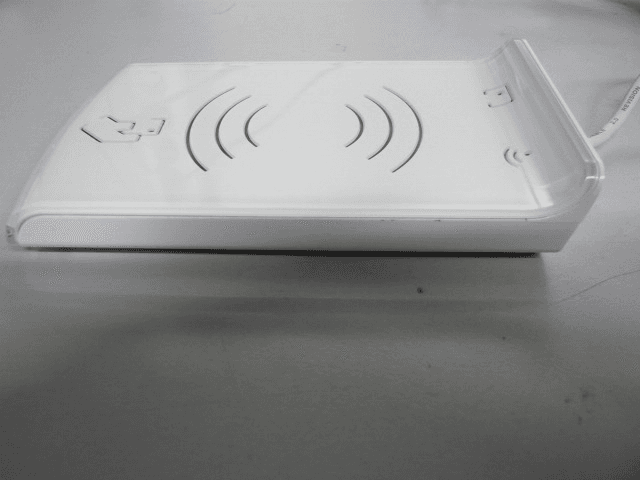
Click to zoom
Application Details
- Equipment Class
- DXX - Part 15 Low Power Communication Device Transmitter
- Date of Grant
- Jan 16, 2011
- Application Purpose
- Original Equipment
- Date of Application
- Jan 16, 2011
- Equipment Note
- RFID Tag Reader
- Frequency Range
- 13.56000000 - 13.56000000
- Company
- Thales DIS France SAS
- Country
- France
Documents & Files
Document Text
Text extracted from the exhibit documents filed with the FCC. Open a document above to read the original.
Users Manual
www.gemalto.com DOC118289C Page 1/4 Prox-DU Dual Interface Contact & Contactless USB Smart Card Reader Quick Installation Guide Prox–DU Quick Installation Guide www.gemalto.com DOC118289C Page 2/4 Prox–DU view Note: For an optimal use with contactless smart cards, please put the smart card over the landing zone as shown in the above figure. Prox–DU computer installation Plug the USB cable into the USB port of your computer and follow the on- screen instructions when the installation wizard appears. For Windows operating systems, the standard USB CCID Microsoft driver is required. Use the Windows Update procedure if needed to download the driver. Use the PC/SC driver package or web link available in the Gemalto web site http://support.gemalto.com . PC/SC driver OS support: Windows: 2000, XP 32/64 bits, Vista 32/64 bits, Seven 32/64 bits Windows: CE 5.0 / 6.0 / 6.0 R2 Linux: Red Hat / Debian / Ubuntu / OpenSuse distributions Mac OS: Tiger 10.4 / Leopard 10.5 / Snow Leopard 10.6 For installation recommendation please refer to the Prox–DU installation guide available in the Gemalto web site http://support.gemalto.com . Contact card yellow indicator Contactless card blue indicator Contactless card landing zone Contact card insertion slot 1m80 USB cable USB A plug Prox–DU Quick Installation Guide www.gemalto.com DOC118289C Page 3/4 Prox–DU operation table Card Indicator Description Off The card interface is deactivated Slow Blink (0,2 s / 2 s) The card interface is ready Blink (0,5 s / 1 s ) The card is present and inactive (powered off) On The card is present and active (powered on) Flashing The card communication is in progress To protect the smart card from undesired operation the contactless interface is deactivated when a contact card is detected by the reader. The contactless interface will be activated again when the smart card is removed from the slot or when a dedicated switch command is send to the reader by the application. To change this default operating mode, please refer to the reference manual available in the Gemalto web site http://support.gemalto.com . Prox–DU Quick Installation Guide www.gemalto.com DOC118289C Page 4/4 Rating: 5V 200mA - Accessories for use with UL Listed Computers having limited power or class 2 output. Intended to be used with a Limited Power Source. Regulatory information Notice for the USA: FCC Statement The Federal Communications Commission (FCC) Radio Frequency Interference Statement (USA Only) This equipment has been tested and found to comply with the limits for a Class B digital device, pursuant to part 15 of the FCC Rules. These limits are designed to provide reasonable protection against harmful interference in a residential installation. This equipment generates uses and can radiate radio frequency energy and, if not installed and used in accordance with the instructions, may cause harmful interference to radio communications. However, there is no guarantee that interference will not occur in a particular installation. If this equipment does cause harmful interference to radio or television reception, which can be determined by turning the equipment off and on, the user is encouraged to try to correct the interference by one or more of the following measures: — Relocate the radio or television antenna. — Plug the equipment away from the radio or television. — Plug the equipment into a different electrical outlet, so that the equipment and the radio or television is on separate electrical circuits. — Make sure that all your peripheral devices are also FCC class B certified. — Make sure you use only shielded cables to connect peripheral devices to your equipment. — Consult your equipment dealer or an experienced radio/television technician for help. Warning: The system verification tests were conducted with Gemalto supported peripheral devices. Cables used with this equipment must be properly shielded to comply with the requirements of the FCC. Changes or modifications not expressly approved by Gemalto could void the user’s authority to operate the equipment. Déclaration de conformité à la directive R&TTE Nous Société GEMALTO Sise à: Avenue du Pic de Bertagne, 13881 GEMENOS Cedex, Déclarons que les produits : Lecteurs de cartes Prox–DU satisfont à la Directive 1999/5/CE du Parlement Européen et du conseil et sont conformes aux normes : (Norme radio) : ETSI EN 302 291-1 (V1.1.1-2005/07) ETSI EN 302 291-2 (V1.1.1-2005/07) (Norme C.E.M) : ETSI EN 301 489-1 (V1.8.1 (2008)) ETSI EN 301 489-3 (V1.48.1 (2002)) (Norme DBT) : EN 60950-1/ A11 Fait à Gémenos, le 10/12/2010 Pierre-André COLLET Responsable Homologations Produits Instructions for disposal of waste equipment by users in private household This symbol on the product or on its packaging indicates that this product must not be disposed of with your other household waste. Instead, it is your responsibility to dispose of your waste equipment by handing it over to a designated collection point for the recycling of waste electrical and electronic equipment. The separate collection and recycling of your waste equipment at the time of disposal will help to conserve natural resources and ensure that it is recycled in a manner that protects human health and the environment. For more information about where you can drop off your waste equipment for recycling, please contact your local city office, your household waste disposal service or the shop where you purchased the product.
Users Manual
www.gemalto.com DOC118369C Page 1/4 Prox-SU Contactless Interface USB Smart Card Reader With optional SIM/SAM slot Quick Installation Guide Prox–SU Quick Installation Guide www.gemalto.com DOC118369C Page 2/4 Prox–SU view Note: For an optimal use with contactless smart cards, please put the smart card over the landing zone as shown in the above figure. Prox–SU computer installation Plug the USB cable into the USB port of your computer and follow the on- screen instructions when the installation wizard appears. For Windows operating systems, the standard USB CCID Microsoft driver is required. Use the Windows Update procedure if needed to download the driver. Use the PC/SC driver package or web link available in the Gemalto web site http://support.gemalto.com . PC/SC driver OS support: Windows: 2000, XP 32/64 bits, Vista 32/64 bits, Seven 32/64 bits Windows: CE 5.0 / 6.0 / 6.0 R2 Linux: Red Hat / Debian / Ubuntu / OpenSuse distributions Mac OS: Tiger 10.4 / Leopard 10.5 / Snow Leopard 10.6 For installation recommendation please refer to the Prox–SU installation guide available in the Gemalto web site http://support.gemalto.com . SIM/SAM card yellow indicator Contactless card blue indicator Contactless card landing zone SIM/SAM card internal slot 1m80 USB cable USB A plug Prox–SU Quick Installation Guide www.gemalto.com DOC118369C Page 3/4 Prox–SU operation table Card Indicator Description Off The card interface is deactivated Slow Blink (0,2 s / 2 s) The card interface is ready Blink (0,5 s / 1 s) The card is present and inactive (powered off) On The card is present and active (powered on) Flashing The card communication is in progress Note: When no SIM/SAM card is inserted, the yellow indicator will always be off. Prox–SU SIM/SAM installation The contact card is optional and can be inserted into the internal SIM/SAM card connector located into the device: Remove the four screws located on the bottom cabinet Remove the bottom cabinet from the top cabinet Insert the SIM/SAM card into the connector Assemble the bottom cabinet with the top cabinet using the four screws For installation recommendation of the SIM/SAM card please refer to the Prox–SU installation guide available in the Gemalto web site http://support.gemalto.com . SAM/SIM internal slot 4 screws location SIM or SAM card SIM or SAM card Prox–SU Quick Installation Guide www.gemalto.com DOC118369C Page 4/4 Rating: 5V 200mA - Accessories for use with UL Listed Computers having limited power or class 2 output. Intended to be used with a Limited Power Source. Regulatory information Notice for the USA: FCC Statement The Federal Communications Commission (FCC) Radio Frequency Interference Statement (USA Only) This equipment has been tested and found to comply with the limits for a Class B digital device, pursuant to part 15 of the FCC Rules. These limits are designed to provide reasonable protection against harmful interference in a residential installation. This equipment generates uses and can radiate radio frequency energy and, if not installed and used in accordance with the instructions, may cause harmful interference to radio communications. However, there is no guarantee that interference will not occur in a particular installation. If this equipment does cause harmful interference to radio or television reception, which can be determined by turning the equipment off and on, the user is encouraged to try to correct the interference by one or more of the following measures: — Relocate the radio or television antenna. — Plug the equipment away from the radio or television. — Plug the equipment into a different electrical outlet, so that the equipment and the radio or television is on separate electrical circuits. — Make sure that all your peripheral devices are also FCC class B certified. — Make sure you use only shielded cables to connect peripheral devices to your equipment. — Consult your equipment dealer or an experienced radio/television technician for help. Warning: The system verification tests were conducted with Gemalto supported peripheral devices. Cables used with this equipment must be properly shielded to comply with the requirements of the FCC. Changes or modifications not expressly approved by Gemalto could void the user’s authority to operate the equipment. Déclaration de conformité à la directive R&TTE Nous Société GEMALTO Sise à: Avenue du Pic de Bertagne, 13881 GEMENOS Cedex, Déclarons que les produits : Lecteurs de cartes Prox–SU satisfont à la Directive 1999/5/CE du Parlement Européen et du conseil et sont conformes aux normes : (Norme radio) : ETSI EN 302 291-1 (V1.1.1-2005/07) ETSI EN 302 291-2 (V1.1.1-2005/07) (Norme C.E.M) : ETSI EN 301 489-1 (V1.8.1 (2008)) ETSI EN 301 489-3 (V1.48.1 (2002)) (Norme DBT) : EN 60950-1/ A11 Fait à Gémenos, le 10/12/2010 Pierre-André COLLET Responsable Homologations Produits Instructions for disposal of waste equipment by users in private household This symbol on the product or on its packaging indicates that this product must not be disposed of with your other household waste. Instead, it is your responsibility to dispose of your waste equipment by handing it over to a designated collection point for the recycling of waste electrical and electronic equipment. The separate collection and recycling of your waste equipment at the time of disposal will help to conserve natural resources and ensure that it is recycled in a manner that protects human health and the environment. For more information about where you can drop off your waste equipment for recycling, please contact your local city office, your household waste disposal service or the shop where you purchased the product.
Cover Letter(s)
January 6 th , 2011 CONFIDENTIALITY REQUEST Curtis-Straus LLC One Distribution Center Circle #1 Littleton, MA 01460 USA Re: Confidentiality request for a Low Power Communication Device FCC ID: MESPROXDUB Gentlemen, GEMALTO requests, pursuant to 47CFR 0.459, post grant confidentiality for portions of the material contained in this application. The following document regarding this submission for FCC ID: MESPROXDUB shall be kept confidential: 1. Schematic Diagram of the PROX DU & PROX SU (file: Schematic-MESPROXDUB.pdf) 2. Block Diagram description of the PROX DU & PROX SU(file: Block Diagram- MESPROXDUB.pdf) Specifically, these exhibits contain information relating to circuit function and complexity that could be of benefit to competitors. The material contains trade secrets and confidential information that GEMALTO does not customarily release to the public and which is otherwise not generally available to the public. Regards, Pierre André COLLET GEMALTO
External Photos
FCC ID: MESPROXDUB Page 1/4 EXTERNAL PHOTOS OF TESTED EUT General views of EUT FCC ID: MESPROXDUB Page 2/4 General views of EUT FCC ID: MESPROXDUB Page 3/4 PROX DU FCC ID: MESPROXDUB Page 4/4 PROX SU (Only one difference on enclosure)
Internal Photos
FCC ID: MESPROXDUB INTERNAL PHOTOS OF TESTED EUT General views FCC ID: MESPROXDUB General view of PCB FCC ID: MESPROXDUB General view of PCB FCC ID: MESPROXDUB Detail view of PCB FCC ID: MESPROXDUB Detail views
Operational Description
FCC ID: MESPROXDUB GENERAL INFORMATION 1.1. Product description FCC ID: MESPROXDUB FCC ID: MESPROXDUB FCC ID: MESPROXDUB FCC ID: MESPROXDUB 1.2. Related Submittal(s) / Grant(s) All host equipments used in the test configuration are FCC granted, when relevant. 1.3. Tested System Details The FCC IDs for all equipment, with description of all cables used in the tested system are: - Internal max frequencies: 27.12MHz Input/output: - 1 x USB port Auxiliaries used for testing: - 1 x Laptop DELL n° 51495 Model: PP11L Sn: 423-546-849-19 - 1 x Power supply unit for laptop DELL PA-12 Model: AA22850-L Sn: CN-OU7088-16293-548-02BW - 1 x Contact less card GEMPLUS (00501001) - 1 x Contact card GEMPLUS (GemSAFE Logon) I/O cables used for testing: - 1 x USB cable of EUT, shielded, length: 1.8m (attached on equipment) 1.4. Test Methodology Both conducted and radiated testing were performed according to the procedures in ANSI C63.4-2009, FCC Part 15 Subpart C. Radiated testing was performed at an antenna to EUT distance of 10 meters. During testing, all equipment’s and cables were moved relative to each other in order to identify the worst case set-up. 1.5. Test facility Tests have been performed on December 7 th , 2010. This test facility has been fully described in a report and accepted by FCC as compliant with the radiated and AC line conducted test site criteria in ANSI C63.4-2009 in a letter dated March 25 th , 2008 (registration number 94821). This test facility has also been accredited by COFRAC (French accreditation authority for European Union test lab accreditation organization) according to NF EN ISO/IEC 17025, accreditation number 1-1633 as compliant with test site criteria and competence in 47 CFR Part 15/ANSI C63.4 and EN55022/CISPR22 norms for 89/336/EEC European EMC Directive application. All pertinent data for this test facility remains unchanged.
Test Report
Rapport d’essai / Test report N° 201006-6348R-A1-R3-E JDE : 103542 DELIVRE A / ISSUED TO : GEMALTO Avenue du Pic de Bertagne 13881 GEMENOS - FRANCE Objet / Subject : Essais de compatibilité électromagnétique conformément aux normes FCC CFR 47 Part 15, Subpart B et C. Electromagnetic compatibility tests according to the standards FCC CFR 47 Part 15, Subpart B and C Matériel testé / Apparatus under test : • Produit / Product : Lecteur USB de carte contact & sans contact Dual Interface Contact & Contactless USB Smart Card Reader • Marque / Trade mark : GEMALTO • Constructeur / Manufacturer : GEMALTO • Type / Model PROX DU & PROX SU • Type Sous Test / Model Under Test : PROX-DU • N° de série / serial number : PROTO • FCC ID : MESPROXDUB Date des essais / Test date : Du 7 au 9 Décembre 2010 / From December 7 th to 9 th , 2010 Lieu d’essai / Test location : LCIE SUD-EST ZI Centr’Alp – 170 rue de Chatagnon 38430 MOIRANS - France Test réalisé par / Test performed by : Anthony MERLIN Ce document comporte /Composition of document : 29 pages. M OIRANS, LE 17 JANVIER 2011 / JANUARY 17TH, 2011 Ecrit par / Written by, Approuvé par / Approved by, Anthony MERLIN Jacques LORQUIN La reproduction de ce document n'est autorisée que sous sa forme intégrale. Toute reproduction partielle ou toute insertion de résultats dans un texte d'accompagnement en vue de leur diffusion doit recevoir un accord préalable et formel du LCIE. Ce document résulte d’essais effectués sur un spécimen, un échantillon ou une éprouvette. Il ne préjuge pas de la conformité de l’ensemble des produits fabriqués à l’objet essayé. Sauf indication contraire, la décision de conformité prend en compte l’incertitude de mesures. Il ne préjuge en aucun cas d’une décision de certification . This document shall not be reproduced, except in full, without t he written approval of the LCIE. This document contains results related only to the item tested. It does not imply the conformity of the whole production to the item tested .Unless otherwise specified; the decision of conformity takes into account the uncertainty of measures. This document does not anticipate any certification decision. RAPPORT D'ESSAI / TEST REPORT N° 201006-6348R-A1-R3-E Page : 2 / 29 SUMMARY 1. TEST PROGRAM ................................................................................................................................... 3 2. SYSTEM TEST CONFIGURATION ........................................................................................................ 4 3. RADIATED EMISSION DATA ................................................................................................................. 6 4. FUNDAMENTAL FREQUENCY TOLERANCE (15.225E) ..................................................................... 11 5. BAND-EDGE COMPLIANCE §15.209................................................................................................. 12 6. CONDUCTED EMISSION DATA .......................................................................................................... 13 7. ANNEX 1 (GRAPHS) ............................................................................................................................ 16 8. TEST EQUIPMENT LIST ...................................................................................................................... 28 9. UNCERTAINTIES CHART .................................................................................................................... 29 RAPPORT D'ESSAI / TEST REPORT N° 201006-6348R-A1-R3-E Page : 3 / 29 1. TEST PROGRAM Standard: - FCC Part 15, Subpart B (Digital Devices) - ANSI C63.4 (2009) EMISSION TEST LIMITS RESULTS (Comments) Frequency Quasi-peak value (dBμV) Average value (dBμV) 150-500kHz 66 to 56 56 to 46 0.5-5MHz 56 46 Limits for conducted disturbance at mains ports 150kHz-30MHz 5-30MHz 60 50 PASS Radiated emissions 30MHz-12.5GHz Measure at 3m 30MHz-88MHz : 40 dBμV/m 88MHz-216MHz : 43.5 dBμV/m 216MHz-960MHz : 46.0 dBμV/m Above 960MHz : 54.0 dBμV/m PASS Standard: - FCC Part 15, Subpart C - ANSI C63.4 (2009) EMISSION TEST LIMITS RESULTS (Comments) Frequency Quasi-peak value (dBμV) Average value (dBμV) 150-500kHz 66 to 56 56 to 46 0.5-5MHz 56 46 Limits for conducted disturbance at mains ports 150kHz-30MHz 5-30MHz 60 50 PASS Radiated emissions 9kHz-30MHz Measure at 300m 9kHz-490kHz : 67.6dBμV/m /F(kHz) Measure at 30m 490kHz-1.705MHz : 87.6dBμV/m /F(kHz) 1.705MHz-30MHz : 29.5 dBμV/m PASS Radiated emissions 30MHz-12.5GHz* Measure at 3m 30MHz-88MHz : 40 dBμV/m 88MHz-216MHz : 43.5 dBμV/m 216MHz-960MHz : 46.0 dBμV/m Above 960MHz : 54.0 dBμV/m PASS Fundamental frequency tolerance Operation within the band 13.110-14.010 MHz §15.225 PASS Bandedge compliance Operation within the band 13.110-14.010 MHz §15.225 PASS *§15.33: The highest internal source of a testing device is defined like more the highest frequency generated or used in the testing device or on which the testing device works or agrees. - If the highest frequency of the internal sources of the testing device is lower than 108 MHz, measurement must be only performed until 1GHz. - If the highest frequency of the internal sources of the testing device ranges between 108 MHz and 500 MHz, measurement must be only performed until 2GHz. - If the highest frequency of the internal sources of the testing device ranges between 500 MHz and 1 GHz, measurement must be only performed until 5GHz. If the highest frequency of the internal sources of the testing device is above 1 GHz, measurement must be only performed until 5 times the highest frequency or 40 GHz, while taking smallest of both. RAPPORT D'ESSAI / TEST REPORT N° 201006-6348R-A1-R3-E Page : 4 / 29 2. SYSTEM TEST CONFIGURATION 2.1. JUSTIFICATION The system was configured for testing in a typical fashion (as a customer would normally use it). Justification of choice tested model: - PROX DU: o Contact less reader o Contact reader - PROX SU: o Contact less reader It’s the same electronic, for th…
Text truncated - open the document above for the full version.
Test Setup Photos
FCC ID: MESPROXDUB Page 1/2 CONDUCTED AND RADIATED MEASUREMENT PHOTO 1.1 Radiated emission FCC ID: MESPROXDUB Page 2/2 1.2 Conducted emissions
Contact Information
Applicant
Jean-Cristophe RUSSO(RD Hardware Manager)
Test Firm
LCIE Etablissement Sud-EstAnthony Merlin
Technical Specifications
| # | Rule Parts | Frequency Range | Power Output |
|---|---|---|---|
| 1 | 15C | 13.56 MHz - 13.56 MHz | - |
Other Applications from Thales DIS France SAS

MES-SWYSPINPAD
Sep 25, 2023Smart Card Reader USB & Bluetooth
Equipment Class
DTS - Digital Transmission System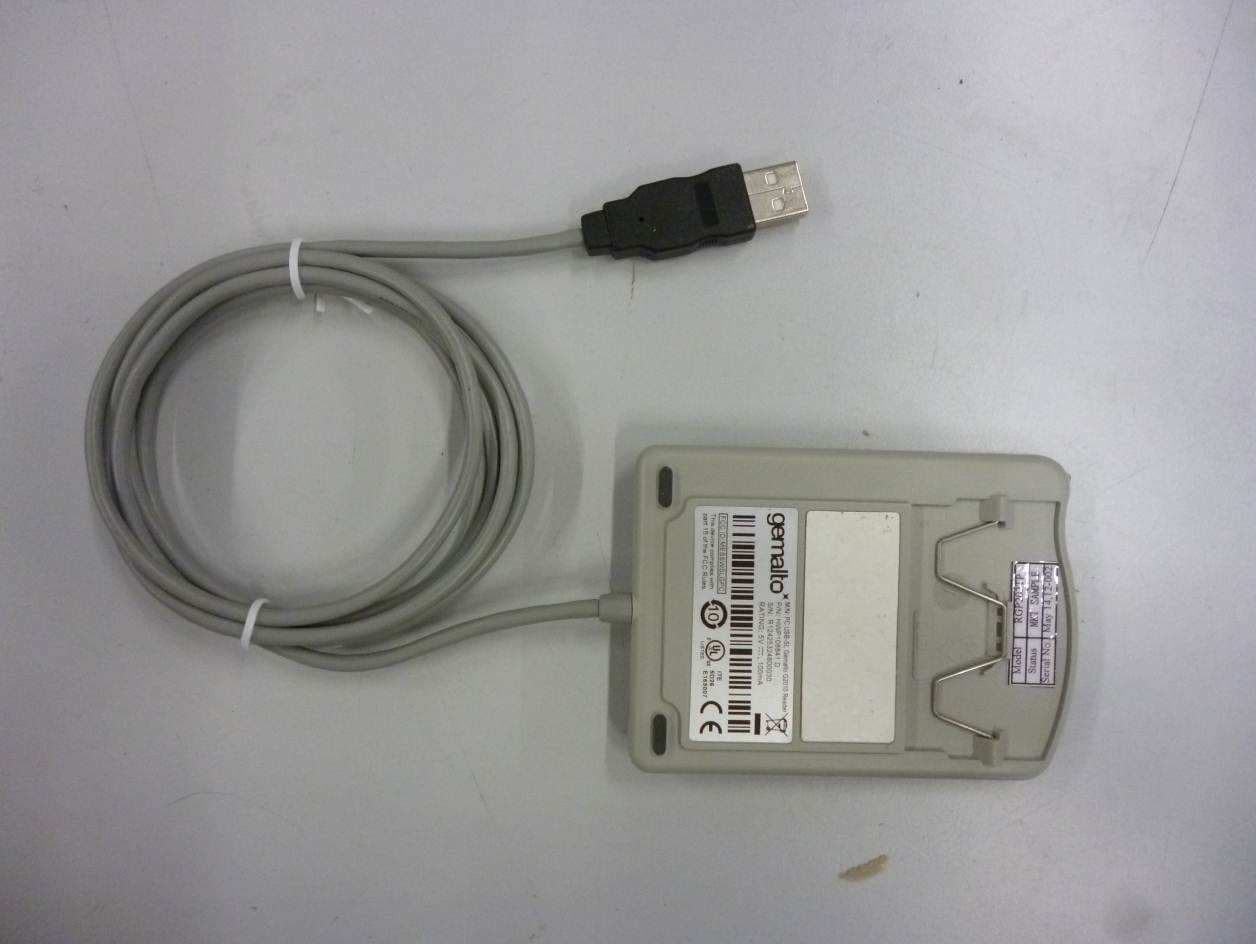
MESIDBCT40
Jul 10, 2012Smart Card Reader
Equipment Class
JBP - Part 15 Class B Computing Device Peripheral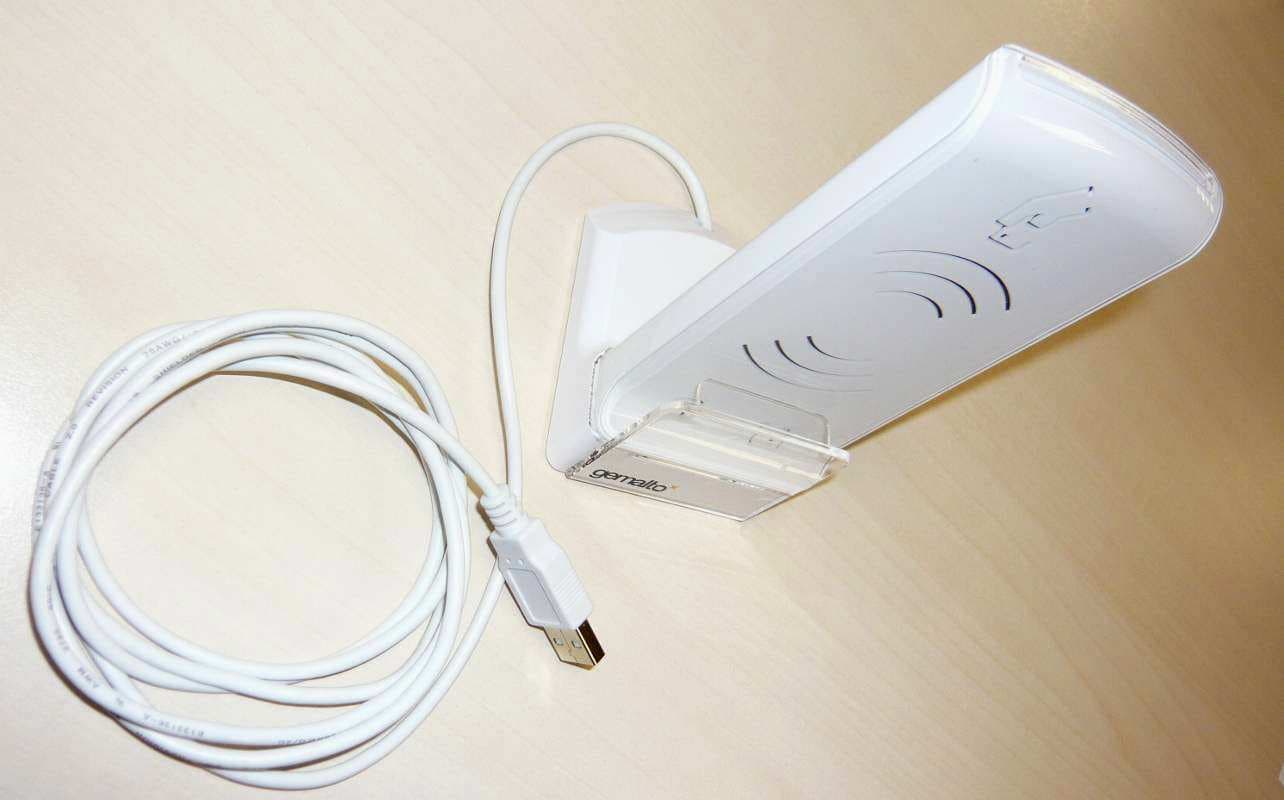
MESPROXDU
Feb 24, 2010Card Reader
Equipment Class
JBP - Part 15 Class B Computing Device Peripheral
MESPROXU
Sep 12, 2006Tag Reader
Equipment Class
DXX - Part 15 Low Power Communication Device Transmitter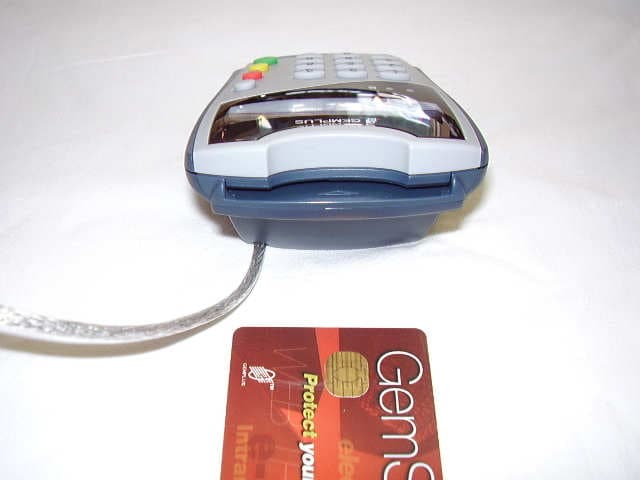
MESPINPAD
Jul 12, 2006Smart Card Reader
Equipment Class
JBP - Part 15 Class B Computing Device Peripheral