QISCP39S1HUAWEI SuperCharge Wireless Car Charger
Huawei Technologies Co.,Ltd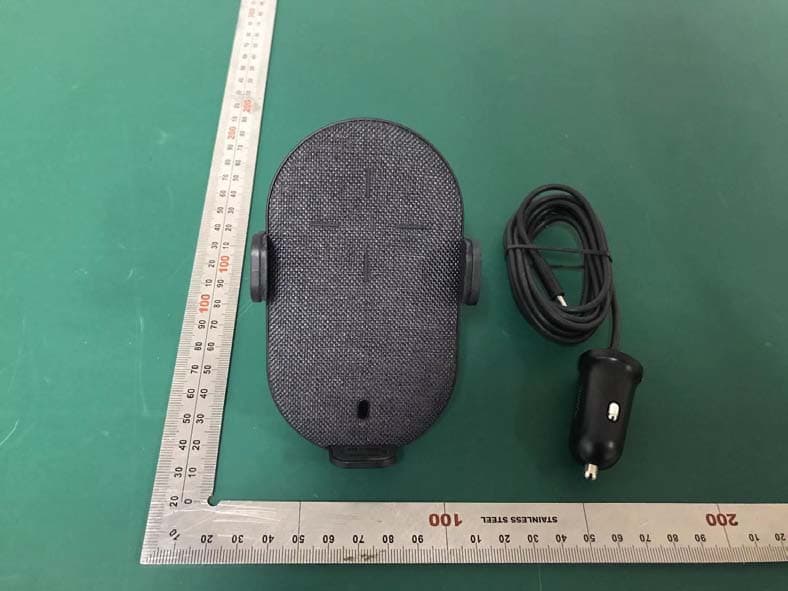
Click to zoom
Application Details
- Equipment Class
- DCD - Part 15 Low Power Transmitter Below 1705 kHz
- Date of Grant
- Mar 18, 2020
- Application Purpose
- Original Equipment
- Date of Application
- Mar 18, 2020
- Equipment Note
- HUAWEI SuperCharge Wireless Car Charger
- Frequency Range
- 0.11050000 - 0.20500000
- Company
- Huawei Technologies Co.,Ltd
- Country
- China
Documents & Files
Document Text
Text extracted from the exhibit documents filed with the FCC. Open a document above to read the original.
Users Manual
Quick Start Guide Model: CP39S 1 Charging indicator light Mounting arm release button Phone mounting arm Knob Clip release button Wireless charger fixing clip Charging cable DC port Type-C port Proximity sensor 2 1. Install the wireless car charger. a. Plug the standard charging cable into the DC port to connect the wireless charger to the cigarette lighter port. b. Press the clip release button on the back of the wireless charger to open the clip c. Attach the wireless charger onto your car's air vent. After the installation is successful and when the car is started, the wireless charger will initialize and the charging indicator light will flash once. • This product only supports standard 10 V/4 A, 5 V/4.5 A, and 9 V/2 A smart charge protocol (SCP), fast charge protocol (FCP), and Quick Charge (QC) protocol car chargers that comply with the RED requirements of the CE certification. • This product does not support low power USB car chargers, including 5 V/2 A, 5 V/1 A, and 5 V/0.5 A USB chargers, and non-standard fast charging USB car chargers. If you use any of the preceding chargers, the indicator light will keep flashing. • Do not use the standard charging cable of this product with other electronic products. 3 • Adjust the knob on the back of the wireless charger to secure the wireless charger in place. • To reach the maximum charging power of 27 W, use the standard charging cable and ensure that your phone supports 27 W charging. • Cigarette lighter ports of certain car models still provide power after you switch off your car. If this applies to your car, it is recommended that you disconnect the charging cable from the wireless charger after you switch off your car. If you need to charge two mobile devices but there is only one cigarette lighter port in your car, it is recommended that you use a 5 A Type-C cable (at least 1 m cable length) and a 40 W dual-port car charger. 4 Do not connect all-in-one data cables, such as two-in-one or three-in-one data cables, to the wireless charger. 2. Place your phone (must support Qi wireless charging) near the proximity sensor and the phone mounting arms will open automatically. Place your phone on the wireless charger and the phone mounting arms will automatically attach to your phone. Your phone will then start charging and the charging indicator will show steady on. When charging your phone, ensure that your phone is flush with 5 the surface of the wireless charger, as shown in the figures below. Ensure that there are no metallic objects between the surface of the wireless charger and your phone. Avoid using a metallic protective case. If you place a phone that does not support wireless charging on the wireless charger, the charging indicator light will also 6 flash. 3. Before exiting your car, touch the mounting arm release button on the left side of the wireless charger and remove your phone when the mounting arms open. When the power at the cigarette lighter port or power supply port is cut off, take out your phone directly. If the cigarette lighter port still provides power after you switch off your car, it is recommended that you disconnect the charging cable from the wireless charger. 4. If the wireless charger cannot be secured to your car's air vent using the clip, use the sticker stand that came with this product to attach the wireless charger. When attaching the sticker stand to your car, ensure the sticky side is clean and smooth. As forcible removal of the sticker stand may damage the interior of your car, it is recommended that you contact a professional agency to attach or remove the sticker stand. 7 The sticker stand cannot be repositioned once it has been attached. Please attach it to an appropriate location in your car. Safety Information English 1 Safety Information Before you use the device, read the following precautions carefully to ensure optimal product performance and to avoid danger or violation of laws and regulations. • In clinics and hospitals where the use of wireless devices is prohibited, please comply with the regulations and power off your device. • Some wireless devices may interfere with implantable medical devices and other medical equipment, such as pacemakers, cochlear implants, and hearing aids. Consult the manufacturer of your medical equipment for more information. • When using the device, keep it at least 30 cm away from medical devices. • Keep the device dry. Avoid using the device in dusty, damp, or dirty environments, as such environments may damage the internal circuitry. • Do not use the device during thunderstorms, as thunderstorms may cause equipment malfunction or a shock hazard. • Please only use the device within its approved operating range of 0°C to 40°C, an d only allow it to be exposed to temperatures within its approved storage range of –20°C to +70°C. Extreme heat or cold may damage the device. • Keep the device away from excessive heat sources and direct sunlight. Do not place it on or in heating devices, such as microwave ovens, stoves, or radiators. • Do not attempt to disassemble or remanufacture the device, insert foreign objects into it, or immerse or expose it to water or other liquids. Doing so may lead to fire, or other hazards. • Dispose of the device in accordance with local regulations. Do not dispose of the device in normal household waste. • Please respect local laws on the disposal of electronic products and their accessories and support recycling efforts. • To prevent accidental swallowing and choking, keep the device out of reach of children and pets. 2 • The device and its accessories may contain small components. Keep the device and its accessories out of the reach of children. Otherwise, children may damage the device and its accessories by mistake, or swallow the small components, which may result in hazards such as choking. • Do not drop, squeeze, or pierce the device to avoid short-circuiting and overheating. • Do not place the device directly above or within …
Text truncated - open the document above for the full version.
Cover Letter(s)
DATE : 2020.03.05 Equipment Autorisation Division Federal Communications Commission 7435 Oakland Mills Road Columbia, MD 21046 FCC ID: QISCP39S1 Product Name: HUAWEI SuperCharge Wireless Car Charger Request for Confidentiality Pursuant to Sections 0.457 and 0.459 of the commissions rules, we hereby request that the following documents be held confidential: (List here the documents for which you are seeking confidentiality – for example ...) Schematics Block diagram Operation description These materials contain trade secrets and proprietary information and are not customarily released to the public. The public disclosure of this information might be harmful to the company and provide unjustified benefits to our competitors. Zhang Xinghai EMC Laboratory Manager Huawei Technologies Co., Ltd. E-mail: [email protected] Tel: 0086-0755-28970299 Fax: 0086-0755-89650226 禁止扩散 仅供航嘉公司申请FCC&IC使用 华为信息资产
Cover Letter(s)
Date:2020.03.05 Federal Communications Commission Authorization & Evaluation Division 7345 Oakland Mills Road Columbia, Maryland 21046 RE: LETTER OF AGENT AUTHORIZATION To Whom It May Concern: We, the undersigned, hereby authorize Compliance Testing, LLC to act on our behalf in all matters relating to application for equipment authorization, including the signing of all documents relating to these matters. We also hereby certify that no party to the application authorized hereunder is subject to the denial of benefits, including FCC benefits, pursuant to Section 5301 of the Anti-Drug Abuse Act of 1988, 21 U.S.C.853(a). Sincerely, <Signature> Name: Tony Tang Title: EMC Engineer Company: EST Technology Co., Ltd.
Cover Letter(s)
Huawei Technologies Co.,Ltd. DATE : 2020.03.05 Federal Communications Commission Authorization & Evaluation Division 7345 Oakland Mills Road Columbia, Maryland 21046 Authority to Act as Agent On our behalf, I appoint EST Technology Co., Ltd. Address: Chilingxiang, Qishantou, Santun, Houjie, Dongguan, Guangdong, China (Name of Agent company name and address) to act as our agent in the preparation of this application for equipment certification. I certify that submitted documents properly describe the device or system for which equipment certification is sought. I also certify that each unit manufactured, imported or marketed, as defined in the Federal Communications Commission’s regulations will have affixed to it a label identical to that submitted for approval with this application. For instances where our authorized agent signs the application for certification on our behalf, I acknowledge that all responsibility for complying with the terms and conditions for certification, still resides with Huawei Technologies Co.,Ltd. Address: Administration Building, Headquarters of Huawei Technologies Co., Ltd., Bantian, Longgang District, Shenzhen, China (Applicant Name and address) Zhang Xinghai EMC Laboratory Manager Huawei Technologies Co., Ltd. E-mail: [email protected] Tel: 0086-0755-28970299 Fax: 0086-0755-89650226 禁止扩散 仅供航嘉公司申请FCC&IC使用 华为信息资产
External Photos
External Photos M/N: CP39S External Photos M/N: CP39S External Photos M/N: CP39S External Photos M/N: CP39S External Photos M/N: CP39S External Photos M/N: CP39S External Photos M/N: CP39S
ID Label/Location Info
20.6 6.6 8.735.5 6.5 13.6 3.5 7.13.1 5.15 5.1 5.6 序列号 字体Arial 字号:3.8pt,位置不可超出虚线 6 6 5.1 字体Arial 字号:3.8pt 2020.03.04 290-xxx1R1 SFC009/无线车充下盖镭雕 (航嘉 海外版) V01 下盖镭雕 黑色PC 6QMKXYYMDD000001 1.机种代码 2.EMS代码 3.年份 4.月份 5.日期 6.产品流水号 说明: 1.机种代码:“6QM”固定不变 2.EMS代码:产商识别代码为“KX” 3.年份:为2位,采用年份后两位,如2019年用19表示 4.月份:1位,1-9月分别用数字1-9表示,A代表10月,B代表11月,C代表12月 5.日:2位,为具体生产日期,如3号为03,15号为15 6.产品流水号:6位,从000001依次递增,不得重复、跳号、漏号 SN码编码规则:共16位,日期以实际生产日期为准。 特别注意:黑色的塑胶壳上, 阴码方式来镭雕, 此二维码如果是镭雕在 必须按对应的效果为 镭雕后的 效果显示 注:二维码里白色部分是镭雕的内容, 黑色是塑壳的颜色
Internal Photos
Internal Photos M/N: CP39S Internal Photos M/N:CP39S Internal Photos M/N: CP39S Internal Photos M/N: CP39S Internal Photos M/N: CP39S Internal Photos M/N: CP39S
RF Exposure Info
FCC ID: QISCP39S1 EST Technology Co., Ltd Report No. ESTE-R1910065 Page 1 of 12 RF EXPOSURE REPORT FOR CERTIFICATION On Behalf of Huawei Technologies Co.,Ltd HUAWEI SuperCharge Wireless Car Charger Model Number: CP39S FCC ID: QISCP39S1 Prepared for: Huawei Technologies Co.,Ltd Administration Building, Headquarters of Huawei Technologies Co., Ltd., Bantian, Longgang District,Shenzhen,China Prepared By: EST Technology Co., Ltd. Chilingxiang, Qishantou, Santun, Houjie, Dongguan, Guangdong, China Tel: 86-769-83081888-808 Report Number: ESTE-R1910065 Date of Test: Sep. 18, 2019~Jan. 09, 2020 Date of Report: Jan. 10, 2020 FCC ID: QISCP39S1 EST Technology Co., Ltd Report No. ESTE-R1910065 Page 2 of 12 TABLE OF CONTENTS Description Page TEST REPORT VERIFICATION......................................................................................................................... 3 1. SUMMARY OF TEST ......................................................................................................................... 4 1.1. Summary of test result ...................................................................................................................... 4 1.2. Test Mode ......................................................................................................................................... 4 1.3. Test Equipment List ......................................................................................................................... 4 2. MAXIMUM PERMISSIBLE EXPOSURE ............................................................................................... 5 2.1. Limit ................................................................................................................................................. 5 2.2. Test Setup ......................................................................................................................................... 5 2.3. Test Procedure .................................................................................................................................. 6 2.4. Equipment Approval Considerations ............................................................................................... 7 2.5. Test Result ........................................................................................................................................ 8 3. TEST SETUP PHOTO ................................................................................................................. 10 FCC ID: QISCP39S1 EST Technology Co., Ltd Report No. ESTE-R1910065 Page 4 of 12 1. SUMMARY OF TEST 1.1. Summary of test result Report Section Description of Test Item FCC Standard Section Results 3 Maximum Permissible Exposure Part 1.1307(b)&1.1310 PASS 1.2. Test Mode 1.3. Test Equipment List Equipment ManufacturerModel No. Serial No.Last Cal. Next Cal. Exposure Level Tester Narda ELT-400 EST-E105 Aug. 21,19 1 Year B-Field Probe Narda ELT Probe EST-E106 Aug. 30,19 1 Year Test Item Test Mode Maximum Permissible Exposure Wireless Charging with Empty Load Wireless Charging with Half Load Wireless Charging with Full Load FCC ID: QISCP39S1 EST Technology Co., Ltd Report No. ESTE-R1910065 Page 5 of 12 2. MAXIMUM PERMISSIBLE EXPOSURE 2.1. Limit Limits for Maximum Permissible Exposure (MPE) Frequency range (MHz) Electric field strength (V/m) Magnetic field strength (A/m) Power density (mW/cm2) Averaging time (minutes) (A) Limits for Occupational/Controlled Exposure 0.3-3.0 614 1.63 *100 6 3.0-30 1842/f 4.89/f *900/f 2 6 30-300 61.4 0.163 1.0 6 300-1,500 f/300 6 1,500-100,000 5 6 (B) Limits for General Population/Uncontrolled Exposure 0.3-1.34 614 1.63 *100 30 1.34-30 824/f 2.19/f *180/f 2 30 30-300 27.5 0.073 0.2 30 300-1,500 f/1500 30 1,500-100,000 1.0 30 Note: 1. f = frequency in MHz * = Plane-wave equivalent power density. 2. For devices designed for typical desktop applications, such a wireless charging pads, RF exposure evaluation should be conducted assuming a user separation distance of 15 cm. E and H field strength measurements or numerical modeling may be used to demonstrate compliance. Measurements should be made from all sides and the top of the primary/client pair, with the 15 cm measured from the center of the probe(s) to the edge of the device. Emissions between 100 kHz to 300 kHz should be assessed versus the limits at 300 kHz in Table 1 of Section 1.1310: 614 V/m and 1.63 A/m. A KDB inquiry is required to determine the applicable exposure limits below 100 kHz. 2.2. Test Setup FCC ID: QISCP39S1 EST Technology Co., Ltd Report No. ESTE-R1910065 Page 6 of 12 2.3. Test Procedure a. The test was performed on turn table in anechoic chamber with a dummy load. b. The dummy load must be placed horizontal of the EUT at the top (Parallel to the coil). c. The probe was placed at 15 cm surrounding the device and 20 cm above the top of the charger and the geometric centre of the probe. d. The highest emission level was recorded and compared with limit as soon as measurement of each point; A, B, C, D, E were completed. FCC ID: QISCP39S1 EST Technology Co., Ltd Report No. ESTE-R1910065 Page 7 of 12 2.4. Equipment Approval Considerations Inductive wireless power transfer applications with supporting field strength results and meeting all of the following requirements are not required to submit a KDB inquiry for devices approved using SDoC or a PAG for equipment approved using certification to address RF exposure compliance. 1 Power transfer frequency is less that 1 MHz YES; the device operated in the frequency range from 110.5-205KHz. 2 Output power from each primary coil is less than or equal to 15 watts. NO; the maximum output power of the primary coil is 27W. 3 The transfer system includes only single primary and secondary coils. This includes charging systems that may have multiple primary coils and clients that are able to detect and allow coupling only between individual pairs of coils. YES; the transfer system includes only sing…
Text truncated - open the document above for the full version.
Test Report
FCC ID: QISCP39S1 EST Technology Co., Ltd Report No.ESTE-R1910064 Page 1 of 99 FCC PART 15C TEST REPORT FOR CERTIFICATION On Behalf of Huawei Technologies Co.,Ltd HUAWEI SuperCharge Wireless Car Charger Model Number: CP39S FCC ID: QISCP39S1 Prepared for: Huawei Technologies Co.,Ltd Administration Building, Headquarters of Huawei Technologies Co., Ltd., Bantian, Longgang District,Shenzhen,China Prepared By: EST Technology Co., Ltd. Chilingxiang, Qishantou, Santun, Houjie, Dongguan, Guangdong, China Tel: 86-769-83081888-808 Report Number: ESTE-R1910064 Date of Test: Sep. 18, 2019~Jan. 09, 2020 Date of Report: Jan. 10, 2020 FCC ID: QISCP39S1 EST Technology Co., Ltd Report No.ESTE-R1910064 Page 2 of 99 TABLE OF CONTENTS Description Page TEST REPORT VERIFICATION ........................................................................................................................ 3 1. GENERAL INFORMATION ................................................................................................................. 4 1.1. Description of Device (EUT) ........................................................................................................... 4 2. SUMMARY OF TEST ......................................................................................................................... 5 2.1. Summary of test result ...................................................................................................................... 5 2.2. Test Facilities .................................................................................................................................... 6 2.3. Measurement uncertainty ................................................................................................................. 7 2.4. Assistant equipment used for test ..................................................................................................... 7 2.5. Block Diagram .................................................................................................................................. 7 2.6. Test Mode ......................................................................................................................................... 9 2.7. Test Equipment List ......................................................................................................................... 9 3. RADIATED EMISSION .................................................................................................................... 10 3.1. Limit ............................................................................................................................................... 10 3.2. Test Setup ....................................................................................................................................... 11 3.3. Spectrum Analyzer Setting ............................................................................................................. 12 3.4. Test Procedure ................................................................................................................................ 12 3.5. Test Result ...................................................................................................................................... 13 4. ANTENNA REQUIREMENTS ............................................................................................................ 84 4.1. Limit ............................................................................................................................................... 84 4.2. Test Result ...................................................................................................................................... 84 5. TEST SETUP PHOTO ................................................................................................................. 85 6. EUT PHOTO ............................................................................................................................... 87 FCC ID: QISCP39S1 EST Technology Co., Ltd Report No.ESTE-R1910064 Page 4 of 99 1. GENERAL INFORMATION 1.1. Description of Device (EUT) Note: For a more detailed features description, please refer to the manufacturer’s specifications or the user's manual. Product Name : HUAWEI SuperCharge Wireless Car Charger Model Number : CP39S Operation Frequency : 110.5KHz-205KHz Max Charge Power : PD: MAX 27W, QI: MAX 10W Max Field Strength of Fundamental : 82.52 dBμV/m Modulation Type : MSK Antenna Type : Induction coil Sample Type : Prototype production FCC ID: QISCP39S1 EST Technology Co., Ltd Report No.ESTE-R1910064 Page 5 of 99 2. SUMMARY OF TEST 2.1. Summary of test result Report Section Description of Test Item FCC Standard Section Results 3 Radiated Emission 15.205 15.209 PASS 4 AC Power Line Conducted Emissions 15.207 N/A 5 Antenna Requirement 15.203 PASS Note: 1. “N/A” denotes test is not applicable in this test report FCC ID: QISCP39S1 EST Technology Co., Ltd Report No.ESTE-R1910064 Page 6 of 99 2.2. Test Facilities EMC Lab : Certificated by CNAS, CHINA Registration No.: L5288 Date of registration: November 13, 2017 Certificated by FCC, USA Designation Number: CN1215 Test Firm Registration Number: 722932 Date of registration: November 21, 2017 Certificated by A2LA, USA Registration No.: 4366.01 Date of registration: November 07, 2017 Certificated by Industry Canada CAB identifier No.: CN0035 Date of registration: January 04, 2019 Certificated by VCCI, Japan Registration No.: R-13663; C-14103 Date of registration: July 25, 2017 This Certificate is valid until: July 24, 2020 Certificated by TUV Rheinland, Germany Registration No.: UA 50413872 0001 Date of registration: July 31, 2018 Certificated by TUV/PS, Shenzhen Registration No.: SCN1017 Date of registration: January 27, 2011 Certificated by Intertek ETL SEMKO Registration No.: 2011-RTL-L2-64 Date of registration: April 28, 2011 Certificated by Nemko, Hong Kong Registration No.: 175193 Date of registration: May 4, 20…
Text truncated - open the document above for the full version.
Test Setup Photos
1. TEST SETUP PHOTO Radiated Test (Below 30MHz) Below 22W 27W Radiated Test (Above 30MHz) Below 22W 27W MPE Position A Position B Position C Position D Position E
Contact Information
Applicant
Zhang Xinghai
Test Firm
EST Technology Co., Ltd.Iceman Hu
[email protected]+86 0769-83081888
Technical Specifications
| # | Rule Parts | Frequency Range | Power Output |
|---|---|---|---|
| 1 | 15C | 0.1105 MHz - 0.205 MHz | - |
Other Applications from Huawei Technologies Co.,Ltd
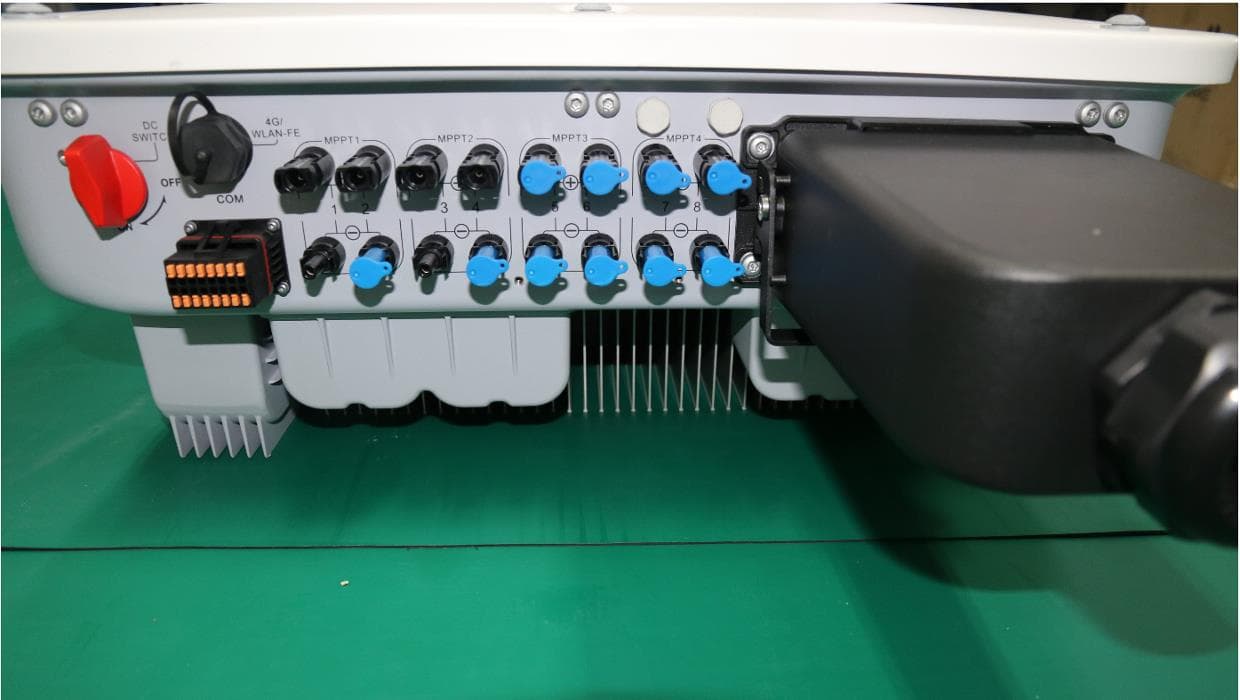
QISSUN2000
Jun 27, 2021Solar Inverter
Equipment Class
DTS - Digital Transmission System
QISCP81-1
Oct 22, 2020Watch Wireless Charger
Equipment Class
DCD - Part 15 Low Power Transmitter Below 1705 kHz
QISRRU3278
Sep 02, 2020Remote Radio Unit
Equipment Class
CBD - Citizens Band Category A and B Devices
QISR2561
Jul 11, 2020Indoor Router
Equipment Class
DTS - Digital Transmission System
QISSMARTLOGGER310
Mar 23, 2020Solar Smart Monitor & Data Logger
Equipment Class
DTS - Digital Transmission System