QISF256VWFixed Wireless Terminal with CDMA band class 0 and class 1
Huawei Technologies Co.,Ltd
Click to zoom
Application Details
- Equipment Class
- PCB - PCS Licensed Transmitter
- Date of Grant
- Aug 16, 2011
- Application Purpose
- Original Equipment
- Date of Application
- Aug 16, 2011
- Equipment Note
- Fixed Wireless Terminal with CDMA band class 0 and class 1
- Frequency Range
- 1851.25000000 - 1908.75000000
- Company
- Huawei Technologies Co.,Ltd
- Country
- China
Documents & Files
Document Text
Text extracted from the exhibit documents filed with the FCC. Open a document above to read the original.
Users Manual
VERIZON WIRELESS HOME PHONE CONNECT USER MANUAL OM256VW label Welcome to Verizon Wireless Thank you for choosing Verizon Wireless Home Phone Connect. You’re now connected to the power of America’s most reliable wireless network. This guide will help you understand your new wireless device and all the things you can do with it. So let’s get started. Contents 1 0B0BIntroduction......................................................................................................................................................1 2B2BPackage Contents...................................................................................................................................1 3B3BTop View.................................................................................................................................................2 4B4BBottom View...........................................................................................................................................3 2 Installation.........................................................................................................................................................4 5B5BInstalling the Battery..............................................................................................................................4 6B6BInstalling the Antenna............................................................................................................................5 7B7BInstalling the Power Adapter.................................................................................................................6 8B8BConnecting the Device to a Telephone.................................................................................................6 9B9BMounting the Device.............................................................................................................................8 3 General Functions.............................................................................................................................................9 10B10BPowering on the Device.........................................................................................................................9 11B11BActivating the Device.............................................................................................................................9 12B12BUnderstanding the Indicators..............................................................................................................10 13B13BMaking Calls.........................................................................................................................................11 14B14BMaking a 3-Way Call.............................................................................................................................11 15B15BReceiving Calls......................................................................................................................................12 16B16BUsing Voice Mail...................................................................................................................................12 17B17BImportant Facts About Your Home Phone Connect...........................................................................13 18B18BAssistive Communication Devices.......................................................................................................14 4 1B1BTroubleshooting.............................................................................................................................................15 1 1 0B0BIntroduction 2B2BPackage Contents The package should contain the following items. Please contact Verizon Wireless if any of the items are missing or damaged. Verizon Wireless Home Phone Connect Antenna Battery User Manual Quick Reference Guide Product Safety and Warranty Information Power Adapter User Manual Quick Reference Guide Product Safety and Warranty Information 2 3B3BTo p Vi e w Note: The figures are only for your reference, the actual shape and color of the product may differ slightly. 1 8 7 6 9 2 3 4 5 10 * Note: Never place a USB-based device into the USB port of the Home Phone Connect under any circumstances. Doing so may damage the device and negate its warranty. The port was designed for diagnostic purposes only; it is not intended for customer use. 1 DC 12V power port 6 Power indicator 2 Telephone port 1 7 Voice mail indicator 3 Telephone port 2 8 Battery indicator 4 USB port* 9 Signal strength indicators 5 Antenna port 10 Power on/off switch 3 4B4BBottom View 123 1 Wall-mounting brackets 3 Battery port 2 Battery cover 4 2 Installation 5B5BInstalling the Battery Note: The system will stop charging the battery when the ambient temperature is outside of the temperature range allowed for charging (14 °F to 113°F). When the power adapter is connected, the battery will automatically charge. When fully charged, the battery will automatically stop charging. Remove the battery if the device will be unused for a period exceeding 2 weeks. The battery is intended for backup purposes only (in the event of a power failure). The device takes 3.5 hours to charge fully. The charge time may be impacted by environmental factors. Talk time is about 2 hours and standby time is about 36 hours, but the actual values vary with the network environment. 5 Remove the battery cover. Carefully insert the battery connection cable into the battery port. The connection cable will click into place when correctly inserted. Place the battery in the battery slot and return the battery cover. 6B6BInstalling the Antenna Make sure the device is turned off. Align the antenna with the antenna port on the device as illustrated below. Screw the antenna into the port, ensuring that the connection is secure. 6 7B7BInstalling the Power Adapter Under normal usage, the device relies on the external power adapter for its power supply. Insert the power adapter into the DC input …
Text truncated - open the document above for the full version.
Users Manual
VERIZON WIRELESS HOME PHONE CONNECT PSW256VW PRODUCT SAFETY AND WARRANTY INFORMATION SAFETY AND WARRANTY This manual addresses the safety guidelines and precautions to follow when operating your device. Before operating your device, please be aware of all the safety details. This manual contains the warranty for your device. Please review this manual thoroughly. 2 SAFETY INFORMATION FOR WIRELESS DEVICE .............3 FDA CONSUMER UPDATE .....................................................7 AVOID POTENTIAL HEARING LOSS ...................................14 FCC COMPLIANCE INFORMATION ..................................16 Emergency Calling .................................................................17 12 MONTH LIMITED WARRANTY ......................................19 Table of Contents 3 SAFETY INFORMATION FOR WIRELESS DEVICE Read this information before using your wireless device. ELECTRONIC DEVICE Power off your device if using the device is prohibited. Do not use the device when usage causes danger or interference with electronic devices. MEDICAL DEVICE • Follow rules and regulations set forth by hospitals and health care facilities. Do not use your device when using the device is prohibited. • Pacemaker manufacturers recommend that a minimum distance of 5.9 inches be maintained between a device and a pacemaker to prevent potential interference with the pacemaker. If you are using a pacemaker, use the device on the opposite side of the pacemaker. • Some wireless devices may affect the performance of hearing aids. For any such problems, consult your service provider. POTENTIALLY EXPLOSIVE ATMOSPHERE Power off your device in any area with a potentially explosive atmosphere, and comply with all signs and instructions. Areas that may have potentially explosive atmospheres include the areas where you would normally be advised to turn off your vehicle engine. Triggering of sparks in such areas could cause an explosion or a fire, resulting in bodily injuries or even deaths. Do not power on your device at refueling points such as service stations. Comply with restrictions on the use of radio equipment in fuel depots, storage, and distribution areas, and chemical plants. In addition, adhere to restrictions in areas where blasting operations are in progress. Before using the device, watch out for areas that have potentially explosive atmospheres that are often, but not always, clearly marked. Such locations include areas below the deck on boats, chemical transfer or storage facilities, and areas where the air contains chemicals or particles such as grain, dust, or metal powders. Ask the manufacturers of vehicles using liquefied 4 petroleum gas (such as propane or butane) whether this device can be safely used in their vicinity. OPERATING ENVIRONMENT • Do not use or charge the device in dusty, damp, and dirty places or places with magnetic fields. Otherwise, it may result in a malfunction of the circuit. • On a stormy day with thunder, do not use your device, to prevent any danger caused by lightning. • When you are on a call, do not touch the antenna. Touching the antenna affects the call quality and results in increase in power consumption. As a result, the talk time and the standby time are reduced. • Do not place any cable or metal near the antenna, because they may interfere with the signal. • Do not install outdoor antenna, because it may damage your device. • Use accessories authorized by the manufacturer. Using unauthorized accessories will render the warranty null and void. • Because the device needs to disperse heat during operation, place the device and the power supply in a cool, ventilated area. Never cover the device, put objects on it, or place it near water, fire as well as inflammable and explosive materials. • This device should be installed and operated with a minimum distance of 7.9 inches between the antenna and all persons. • Keep the ambient temperature between 14°F and 113°F while the device is being charged. Keep the ambient temperature between 14°F and 122°F for using the device powered by a battery. SAFETY OF CHILDREN Comply with all precautions with regard to children's safety. Letting the child play with your device or its accessories, which may include parts that can be detached 5 from the device, may be dangerous, as it may present a choking hazard. Ensure that small children are kept away from the device and accessories. ACCESSORIES Only use parts or accessories made by the Manufacturer. Using accessories of other manufacturers or vendors with this device model may invalidate any approval or warranty applicable to the device, result in the non-operation of the device, and cause danger.interference with airborne electronic equipment. BATTERY AND CHARGER • Unplug the charger from the electrical plug and the device when not in use. • Do no connect two poles of the battery with conductors, such as metal materials, keys or jewelry. Otherwise, the battery may short circuit and cause bodily injury or harm. • Do not disassemble the battery or solder the battery poles. Otherwise, it may lead to electrolyte leakage, overheating, fire, or explosion. • If battery electrolyte leaks out, ensure that the electrolyte does not touch your skin and eyes. When the electrolyte touches your skin or splashes into your eyes, wash your eyes with clean water immediately and consult a doctor. • If there is a case of battery deformation, color change, or abnormal heating while you charge or store the battery, remove the battery immediately and stop using it. Otherwise, it may lead to battery leakage, overheating, explosion, or fire. • If the power cable is damaged (for example, the cord is exposed or broken), or the plug loosens, stop using the cable at once. Otherwise, it may lead to an electric shock, a short circuit of the charger, or a fire. • Do not dispose of batteries in fire as they may explode. Batteries may also explode if damaged. • Danger of explosion if battery is incorrectly r…
Text truncated - open the document above for the full version.
External Photos
HUAWEI F256VW Fixed Wireless Terminal SECRET Page1 Total7 Photo documentation of external of product HUAWEI F256VW Fixed Wireless Terminal SECRET Page2 Total7 HUAWEI F256VW Fixed Wireless Terminal SECRET Page3 Total7 HUAWEI F256VW Fixed Wireless Terminal SECRET Page4 Total7 HUAWEI F256VW Fixed Wireless Terminal SECRET Page5 Total7 HUAWEI F256VW Fixed Wireless Terminal SECRET Page6 Total7 HUAWEI F256VW Fixed Wireless Terminal SECRET Page7 Total7
ID Label/Location Info
Huawei F256VW Fixed Wireless Terminal SECRET Page1, Total 1 F256VW ID Labe
ID Label/Location Info
Huawei F256VW Fixed Wireless Terminal SECRET Page1, Total 1 F256VW
Internal Photos
HUAWEI F256VW Fixed Wireless Terminal SECRET Page1,Total 7 Photo documentation of interior of product HUAWEI F256VW Fixed Wireless Terminal SECRET Page2,Total 7 HUAWEI F256VW Fixed Wireless Terminal SECRET Page3,Total 7 HUAWEI F256VW Fixed Wireless Terminal SECRET Page4,Total 7 HUAWEI F256VW Fixed Wireless Terminal SECRET Page5,Total 7 HUAWEI F256VW Fixed Wireless Terminal SECRET Page6,Total 7 HUAWEI F256VW Fixed Wireless Terminal SECRET Page7,Total 7
RF Exposure Info
HUAWEI F256VW Electromagnetic Radiation Exposure Estimation 1 Maximum Permissible Exposure (MPE) Estimation for F256VW 1 Introduction HUAWEI F256VW is Wireless Fixed Terminal equipment in the CDMA/ system, The frequency band is US Cellular and US PCS. The Fixed Wireless Terminal implements such functions as RF signal receiving / Transmitting, CDMA protocol processing, voice and SMS service etc. The Fixed Wireless Terminal uses QSC6055 chipset. 2 Limits and Guidelines on Exposure to Electromagnetic Fields According to the FCC Part 2.1091, we know: mobile device (transmitting device designed to be used in other than fixed locations and to generally be used in such a way that a separation distance of at least 20 centimeters is normally maintained between the transmitters radiating structure(s) and the body of the user or nearby persons). And the Cellular radiotelephone service and PCS services are subject to routine environmental evaluation for RF exposure prior to equipment authorization or use if they operate at frequencies of 1.5 GHz or below and their effective radiated power (ERP) is 1.5 watts or more, or if they operate at frequencies above 1.5 GHz and their ERP is 3 watts or more. The radiated power of 800MHz for F256VW is 1W, so the F256VW is excluded from routine environmental evaluation for RF exposure according to the requirement of FCC Part 2.1091. The present document is given just only for reference. Uncontrolled limits are used for general public. General population/uncontrolled exposure apply in situations in which the general public may be exposed, or in which persons that are exposed as a consequence of their employment may not be fully aware of the potential for exposure or can not exercise control over their exposure. The exposure levels can be expressed in terms of power density, electric field strength, or magnetic field strength, as averaged over 30 minutes for the general public and 6 minutes for trained personnel. The exposure criterion is frequency dependent, and a chart covering the range from 3 kHz to 100 GHz can be found in NCRP No.86 (references IEEE C95.1-1999). Below are the limits. For CDMA 800M Limits for Occupational/Controlled Exposure HUAWEI F256VW Electromagnetic Radiation Exposure Estimation 2 Frequency Range (MHz) Electric Field Strength (E) (V/m) Magnetic Field Strength (H) (A/m) Power Density (S) (mW/cm2) 0.3-3.0 3.0-30 30-300 300-1500 15,00-100,000 614 1842/f 61.4 -- -- 16.3/f 16.3/f 0.163 -- -- (100)* (900/f2)* 1.0 f/300 5 Limits for General Population/Uncontrolled Exposure Frequency Range (MHz) Electric Field Strength (E) (V/m) Magnetic Field Strength (H) (A/m) Power Density (S) (mW/cm2) 0.3-1.34 1.34-30 30-300 300-15,00 15,00-100,000 614 824/f 27.5 -- -- 1.63 2.19/f 0.073 -- -- (100)* (180/f2)* 0.2 f/1500 1.0 Power density S [mW/cm2] for controlled area at 800 MHz 75.2 300 248 300 )( MHzf S mW/cm 2 Power density S [mW/cm2] for uncontrolled area at 800 MHz 55.0 1500 248 1500 )( MHzf S mW/cm 2 S= 0.55 mW/cm 2 = 5.5 W/m 2 for uncontrolled exposure For CDMA 1900M Limits for Occupational/Controlled Exposure Frequency Range (MHz) Electric Field Strength (E) (V/m) Magnetic Field Strength (H) (A/m) Power Density (S) (mW/cm2) HUAWEI F256VW Electromagnetic Radiation Exposure Estimation 3 0.3-3.0 3.0-30 30-300 300-1500 15,00-100,000 614 1842/f 61.4 -- -- 16.3/f 16.3/f 0.163 -- -- (100)* (900/f2)* 1.0 f/300 5 Limits for General Population/Uncontrolled Exposure Frequency Range (MHz) Electric Field Strength (E) (V/m) Magnetic Field Strength (H) (A/m) Power Density (S) (mW/cm2) 0.3-1.34 1.34-30 30-300 300-15,00 15,00-100,000 614 824/f 27.5 -- -- 1.63 2.19/f 0.073 -- -- (100)* (180/f2)* 0.2 f/1500 1.0 Power density S [mW/cm2] for controlled area at 1900 MHz S=5mW/cm 2 Power density S [mW/cm2] for uncontrolled area at 1900 MHz S=1.0mW/cm 2 S= 1.0 mW/cm 2 = 10 W/m 2 for uncontrolled exposure Reference levels are provided for exposure assessment to determine whether the basic restrictions on exposure of humans to electromagnetic fields are exceeded. The basic restrictions on exposure to electromagnetic fields are based directly on established health effects and biological considerations. We can get the max ERP in channel 1013 from the RF report, the ERP is 24.08dBm, and the max EIRP in channel 25 from the RF report, the EIRP is 24.03dBm, which is less than 30dBm, so in this report we calculate by using the 30dBm as the worst case. 3 Location of EUT The EUT uses one monopole antenna. The source of the radiation is mounted on terminal; generally the direction of the antenna position is uprightness tabletop. The highest level of emission would be expected in close vicinity of the antenna and in line of sight to the antenna. HUAWEI F256VW Electromagnetic Radiation Exposure Estimation 4 4 Prediction of the Exposure to Electromagnetic Fields Calculations can be made on a site by site basis to ensure the power density is below the limits given above, or guidelines can be done beforehand to ensure the minimum distances from the antenna is maintained through the site planning. The calculations are based on FCC OET 65 Appendix B. 4.1 Calculation of the Safe Distance Below method describes a theoretical approach to calculate possible exposure to electromagnetic radiation around a base station transceiver antenna. Precise statements are basically only possible either with measurements or complex calculations considering the complexity of the environment (e.g. soil conditions, near buildings and other obstacles) which causes reflections, scattering of electromagnetic fields. The maximum output power (given in EIRP) of a base station is usually limited by license conditions of the network operator. A rough estimation of the expected exposure in power flux density on a given point can be made with the following equation. The calculations are based on FCC OET 65 Appendix B. )(4 )( 2 mr GWP S numeric Whereas: P = Maximum output power in W of the site G numeric = Nu…
Text truncated - open the document above for the full version.
Test Report
FCC RF Test Report Product Name: Fixed Wireless Terminal Model Number: F256VW Report No: SYBH(Z-RF)014072011-2001 FCC ID: QISF256VW Reliability Laboratory of Huawei Technologies Co., Ltd. Huawei Base, Bantian, Longgang District, Shenzhen 518129, P.R. China Tel: +86 755 28780808 Fax: +86 755 89652518 FCC Test Report of F256VW FCC ID: QISF256VW Security Level: Public Report No: SYBH(Z-RF)014072011-2001 Confidential Information of Huawei. No Distribution without Permission Page2, Total35 Notice 1. The laboratory has obtained the accreditation of China National Accreditation Service for Conformity Assessment (CNAS), and accreditation number: L0310. 2. The laboratory has been listed on the US Federal Communications Commission list of test facilities recognized to perform electromagnetic emissions measurements. The site recognition number is 97456. 3. The laboratory has been listed by industry Canada to perform electromagnetic emission measurement. The site recognition number is 6369A-2. 4. The test report is invalid if not marked with "exclusive stamp for the test report". 5. The test report is invalid if not marked with the stamps or the signatures of the persons responsible for performing, revising and approving the test report. 6. The test report is invalid if there is any evidence of erasure and/or falsification. 7. If there is any dissidence for the test report, please file objection to the test centre within 15 days from the date of receiving the test report. 8. Normally, the test report is only responsible for the samples that have undergone the test. 9. Context of the test report cannot be used partially or in full for publicity and/or promotional purposes without previous written approval of the laboratory. FCC Test Report of F256VW FCC ID: QISF256VW Security Level: Public Report No: SYBH(Z-RF)014072011-2001 Confidential Information of Huawei. No Distribution without Permission Page3, Total35 Notice 2 Table 1 Modification Information Modification Information 1 2 3 4 5 6 7 FCC Test Report of F256VW FCC ID: QISF256VW Security Level: Public Report No: SYBH(Z-RF)014072011-2001 Confidential Information of Huawei. No Distribution without Permission Page4, Total35 REGULATION FCC CFR47 Part 2: Subpart J; FCC CFR47 Part 22 : Subpart H; START OF TEST Jul.21, 2011 END OF TEST Jul.22, 2011 Final Judgement: Pass Approved By 2011-07-23 Chen Xiaohong Date Name Signature Reviewed By 2011-07-23 Xu Guangyi Date Name Signature Operator 2011-07-23 Huang Qiuliang Date Name Signature FCC Test Report of F256VW FCC ID: QISF256VW Security Level: Public Report No: SYBH(Z-RF)014072011-2001 Confidential Information of Huawei. No Distribution without Permission Page5, Total35 Contents 1 Summary .................................................................................................................................................... 6 2 Product Description ................................................................................................................................ 7 2.1 PRODUCTION INFORMATION ................................................................................................................... 7 2.2 MODIFICATION INFORMATION ................................................................................................................. 8 3 Test Site Description ................................................................................................................................. 9 3.1 TESTING PERIOD ................................................................................................................................... 9 3.2 GENERAL SET UP DESCRIPTION ............................................................................................................. 9 4 Product Description ................................................................................................................................ 10 4.1 TECHNICAL CHARACTERISTICS ............................................................................................................. 10 4.2 EUT IDENTIFICATION LIST .................................................................................................................... 12 5 Main Test Instruments ............................................................................................................................ 13 6 Transmitter Measurements .................................................................................................................... 14 6.1 EFFECTIVE RADIATED POWER OF TRANSMITTER (ERP) ........................................................................ 14 6.2 CONDUCTED OUTPUT POWER ............................................................................................................... 18 6.3 MODULATION CHARACTERISTICS .......................................................................................................... 20 6.4 OCCUPIED BANDWIDTH ........................................................................................................................ 22 6.5 BAND EDGES COMPLIANCE .................................................................................................................. 24 6.6 SPURIOUS EMISSION AT ANTENNA TERMINAL ........................................................................................ 26 6.7 RADIATED SPURIOUS EMISSIONS ......................................................................................................... 28 6.8 FREQUENCY STABILITY ........................................................................................................................ 31 7 System Measurement Uncertainty ......................................................................................................... 34 8 Appendixes .............................................................................................................................................. 35 FCC Test Report of F256VW FCC ID: QISF256VW Security Level: Public …
Text truncated - open the document above for the full version.
Test Report
FCC RF Test Report Product Name: Fixed Wireless Terminal Model Number: F256VW Report No: SYBH(Z-RF)014072011-2002 FCC ID: QISF256VW Reliability Laboratory of Huawei Technologies Co., Ltd. Huawei Base, Bantian, Longgang District, Shenzhen 518129, P.R. China Tel: +86 755 28780808 Fax: +86 755 89652518 FCC Test Report of F256VW FCC ID: QISF256VW Security Level: Public Report No: SYBH(Z-RF)014072011-2002 Confidential Information of Huawei. No Distribution without Permission Page 2, Total35 Notice 1. The laboratory has obtained the accreditation of China National Accreditation Service for Conformity Assessment (CNAS), and accreditation number: L0310. 2. The laboratory has been listed on the US Federal Communications Commission list of test facilities recognized to perform electromagnetic emissions measurements. The site recognition number is 97456. 3. The laboratory has been listed by industry Canada to perform electromagnetic emission measurement. The site recognition number is 6369A-2. 4. The test report is invalid if not marked with "exclusive stamp for the test report". 5. The test report is invalid if not marked with the stamps or the signatures of the persons responsible for performing, revising and approving the test report. 6. The test report is invalid if there is any evidence of erasure and/or falsification. 7. If there is any dissidence for the test report, please file objection to the test centre within 15 days from the date of receiving the test report. 8. Normally, the test report is only responsible for the samples that have undergone the test. 9. Context of the test report cannot be used partially or in full for publicity and/or promotional purposes without previous written approval of the laboratory. FCC Test Report of F256VW FCC ID: QISF256VW Security Level: Public Report No: SYBH(Z-RF)014072011-2002 Confidential Information of Huawei. No Distribution without Permission Page 3, Total35 Notice 2 Table 1 Modification Information Modification Information 1 2 3 4 5 6 7 FCC Test Report of F256VW FCC ID: QISF256VW Security Level: Public Report No: SYBH(Z-RF)014072011-2002 Confidential Information of Huawei. No Distribution without Permission Page 4, Total35 REGULATION FCC CFR47 Part 2: Subpart J; FCC CFR47 Part 24: Subpart E; START OF TEST Jul.21, 2011 END OF TEST Jul.22, 2011 Final Judgement: Pass Approved By 2011-07-23 Chen Xiaohong Date Name Signature Reviewed By 2011-07-23 Xu Guangyi Date Name Signature Operator 2011-07-23 Huang Qiuliang Date Name Signature FCC Test Report of F256VW FCC ID: QISF256VW Security Level: Public Report No: SYBH(Z-RF)014072011-2002 Confidential Information of Huawei. No Distribution without Permission Page 5, Total35 Contents 1 Summary .................................................................................................................................................... 6 2 Product Description ................................................................................................................................ 7 2.1 PRODUCTION INFORMATION ................................................................................................................... 7 2.2 MODIFICATION INFORMATION ................................................................................................................. 8 3 Test Site Description ................................................................................................................................. 9 3.1 TESTING PERIOD ................................................................................................................................... 9 3.2 GENERAL SET UP DESCRIPTION ............................................................................................................. 9 4 Product Description ................................................................................................................................ 10 4.1 TECHNICAL CHARACTERISTICS ............................................................................................................. 10 4.2 EUT IDENTIFICATION LIST .................................................................................................................... 12 5 Main Test Instruments ............................................................................................................................ 13 6 Transmitter Measurements .................................................................................................................... 14 6.1 EFFECTIVE ISOTROPIC RADIATED POWER (EIRP) .................................................................................. 14 6.2 CONDUCTED POWER OF TRANSMITTER ................................................................................................ 17 6.3 MODULATION CHARACTERISTICS .......................................................................................................... 19 6.4 OCCUPIED BANDWIDTH ..............…
Text truncated - open the document above for the full version.
Contact Information
Applicant
Zhang Xinghai
Technical Contact
TUV SUD China Shenzhen BranchLouis Lin
[email protected]+8675533323289
6/F, H Hall, Century Craftwork Square · Shenzhen · China
Test Firm
Huawei Technologies Co., LTDZhou Fengyum
Technical Specifications
| # | Rule Parts | Frequency Range | Power Output | Emission | Tolerance |
|---|---|---|---|---|---|
| 2 | 24E | 1.85 GHz - 1.91 GHz | 243.00 mW | 1M23F9W | 0.1 ppm |
Other Applications from Huawei Technologies Co.,Ltd
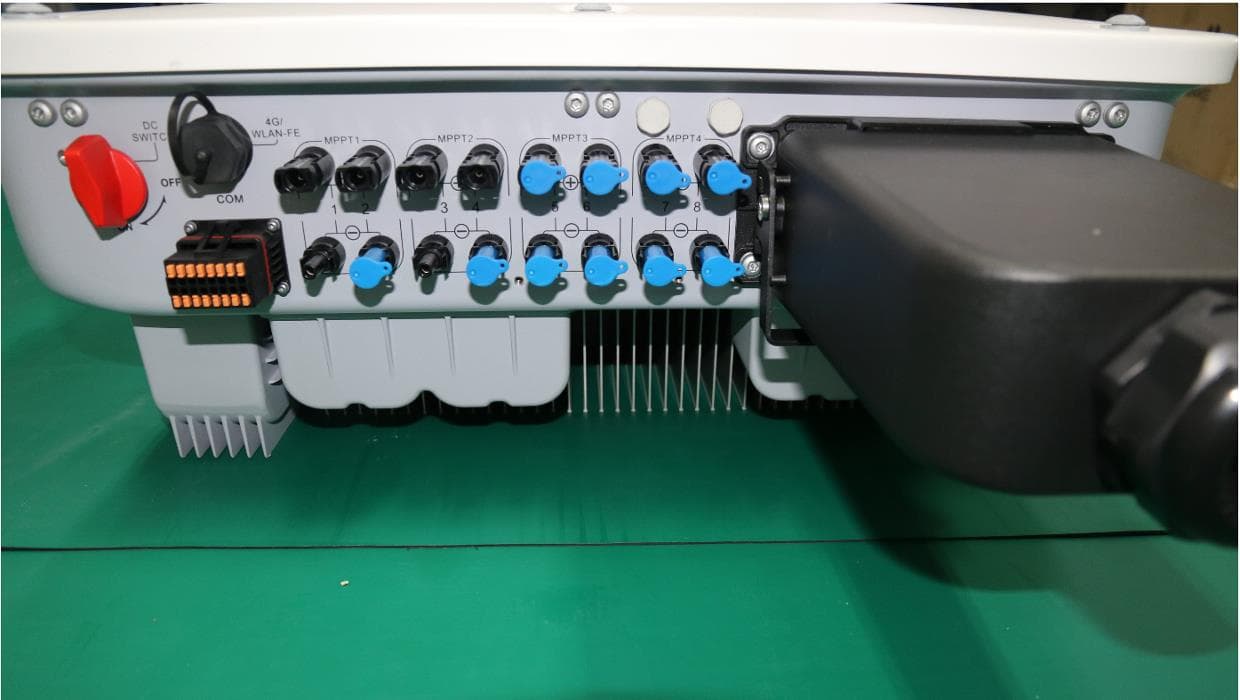
QISSUN2000
Jun 27, 2021Solar Inverter
Equipment Class
DTS - Digital Transmission System
QISCP81-1
Oct 22, 2020Watch Wireless Charger
Equipment Class
DCD - Part 15 Low Power Transmitter Below 1705 kHz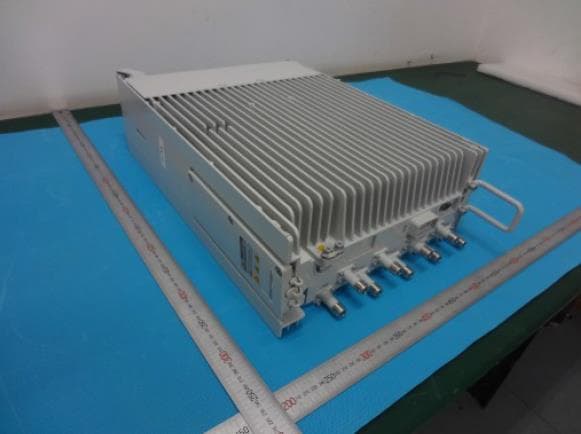
QISRRU3278
Sep 02, 2020Remote Radio Unit
Equipment Class
CBD - Citizens Band Category A and B Devices
QISR2561
Jul 11, 2020Indoor Router
Equipment Class
DTS - Digital Transmission System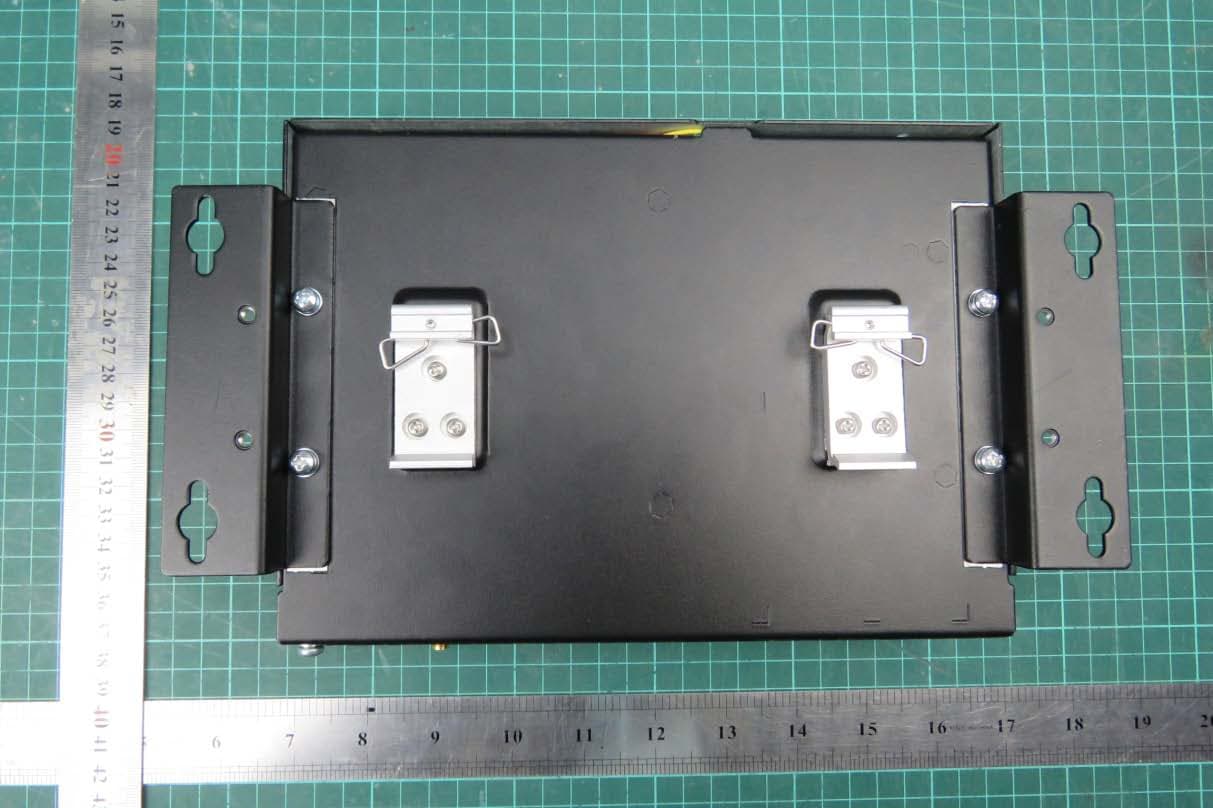
QISSMARTLOGGER310
Mar 23, 2020Solar Smart Monitor & Data Logger
Equipment Class
DTS - Digital Transmission System