QISM2-801LHUAWEI MediaPad M2 8.0
Huawei Technologies Co.,Ltd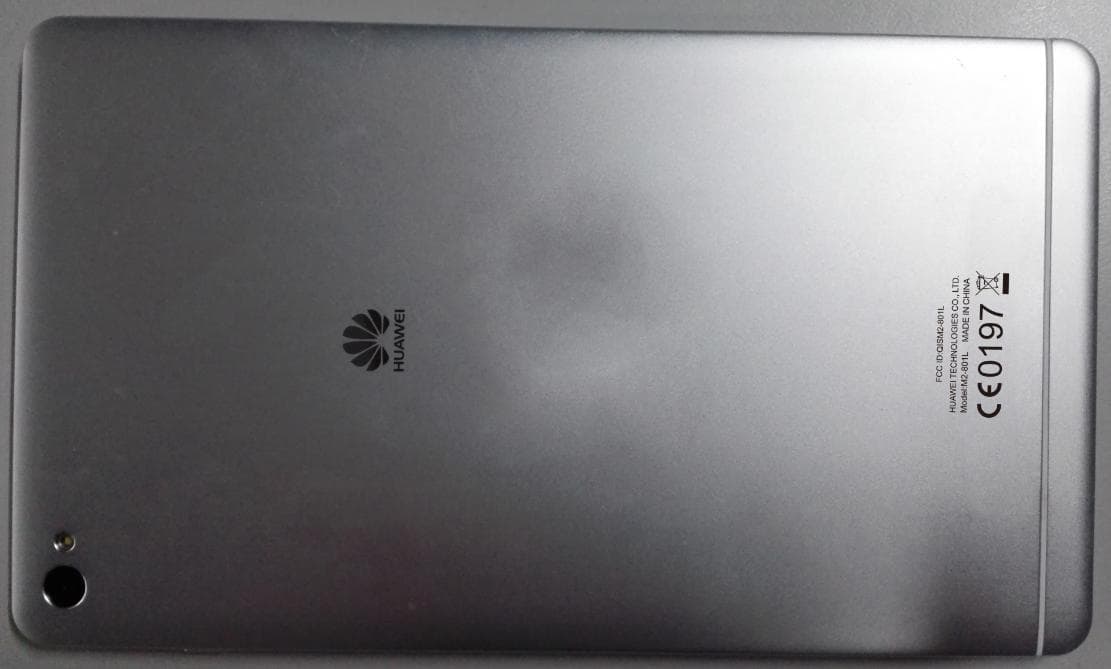
Click to zoom
Application Details
- Equipment Class
- DTS - Digital Transmission System
- Date of Grant
- Dec 22, 2015
- Application Purpose
- Original Equipment
- Date of Application
- Dec 22, 2015
- Equipment Note
- HUAWEI MediaPad M2 8.0
- Frequency Range
- 2402.00000000 - 2480.00000000
- Company
- Huawei Technologies Co.,Ltd
- Country
- China
Documents & Files
Document Text
Text extracted from the exhibit documents filed with the FCC. Open a document above to read the original.
Users Manual
Safety Information 1 1 Safety information This section contains important information about the operation of your device. It also contains information about how to use the device safely. Read this information carefully before using your device. Electronic device Do not use your device if using the device is prohibited. Do not use the device if doing so causes danger or interference with other electronic devices. Interference with medical equipment Follow rules and regulations set forth by hospitals and health care facilities. Do not use your device where prohibited. Some wireless devices may affect the performance of hearing aids or pacemakers. Consult your service provider for more information. Pacemaker manufacturers recommend that a minimum distance of 15 cm be maintained between a device and a pacemaker to prevent potential interference with the pacemaker. If using a pacemaker, hold the device on the side opposite the pacemaker and do not carry the device in your front pocket. Protecting your hearing when using a headset To prevent possible hearing damage, do not listen at high volume levels for long periods. 2 Using a headset at high volumes may damage your hearing. To reduce this risk, lower the headset volume to a safe and comfortable level. Exposure to high volumes while driving may cause distraction and increase your risk of an accident. Areas with flammables and explosives Do not use the device where flammables or explosives are stored (in a gas station, oil depot, or chemical plant, for example). Using your device in these environments increases the risk of explosion or fire. In addition, follow the instructions indicated in text or symbols. Do not store or transport the device in containers with flammable liquids, gases, or explosives. Traffic security Observe local laws and regulations while using the device. To reduce the risk of accidents, do not use your wireless device while driving. Concentrate on driving. Your first responsibility is to drive safely. RF signals may affect the electronic systems of motor vehicles. For more information, consult the vehicle manufacturer. Do not place the device over the air bag or in the air bag deployment area in a motor vehicle. Doing so may hurt you because of the strong force when the air bag inflates. Do not use your device while flying in an aircraft or immediately before boarding. Using wireless devices in an aircraft may disrupt wireless networks, present a hazard to aircraft operation, or be illegal. 3 Operating environment Avoid dusty, damp, or dirty environments. Avoid magnetic fields. Using the device in these environments may result in circuit malfunctions. Do not use your device during thunderstorms to protect your device against any danger caused by lightning. Ideal operating temperatures are 0°C to 35°C. Ideal storage temperatures are -20°C to 45°C. Extreme heat or cold may damage your device or accessories. Do not expose your device to direct sunlight (such as on a car dashboard) for prolonged periods. To protect your device or accessories from fire or electrical shock hazards, avoid rain and moisture. Keep the device away from sources of heat and fire, such as a heater, microwave oven, stove, water heater, radiator, or candle. Do not place sharp metal objects, such as pins, near the earpiece or speaker. The earpiece may attract these objects and result in injury. Stop using your device or applications for a while if the device is overheated. If skin is exposed to an overheated device for an extended period, low temperature burn symptoms, such as red spots and darker pigmentation, may occur. Do not touch the device's antenna. Otherwise, communication quality may be reduced. Do not allow children or pets to bite or suck the device or accessories. Doing so may result in damage or explosion. Observe local laws and regulations, and respect the privacy and legal rights of others. 4 Child's safety Comply with all precautions with regard to child's safety. Letting children play with the device or its accessories may be dangerous. The device includes detachable parts that may present a choking hazard. Keep away from children. The device and its accessories are not intended for use by children. Children should only use the device with adult supervision. Accessories Using an unapproved or incompatible power adapter, charger or battery may cause fire, explosion or other hazards. Choose only accessories approved for use with this model by the device manufacturer. The use of any other types of accessories may void the warranty, may violate local regulations and laws, and may be dangerous. Please contact your retailer for information about the availability of approved accessories in your area. Charger safety For pluggable devices, the socket-outlet shall be installed near the devices and shall be easily accessible. Unplug the charger from electrical outlets and the device when not in use. Do not drop or cause an impact to the charger. If the power cable is damaged (for example, the cord is exposed or broken), or the plug loosens, stop using it at once. Continued use may lead to electric shocks, short circuits, or fire. Do not touch the power cord with wet hands or pull the power cord to disconnect the charger. 5 Do not touch the device or the charger with wet hands. Doing so may lead to short circuits, malfunctions, or electric shocks. If your charger has been exposed to water, other liquids, or excessive moisture, take it to an authorized service center for inspection. Ensure that the charger meets the requirements of Clause 2.5 in IEC60950-1/EN60950-1/UL60950-1 and has been tested and approved according to national or local standards. Connect the device only to products with the USB-IF logo or with USB-IF compliance program completion. Battery safety Do not connect battery poles with conductors, such as keys, jewelry, or other metal materials. Doing so may sh…
Text truncated - open the document above for the full version.
External Photos
SECRET Page1, Total3 Photo documentation of external of product SECRET Page2, Total3 SECRET Page3, Total3
ID Label/Location Info
SECRET Page1, Total 1 Label Location
ID Label/Location Info
M2-801L SECRET Page1, Total 1
Internal Photos
HUAWEI MediaPad M2 8.0 SECRET Page1, Total3 Photo documentation of interior of product HUAWEI MediaPad M2 8.0 SECRET Page2, Total3 HUAWEI MediaPad M2 8.0 SECRET Page3, Total3
RF Exposure Info
Justification of the extended calibration of Dipole D 835V2 SN:4d059 Per KDB 865664, we have Measured the Impedance and Return Loss as below, and the retur n loss is <-20dB, with 20% of prior calibration; t he real or imaginary parts of t he impedance is with 5 ohm of prior calibration. Therefore the verification result should support extended calibration. Dipole 835 Head TST Target Value Measured Value Difference Impedance transformed to feed point 51.7Ω-2.7jΩ 52.2Ω-2.83jΩ R=0.5Ω, X=-0.13Ω Return Loss -30.2dB -31.74dB -5.1% Dipole 835 Body TST Target Value Measured Value Difference Impedance transformed to feed point 47.1Ω-4.7jΩ 48.07Ω-4.87jΩ R=0.97Ω, X=-0.17Ω Return Loss -24.9dB -25.01dB -0.44% Measured Date 2013-05-02 2015-05-01 ----- Impedance Test-Head Return Loss Test-Head
RF Exposure Info
Administration Building, Headquarters of Huawei Technologies Co., Ltd., Bantian, Longgang District, Shenzhen, 518129, P.R.C Tel: +86 755 28780808 Fax: +86 755 89652518 FCC SAR Compliance Test Report Product Name: HUAWEI MediaPad M2 8.0 Model: M2-801L Report No.: SYBH(Z-SAR)015112015-2 FCC ID: QISM2-801L APPROVED (Lab Manager) PREPARED (Test Engineer) BY DATE 2015-12-22 2015-12-22 Reliability Laboratory of Huawei Technologies Co., Ltd. Report No.: SYBH(Z-SAR)015112015-2 FCC ID: QISM2-801L 2015-12-22 Page 2 of 54 ※ ※ Notice ※ ※ 1. The laboratory has passed the accreditation by China National Accreditation Service for Conformity Assessment (CNAS). The accreditation number is L0310. 2. The laboratory has passed the accreditation by The American Association for Laboratory Accreditation (A2LA). The accreditation number is 2174.01. 3. The laboratory (Reliability Lab of Huawei Technologies Co., Ltd) is also named as “Global Compliance and Testing Center of Huawei Technologies Co., Ltd”, the both names have coexisted since 2009. 4. The test report is invalid if not marked with the signatures of the persons responsible for preparing and approving the test report. 5. The test report is invalid if there is any evidence of erasure and/or falsification. 6. The test report is only valid for the test samples. 7. Content of the test report, in part or in full, cannot be used for publicity and/or promotional purposes without prior written approval from the laboratory. Report No.: SYBH(Z-SAR)015112015-2 FCC ID: QISM2-801L 2015-12-22 Page 3 of 54 Table of Contents 1 General Information ............................................................................................................................................... 6 1.1 Statement of Compliance .............................................................................................................................. 6 1.2 RF exposure limits ......................................................................................................................................... 7 1.3 EUT Description ............................................................................................................................................ 8 1.3.1 General Description ............................................................................................................................... 9 1.4 Test specification(s) .................................................................................................................................... 10 1.5 Testing laboratory ........................................................................................................................................ 10 1.6 Applicant and Manufacturer ........................................................................................................................ 10 1.7 Application details ........................................................................................................................................ 10 1.8 Ambient Condition ...................................................................................................................................... 10 2 SAR Measurement System ................................................................................................................................. 11 2.1 SAR Measurement Set-up .......................................................................................................................... 11 2.2 Test environment ......................................................................................................................................... 12 2.3 Data Acquisition Electronics description .................................................................................................... 12 2.4 Probe description ......................................................................................................................................... 13 2.5 Phantom description .................................................................................................................................... 14 2.6 Device holder description ............................................................................................................................ 15 2.7 Test Equipment List ..................................................................................................................................... 16 3 SAR Measurement Procedure ............................................................................................................................ 17 3.1 Scanning procedure .................................................................................................................................... 17 3.2 Spatial Peak SAR Evaluation ...................................................................................................................... 18 3.3 Data Storage and Evaluation ...................................................................................................................... 19 4 System Verification Procedure ............................................................................................................................ 21 4.1 Tissue Verification ....................................................................................................................................... 21 4.2 System Check ............................................................................................................................................. 23 4.3 System check Procedure............................................................................................................................. 24 5 SAR measurement variability and uncertainty .................................................................................................... 25 5.1 SAR measurement variability .............................................................................................................…
Text truncated - open the document above for the full version.
RF Exposure Info
Justification of the extended calibration of Dipole D1900V2 SN:5d143 Per KDB 865664, we have Measured the Impedance and Return Loss as below, and the return loss is <-20dB, with 20% of prior calibration; the real or imaginary parts of the impedance is with 5 ohm of prior calibration. Therefore the verification result should support extended calibration. Dipole 1900 Head TST Target Value Measured Value Difference Impedance transformed to feed point 53.1Ω+6.3jΩ 51.92Ω+6.23jΩ R=-1.18Ω, X=-0.07Ω Return Loss -23.3dB -23.22dB 0.34% Dipole 1900 Body TST Target Value Measured Value Difference Impedance transformed to feed point 48.9Ω+6.2jΩ 48.91Ω+6.12jΩ R=-0.01Ω, X=-0.08Ω Return Loss -24.0dB -24.46dB -1.92% Measured Date 2014-09-23 2015-09-21 ----- Impedance Test-Head Return Loss Test-Head Impedance Test-Body Return Loss Test- Body
RF Exposure Info
此V Report No.: SYBH(Z-SAR)015112015-2 FCC ID: QISM2-801L Appendix A. System Check Plots Table of contents SystemPerformanceCheck-D835-EX-Body SystemPerformanceCheck-D1900-EX-Body SystemPerformanceCheck-D2450-ES-Body SystemPerformanceCheck-D2600-EX-Body Date: 2015/11/20 Test Laboratory: HUAWEI SAR/HAC Lab SystemPerformanceCheck-D835-EX-Body DUT: Dipole 835 MHz D835V2; Type: D835V2; Serial: D835V2 - SN:4d059 Communication System: UID 0, CW; Frequency: 835 MHz;Duty Cycle 1:1 Medium parameters used: f = 835 MHz; σ = 0.999 S/m; ε r = 53.536; ρ = 1000 kg/m 3 Phantom section: Flat Section DASY Configuration: lProbe: EX3DV4 - SN3744; ConvF(8.82, 8.82, 8.82); Calibrated: 2015/7/24; lSensor-Surface: 3mm (Mechanical Surface Detection), z = 1.0, 31.0 lElectronics: DAE4 Sn852; Calibrated: 2015/4/27 lPhantom: ELI v5.0; Type: ELI; Serial: TP:1111 lDASY52 52.8.8(1222); SEMCAD X 14.6.10(7331) Configuration/d=15mm, Pin=250mW/Area Scan (6x13x1): Measurement grid: dx=15mm, dy=15mm Maximum value of SAR (measured) = 2.54 W/kg Configuration/d=15mm, Pin=250mW/Zoom Scan (5x5x7)/Cube 0: Measurement grid: dx=8mm, dy=8mm, dz=5mm Reference Value = 49.853 V/m; Power Drift = 0.03 dB Peak SAR (extrapolated) = 3.39 W/kg SAR(1 g) = 2.31 W/kg; SAR(10 g) = 1.52 W/kg Maximum value of SAR (measured) = 2.69 W/kg 0 dB = 2.69 W/kg = 4.30 dBW/kg Date: 2015/11/20 Test Laboratory: HUAWEI SAR/HAC Lab SystemPerformanceCheck-1900-EX-Body DUT: Dipole 1900 MHz D1900V2; Type: D1900V2; Serial: D1900V2 - SN:5d142 Communication System: UID 0, CW (0); Frequency: 1900 MHz;Duty Cycle 1:1 Medium parameters used: f = 1900 MHz; σ = 1.5 S/m; ε r = 53.571; ρ = 1000 kg/m 3 Phantom section: Flat Section DASY Configuration: lProbe: EX3DV4 - SN3744; ConvF(7.24, 7.24, 7.24); Calibrated: 2015/7/24; lSensor-Surface: 3mm (Mechanical Surface Detection), z = 1.0, 31.0 lElectronics: DAE4 Sn852; Calibrated: 2015/4/27 lPhantom: ELI v5.0; Type: ELI; Serial: TP:1111 lDASY52 52.8.8(1222); SEMCAD X 14.6.10(7331) Configuration/d=10mm, Pin=250mW/Area Scan (6x9x1): Measurement grid: dx=15mm, dy=15mm Maximum value of SAR (measured) = 10.5 W/kg Configuration/d=10mm, Pin=250mW/Zoom Scan (5x5x7)/Cube 0: Measurement grid: dx=8mm, dy=8mm, dz=5mm Reference Value = 86.249 V/m; Power Drift = 0.08 dB Peak SAR (extrapolated) = 17.9 W/kg SAR(1 g) = 10.1 W/kg; SAR(10 g) = 5.37 W/kg Maximum value of SAR (measured) = 12.6 W/kg 0 dB = 12.6 W/kg = 11.00 dBW/kg Date: 2015/11/3 Test Laboratory: HUAWEI SAR/HAC Lab SystemPerformanceCheck-D2450-ES-Body DUT: Dipole 2450 MHz D2450V2; Type: D2450V2; Serial: D2450V2 - SN:869 Communication System: UID 0, CW; Frequency: 2450 MHz;Duty Cycle 1:1 Medium parameters used: f = 2450 MHz; σ = 2.025 S/m; ε r = 50.917; ρ = 1000 kg/m 3 Phantom section: Flat Section DASY Configuration: lProbe: ES3DV3 - SN3168; ConvF(4.35, 4.35, 4.35); Calibrated: 2015/9/28; lSensor-Surface: 3mm (Mechanical Surface Detection), z = 2.0, 32.0 lElectronics: DAE4 Sn852; Calibrated: 2015/4/27 lPhantom: ELI v5.0; Type: ELI; Serial: TP:1111 lDASY52 52.8.8(1222); SEMCAD X 14.6.10(7331) Configuration/d=10mm, Pin=250mW/Area Scan (6x11x1): Measurement grid: dx=12mm, dy=12mm Maximum value of SAR (measured) = 15.6 W/kg Configuration/d=10mm, Pin=250mW/Zoom Scan (7x7x7)/Cube 0: Measurement grid: dx=5mm, dy=5mm, dz=5mm Reference Value = 86.106 V/m; Power Drift = 0.05 dB Peak SAR (extrapolated) = 28.6 W/kg SAR(1 g) = 13.5 W/kg; SAR(10 g) = 6.14 W/kg Maximum value of SAR (measured) = 17.8 W/kg 0 dB = 17.8 W/kg = 12.50 dBW/kg Date: 2015/11/24 Test Laboratory: HUAWEI SAR/HAC Lab SystemPerformanceCheck-D2600-EX DUT: Dipole 2600 MHz D2600V2; Type: D2600V2; Serial: D2600V2 - SN:1021 Communication System: UID 0, CW; Frequency: 2600 MHz;Duty Cycle 1:1 Medium parameters used: f = 2600 MHz; σ = 2.186 S/m; ε r = 51; ρ = 1000 kg/m 3 Phantom section: Flat Section DASY Configuration: lProbe: EX3DV4 - SN3744; ConvF(6.65, 6.65, 6.65); Calibrated: 2015/7/24; lSensor-Surface: 3mm (Mechanical Surface Detection), z = 1.0, 31.0 lElectronics: DAE4 Sn852; Calibrated: 2015/4/27 lPhantom: ELI v5.0; Type: ELI; Serial: TP:1111 lDASY52 52.8.8(1222); SEMCAD X 14.6.10(7331) Configuration/d=10mm, Pin=250mW/Area Scan (8x11x1): Measurement grid: dx=12mm, dy=12mm Maximum value of SAR (measured) = 16.4 W/kg Configuration/d=10mm, Pin=250mW/Zoom Scan (7x7x7)/Cube 0: Measurement grid: dx=5mm, dy=5mm, dz=5mm Reference Value = 83.620 V/m; Power Drift = 0.12 dB Peak SAR (extrapolated) = 29.5 W/kg SAR(1 g) = 14.2 W/kg; SAR(10 g) = 6.35 W/kg Maximum value of SAR (measured) = 18.8 W/kg 0 dB = 18.8 W/kg = 12.74 dBW/kg
RF Exposure Info
此V Report No.: SYBH(Z-SAR)015112015-2 FCC ID: QISM2-801L Appendix B. SAR Measurement Plots Table of contents GSM850 Body GSM1900 Body WiFi 2.4G Head LTE Band VII Body Date: 2015/11/20 Test Laboratory: HUAWEI SAR/HAC Lab M2-801L GSM850 GSM 190CH Back Side with Headset 0mm DUT: HUAWEI MediaPad M2 8.0; Type: M2-801L; Serial: SAR2 Communication System: UID 0, HW-GSM\GPRS\EGPRS-1TS (0); Frequency: 848.8 MHz;Duty Cycle 1:1 Medium parameters used: f = 849 MHz; σ = 1.015 S/m; ε r = 53.366; ρ = 1000 kg/m 3 Phantom section: Flat Section DASY Configuration: lProbe: EX3DV4 - SN3744; ConvF(8.82, 8.82, 8.82); Calibrated: 2015/7/24; lSensor-Surface: 3mm (Mechanical Surface Detection), z = 1.0, 31.0 lElectronics: DAE4 Sn852; Calibrated: 2015/4/27 lPhantom: ELI v5.0; Type: ELI; Serial: TP:1111 lDASY52 52.8.8(1222); SEMCAD X 14.6.10(7331) Configuration/Body/Area Scan (11x9x1): Measurement grid: dx=15mm, dy=15mm Maximum value of SAR (measured) = 1.46 W/kg Configuration/Body/Zoom Scan (5x5x7)/Cube 0: Measurement grid: dx=8mm, dy=8mm, dz=5mm Reference Value = 0.921 V/m; Power Drift = -0.09 dB Peak SAR (extrapolated) = 2.85 W/kg SAR(1 g) = 1.17 W/kg; SAR(10 g) = 0.550 W/kg Maximum value of SAR (measured) = 1.61 W/kg 0 dB = 1.61 W/kg = 2.07 dBW/kg Date: 2015/11/20 Test Laboratory: HUAWEI SAR/HAC Lab M2-801L GSM1900 810CH Back Side with Headset-Repeated 0mm DUT: HUAWEI MediaPad M2 8.0; Type: M2-801L; Serial: SAR2 Communication System: UID 0, HW-GSM\GPRS\EGPRS-1TS (0); Frequency: 1909.8 MHz;Duty Cycle 1:1 Medium parameters used: f = 1910 MHz; σ = 1.512 S/m; ε r = 53.54; ρ = 1000 kg/m 3 Phantom section: Flat Section DASY Configuration: lProbe: EX3DV4 - SN3744; ConvF(7.24, 7.24, 7.24); Calibrated: 2015/7/24; lSensor-Surface: 3mm (Mechanical Surface Detection), z = 1.0, 31.0 lElectronics: DAE4 Sn852; Calibrated: 2015/4/27 lPhantom: ELI v5.0; Type: ELI; Serial: TP:1111 lDASY52 52.8.8(1222); SEMCAD X 14.6.10(7331) Configuration/Body/Area Scan (11x9x1): Measurement grid: dx=15mm, dy=15mm Maximum value of SAR (measured) = 1.08 W/kg Configuration/Body/Zoom Scan (5x5x7)/Cube 0: Measurement grid: dx=8mm, dy=8mm, dz=5mm Reference Value = 0 V/m; Power Drift = 0.00 dB Peak SAR (extrapolated) = 2.15 W/kg SAR(1 g) = 1.09 W/kg; SAR(10 g) = 0.554 W/kg Maximum value of SAR (measured) = 1.28 W/kg 0 dB = 1.28 W/kg = 1.07 dBW/kg Date: 2015/11/21 Test Laboratory: HUAWEI SAR/HAC Lab M2-801L UMTS Band II 9262CH Back Side 0mm DUT: HUAWEI MediaPad M2 8.0; Type: M2-801L; Serial: SAR2 Communication System: UID 0, HW-UMTS-FDD(WCDMA) (0); Frequency: 1852.4 MHz;Duty Cycle 1:1 Medium parameters used (interpolated): f = 1852.4 MHz; σ = 1.454 S/m; ε r = 53.722; ρ = 1000 kg/m 3 Phantom section: Flat Section DASY Configuration: lProbe: EX3DV4 - SN3744; ConvF(7.24, 7.24, 7.24); Calibrated: 2015/7/24; lSensor-Surface: 3mm (Mechanical Surface Detection), z = 1.0, 31.0 lElectronics: DAE4 Sn852; Calibrated: 2015/4/27 lPhantom: ELI v5.0; Type: ELI; Serial: TP:1111 lDASY52 52.8.8(1222); SEMCAD X 14.6.10(7331) Configuration/Body/Area Scan (13x9x1): Measurement grid: dx=15mm, dy=15mm Info: Interpolated medium parameters used for SAR evaluation. Maximum value of SAR (measured) = 1.02 W/kg Configuration/Body/Zoom Scan (5x5x7)/Cube 0: Measurement grid: dx=8mm, dy=8mm, dz=5mm Reference Value = 0.700 V/m; Power Drift = 0.14 dB Peak SAR (extrapolated) = 2.34 W/kg SAR(1 g) = 1.11 W/kg; SAR(10 g) = 0.551 W/kg Info: Interpolated medium parameters used for SAR evaluation. Maximum value of SAR (measured) = 1.39 W/kg 0 dB = 1.39 W/kg = 1.43 dBW/kg Date: 2015/11/20 Test Laboratory: HUAWEI SAR/HAC Lab M2-801L UMTS Band V 4233CH Back Side 0mm-Repeated DUT: HUAWEI MediaPad M2 8.0; Type: M2-801L; Serial: SAR2 Communication System: UID 0, HW-UMTS-FDD(WCDMA) (0); Frequency: 846.6 MHz;Duty Cycle 1:1 Medium parameters used: f = 847 MHz; σ = 1.013 S/m; ε r = 53.386; ρ = 1000 kg/m 3 Phantom section: Flat Section DASY Configuration: lProbe: EX3DV4 - SN3744; ConvF(8.82, 8.82, 8.82); Calibrated: 2015/7/24; lSensor-Surface: 3mm (Mechanical Surface Detection), z = 1.0, 31.0 lElectronics: DAE4 Sn852; Calibrated: 2015/4/27 lPhantom: ELI v5.0; Type: ELI; Serial: TP:1111 lDASY52 52.8.8(1222); SEMCAD X 14.6.10(7331) Configuration/Body/Area Scan (11x9x1): Measurement grid: dx=15mm, dy=15mm Maximum value of SAR (measured) = 1.22 W/kg Configuration/Body/Zoom Scan (5x5x7)/Cube 0: Measurement grid: dx=8mm, dy=8mm, dz=5mm Reference Value = 1.443 V/m; Power Drift = 0.19 dB Peak SAR (extrapolated) = 2.89 W/kg SAR(1 g) = 1.15 W/kg; SAR(10 g) = 0.542 W/kg Maximum value of SAR (measured) = 1.61 W/kg 0 dB = 1.61 W/kg = 2.07 dBW/kg Date: 2015/11/24 Test Laboratory: HUAWEI SAR/HAC Lab M2-801L LTE Band VII 20M QPSK 1RB#0 21350CH Right Side 0mm with Battery 2# DUT: HUAWEI MediaPad M2 8.0; Type: M2-801L; Serial: SAR2 Communication System: UID 0, LTE-FDD (SC-FDMA, 20MHz, QPSK/16-QAM) (0); Frequency: 2560 MHz;Duty Cycle 1:1 Medium parameters used: f = 2560 MHz; σ = 2.131 S/m; ε r = 51.163; ρ = 1000 kg/m 3 Phantom section: Flat Section DASY Configuration: lProbe: EX3DV4 - SN3744; ConvF(6.65, 6.65, 6.65); Calibrated: 2015/7/24; lSensor-Surface: 3mm (Mechanical Surface Detection), z = 1.0, 31.0 lElectronics: DAE4 Sn852; Calibrated: 2015/4/27 lPhantom: ELI v5.0; Type: ELI; Serial: TP:1111 lDASY52 52.8.8(1222); SEMCAD X 14.6.10(7331) Configuration/Body/Area Scan (6x11x1): Measurement grid: dx=12mm, dy=12mm Maximum value of SAR (measured) = 0.573 W/kg Configuration/Body/Zoom Scan (7x7x7)/Cube 0: Measurement grid: dx=5mm, dy=5mm, dz=5mm Reference Value = 5.080 V/m; Power Drift = 0.07 dB Peak SAR (extrapolated) = 1.56 W/kg SAR(1 g) = 0.613 W/kg; SAR(10 g) = 0.255 W/kg Maximum value of SAR (measured) = 0.880 W/kg 0 dB = 0.880 W/kg = -0.56 dBW/kg Date: 2015/12/4 Test Laboratory: HUAWEI SAR/HAC Lab M2-801L WIFI 2.4G 11g 11CH Top Side 0mm DUT: HUAWEI MediaPad M2 8.0; Type: M2-801L; Serial: SAR2 Communication System: UID 0, WiFi(802.11a/b/g/n/ac) (0); Frequency: 2462 MHz;Duty Cycle 1:1 Medium parameters used: f = 2462 M…
Text truncated - open the document above for the full version.
Test Report
RF Test Report of M2-801L Report No: SYBH(Z-RF)011112015-2004 Huawei Proprietary and Confidential Copyright © Huawei Technologies Co., Ltd. Page 1 of 51 Appendix for Testreport RF Test Report of M2-801L Report No: SYBH(Z-RF)011112015-2004 Huawei Proprietary and Confidential Copyright © Huawei Technologies Co., Ltd. Page 2 of 51 Appendix A: DTS (6 dB) Bandwidth In this document, the "DTS6dBBW" refers to the measured "DTS (6 dB) Bandwidth" value. In this Appendix, the "fc(DTS6dBBW)" refers to the centre of the measured "DTS6dBBW". The introduction of the "fc(DTS6dBBW)" is due to that other measurements use it as the spectrum analyzer setting. For measurements on smart antenna systems (devices with multiple transmit chains), the test is performed at each chain, and used as respective results for each chain. Part I - Test Results Test Mode Test Channel Frequency[MHz] Ant DTS6dBBW[MHz] Verdict TM1_Ch0 L 2402 Ant 1 0.52 pass TM1_Ch19 M 2440 Ant 1 0.75 pass TM1_Ch39 H 2480 Ant 1 0.51 pass RF Test Report of M2-801L Report No: SYBH(Z-RF)011112015-2004 Huawei Proprietary and Confidential Copyright © Huawei Technologies Co., Ltd. Page 3 of 51 Part II - Test Plots 2.1 TM1_Ch0 RF Test Report of M2-801L Report No: SYBH(Z-RF)011112015-2004 Huawei Proprietary and Confidential Copyright © Huawei Technologies Co., Ltd. Page 4 of 51 2.3 TM1_Ch19 RF Test Report of M2-801L Report No: SYBH(Z-RF)011112015-2004 Huawei Proprietary and Confidential Copyright © Huawei Technologies Co., Ltd. Page 5 of 51 2.5 TM1_Ch39 RF Test Report of M2-801L Report No: SYBH(Z-RF)011112015-2004 Huawei Proprietary and Confidential Copyright © Huawei Technologies Co., Ltd. Page 6 of 51 Appendix B: Occupied Bandwidth For measurements on smart antenna systems (devices with multiple transmit chains), the test is performed at each chain, and used as respective results for each chain. Part I - Test Results Test Mode Test Channel Frequency[MHz] Ant Occupied Bandwidth [MHz] Verdict TM1_Ch0 L 2402 Ant 1 1.05 pass TM1_Ch19 M 2440 Ant 1 1.03 pass TM1_Ch39 H 2480 Ant 1 1.05 pass RF Test Report of M2-801L Report No: SYBH(Z-RF)011112015-2004 Huawei Proprietary and Confidential Copyright © Huawei Technologies Co., Ltd. Page 7 of 51 Part II - Test Plots 2.1 TM1_Ch0 RF Test Report of M2-801L Report No: SYBH(Z-RF)011112015-2004 Huawei Proprietary and Confidential Copyright © Huawei Technologies Co., Ltd. Page 8 of 51 2.1 TM1_Ch19 RF Test Report of M2-801L Report No: SYBH(Z-RF)011112015-2004 Huawei Proprietary and Confidential Copyright © Huawei Technologies Co., Ltd. Page 9 of 51 2.1 TM1_Ch39 RF Test Report of M2-801L Report No: SYBH(Z-RF)011112015-2004 Huawei Proprietary and Confidential Copyright © Huawei Technologies Co., Ltd. Page 10 of 51 Appendix C: Duty cycle Part I - Test Results Test Mode TX Freq. [MHz] Ant Duty cycle [%] TM1_Ch19 CH0,CH19,CH39 Ant 1 15 RF Test Report of M2-801L Report No: SYBH(Z-RF)011112015-2004 Huawei Proprietary and Confidential Copyright © Huawei Technologies Co., Ltd. Page 11 of 51 Part II - Test Plots 2.1 TM1_Ch19 RF Test Report of M2-801L Report No: SYBH(Z-RF)011112015-2004 Huawei Proprietary and Confidential Copyright © Huawei Technologies Co., Ltd. Page 12 of 51 Appendix D: Maximum Conducted Average Output Power Part I - Test Results Test Mode Test Channel Frequency[MHz] Ant Power[dBm] Verdict TM1_Ch0 L 2402 Ant 1 5.56 pass TM1_Ch19 M 2440 Ant 1 5.74 pass TM1_Ch39 H 2480 Ant 1 4.77 pass RF Test Report of M2-801L Report No: SYBH(Z-RF)011112015-2004 Huawei Proprietary and Confidential Copyright © Huawei Technologies Co., Ltd. Page 13 of 51 Part II - Test Plots 2.1 TM1_Ch0 RF Test Report of M2-801L Report No: SYBH(Z-RF)011112015-2004 Huawei Proprietary and Confidential Copyright © Huawei Technologies Co., Ltd. Page 14 of 51 2.3 TM1_Ch19 RF Test Report of M2-801L Report No: SYBH(Z-RF)011112015-2004 Huawei Proprietary and Confidential Copyright © Huawei Technologies Co., Ltd. Page 15 of 51 2.5 TM1_Ch39 RF Test Report of M2-801L Report No: SYBH(Z-RF)011112015-2004 Huawei Proprietary and Confidential Copyright © Huawei Technologies Co., Ltd. Page 16 of 51 Appendix E: Maximum Power Spectral Density Level Part I - Test Results Test Mode Test Channel Frequency[MHz] Ant PD[MHz] Verdict TM1_Ch0 L 2402 Ant 1 -5.61 pass TM1_Ch19 M 2440 Ant 1 -5.49 pass TM1_Ch39 H 2480 Ant 1 -6.67 pass RF Test Report of M2-801L Report No: SYBH(Z-RF)011112015-2004 Huawei Proprietary and Confidential Copyright © Huawei Technologies Co., Ltd. Page 17 of 51 Part II - Test Plots 2.1 TM1_Ch0 RF Test Report of M2-801L Report No: SYBH(Z-RF)011112015-2004 Huawei Proprietary and Confidential Copyright © Huawei Technologies Co., Ltd. Page 18 of 51 2.3 TM1_Ch19 RF Test Report of M2-801L Report No: SYBH(Z-RF)011112015-2004 Huawei Proprietary and Confidential Copyright © Huawei Technologies Co., Ltd. Page 19 of 51 2.5 TM1_Ch39 RF Test Report of M2-801L Report No: SYBH(Z-RF)011112015-2004 Huawei Proprietary and Confidential Copyright © Huawei Technologies Co., Ltd. Page 20 of 51 Appendix F: Band Edges Compliance Part I - Test Results Test Mode Test Channel Frequency[MHz] Ant Carrier Power[dBm] Max.Spurious Level[dBm] Verdict TM1_Ch0 L 2402 Ant 1 5.56 -52.80 pass TM1_Ch39 H 2480 Ant 1 4.83 -52.98 pass RF Test Report of M2-801L Report No: SYBH(Z-RF)011112015-2004 Huawei Proprietary and Confidential Copyright © Huawei Technologies Co., Ltd. Page 21 of 51 Part II - Test Plots 2.1 TM1_Ch0 RF Test Report of M2-801L Report No: SYBH(Z-RF)011112015-2004 Hua…
Text truncated - open the document above for the full version.
Contact Information
Applicant
Zhang Xinghai
Test Firm
Huawei Technologies Co., LTDZhou Fengyum
Technical Specifications
| # | Rule Parts | Frequency Range | Power Output |
|---|---|---|---|
| 2 | 15C | 2.40 GHz - 2.48 GHz | 3.80 mW |
Other Applications from Huawei Technologies Co.,Ltd
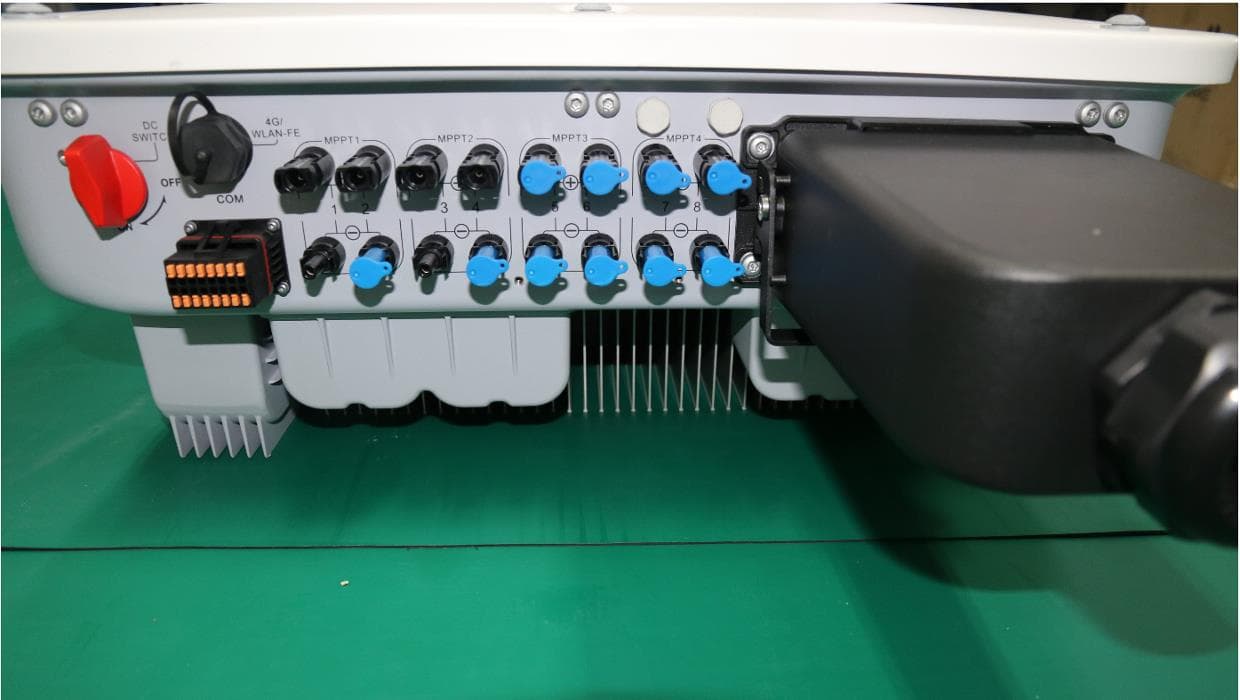
QISSUN2000
Jun 27, 2021Solar Inverter
Equipment Class
DTS - Digital Transmission System
QISCP81-1
Oct 22, 2020Watch Wireless Charger
Equipment Class
DCD - Part 15 Low Power Transmitter Below 1705 kHz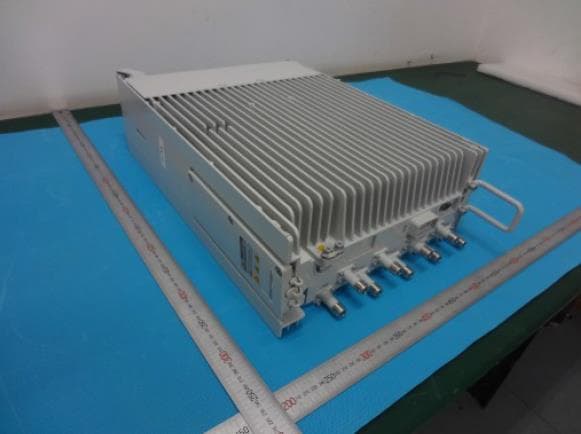
QISRRU3278
Sep 02, 2020Remote Radio Unit
Equipment Class
CBD - Citizens Band Category A and B Devices
QISR2561
Jul 11, 2020Indoor Router
Equipment Class
DTS - Digital Transmission System
QISSMARTLOGGER310
Mar 23, 2020Solar Smart Monitor & Data Logger
Equipment Class
DTS - Digital Transmission System