QISMU709S-6HSPA+ Module
Huawei Technologies Co.,Ltd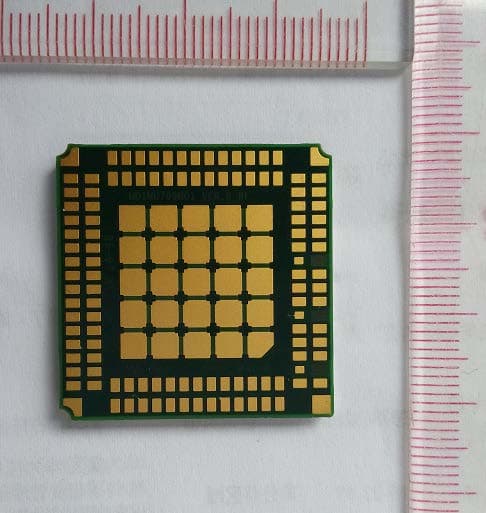
Click to zoom
Application Details
- Equipment Class
- PCB - PCS Licensed Transmitter
- Date of Grant
- Jan 14, 2015
- Application Purpose
- Original Equipment
- Date of Application
- Jan 14, 2015
- Equipment Note
- HSPA+ Module
- Frequency Range
- 1852.40000000 - 1907.60000000
- Company
- Huawei Technologies Co.,Ltd
- Country
- China
Documents & Files
Document Text
Text extracted from the exhibit documents filed with the FCC. Open a document above to read the original.
Users Manual
Copyright © Huawei Technologies Co., Ltd. 2012. All rights reserved. No part of this document may be reproduced or transmitted in any form or by any means without prior written consent of Huawei Technologies Co., Ltd. The product described in this manual may include copyrighted software of Huawei Technologies Co., Ltd and possible licensors. Customers shall not in any manner reproduce, distribute, modify, decompile, disassemble, decrypt, extract, reverse engineer, lease, assign, or sublicense the said software, unless such restrictions are prohibited by applicable laws or such actions are approved by respective copyright holders under licenses. Trademarks and Permissions , , and are trademarks or registered trademarks of Huawei Technologies Co., Ltd. Other trademarks, product, service and company names mentioned are the property of their respective owners. Notice Some features of the product and its accessories described herein rely on the software installed, capacities and settings of local network, and may not be activated or may be limited by local network operators or network service providers, thus the descriptions herein may not exactly match the product or its accessories you purchase. Huawei Technologies Co., Ltd reserves the right to change or modify any information or specifications contained in this manual without prior notice or obligation. NO WARRANTY THE CONTENTS OF THIS MANUAL ARE PROVIDED “AS IS”. EXCEPT AS REQUIRED BY APPLICABLE LAWS, NO WARRANTIES OF ANY KIND, EITHER EXPRESS OR IMPLIED, INCLUDING BUT NOT LIMITED TO, THE IMPLIED WARRANTIES OF MERCHANTABILITY AND FITNESS FOR A PARTICULAR PURPOSE, ARE MADE IN RELATION TO THE ACCURACY, RELIABILITY OR CONTENTS OF THIS MANUAL. TO THE MAXIMUM EXTENT PERMITTED BY APPLICABLE LAW, IN NO CASE SHALL HUAWEI TECHNOLOGIES CO., LTD BE LIABLE FOR ANY SPECIAL, INCIDENTAL, INDIRECT, OR CONSEQUENTIAL DAMAGES, OR LOST PROFITS, BUSINESS, REVENUE, DATA, GOODWILL OR ANTICIPATED SAVINGS. Import and Export Regulations Customers shall comply with all applicable export or import laws and regulations and will obtain all necessary governmental permits and licenses in order to export, re-export or import the product mentioned in this manual including the software and technical data therein. i Contents Getting to Know the MU709 ............................................................................................................ 1 PCB Design ........................................................................................................................................ 2 Assembly ........................................................................................................................................... 3 1 Thank you for purchasing HUAWEI MU709s-6 HSPA+ LGA Module (hereinafter referred to as the MU709) Note: This manual briefly describes the preparation, the process for PCB Design, Assembly and safety precautions. You are recommended to read the manual before using the MU709. Getting to Know the MU709 The package of the LGA module is 145 pin LGA with a dimension of 30 mm × 30 mm × 2.27 mm. It is applied to the user interface board, and can be used as a wireless terminal in a network environment. 2 PCB Design PCB Pad Design To achieve assembly yields and solder joints of high reliability, it is recommended that the PCB pad size be designed as follows: the sizes of the solder pads on customers' PCBs are the same as those of the module's solder pads for the high production efficiency and high reliability of solder joints. For details, see the following figure: 3 Requirements on PCB Layout To reduce deformation, a thickness of at least 1.0 mm is recommended. Other devices must be located more than 3 mm (5 mm recommended) away from the LGA module. The minimum distance between the LGA module and the PCB edge is 0.5 mm. When the PCB layout is double sided, it is recommended that the LGA module be placed on the second side for assembly; so as to avoid module dropped from PCB or component (located in module) re-melding defects caused by uneven weight. Design of Solder Mask The PCB pad design can be solder mask defined (SMD), or non-solder mask defined (NSMD).NSMD is recommended. In addition, the solder mask of the NSMD pad design is larger than the pad so the reliability of the solder joint can be improved. The solder mask must be 100 μm to150 μm larger than the pad, that is, the single side of the solder mask must be 50 μm to 75 μm larger than the pad. The specific size depends on the processing capability of the PCB manufacturer. Assembly Stencil Design It is recommended that the stencil for the LGA module be 0.15 mm in thickness. For the stencil design, see the following figure: 4 0.6 5 Reflow Profile For the soldering temperature of the LGA module, see the following figure. Reflow profile Reflow parameters Temperature Zone Time Key Parameter Preheat zone (40°C–150°C) 60s–120s Heating rate: 0.5°C/s–2°C/s Soak zone (150°C–200°C) (t1–t2): 60s–120s Heating rate: < 1.0°C/s 6 Reflow zone (> 217°C) (t3–t4): 30s –9 0s Peak reflow temperature: 230°C–250°C Cooling zone Cooling rate: 1°C/s ≤ Slope ≤ 4°C/s
Users Manual
1 Safety Information Warnings and Precautions This section contains important information pertaining to the operating instructions of your device. It also contains information about how to use your device safely. Read this information carefully before using the device. Electronic Device Do not use your device if using the device is prohibited. Do not use the device when using the device causes danger or interference with electronic devices. Medical Device Follow rules and regulations set forth by hospitals and health care facilities. Do not use your device when using the device is prohibited. Some wireless devices may affect the performance of hearing aids or pacemakers. For any such problems, consult your service provider. If you are using an electronic medical device, consult the doctor or the device manufacturer to confirm whether radio waves affect the operation of this device. Potentially Explosive Atmosphere Do not use your device in any area with a potentially explosive atmosphere, and comply with all signs and instructions. Areas that may have potentially explosive atmospheres include the areas where you would normally be advised to turn off your vehicle engine. Triggering of sparks in such areas could cause an explosion or a fire, resulting in bodily injuries or even deaths. Do not use your device at refueling points such as service stations. Comply with restrictions on the use of radio equipment in fuel depots, storage, and distribution areas, and chemical plants. In addition, adhere to restrictions in areas where blasting operations are in progress. Before using the device, watch out for areas that have potentially explosive atmospheres that are often, but not always, clearly marked. Such locations include areas below the deck on boats, chemical transfer or storage facilities, and areas where the air 2 contains chemicals or particles such as grain, dust, or metal powders. Ask the manufacturers of vehicles using liquefied petroleum gas (such as propane or butane) whether this device can be safely used in their vicinity. Traffic Security Observe local laws and regulations while using the device. To prevent accidents, do not use your wireless device while driving. RF signals may affect electronic systems of motor vehicles. For more information, consult the vehicle manufacturer. In a motor vehicle, do not place the device over the air bag or in the air bag deployment area. Otherwise, the device may hurt you owing to the strong force when the air bag inflates. Do not use your device while flying in an aircraft and before boarding an aircraft. Using wireless devices in an aircraft may cause danger to the operation of the aircraft and disrupt the wireless telephone network. It may also be considered illegal. Operating Environment Do not use the device in dusty, damp, and dirty places or places with magnetic fields. Otherwise, it may result in malfunction of the circuit. On a stormy day with thunder, do not use your device when it is being charged, to prevent any danger caused by lightning. While using the device, observe the local laws and regulations, and respect others' privacy and legal rights. The device should be installed and operated with a minimum distance of 20 cm between the radiator and your body. Safety of Children Comply with all precautions with regard to children's safety. Letting the child play with your device or its accessories, which may include parts that can be detached from the device, may be dangerous, as it may present a choking hazard. Ensure that small children are kept away from the device and accessories. Accessories Use the accessories delivered only by the manufacturer. Using accessories of other 3 manufacturers or vendors with this device model may invalidate any approval or warranty applicable to the device, result in the non-operation of the device, and cause danger. Cleaning and Maintenance It is normal that your wireless device gets hot when you use or charge it. Before you clean or maintain the wireless device, stop all applications and disconnect the wireless device from your PC. Use your wireless device and accessories with care and in a clean environment. Keep the wireless device away from a fire or a lit cigarette. Protect your wireless device and accessories from water and vapor, and keep them dry. Do not drop, throw, or bend your wireless device. Clean your wireless device with a piece of damp and soft antistatic cloth. Do not use any chemical detergent, powder, or other chemical agents (such as alcohol and benzene) to clean the device. Keep the ambient temperature between -20°C to +70°C for using the device. FCC Radiation Exposure Statement: This equipment complies with FCC radiation exposure limits set forth for an uncontrolled environment. End users must follow the specific operating instructions for satisfying RF exposure compliance. Note 1: This module has been certified to comply with RF exposure requirements under mobile or fixed condition, this module is to be installed only in mobile or fixed applications. The system antenna(s) used for this module must not exceed 2.5dBi. The transmitter module may not be co-located with any other transmitter or antenna. The FCC ID label on the final system must be labeled with “Contains FCC ID:QISMU709S-6”. As long as the above conditions are met, further transmitter test will not be required. However, the OEM integrator is still responsible for testing their end-product for any additional compliance requirements required with this module installed. To ensure compliance with all non-transmitter functions the host manufacturer is responsible for ensuring compliance with the module(s) installed and fully operational. For example, if a host was previously authorized as an unintentional radiator under the Declaration of Conformity procedure without a transmitter certified module and a module is added, the host manufacturer is responsible for ensuring that the after …
Text truncated - open the document above for the full version.
Cover Letter(s)
Huawei Technologies Co.,Ltd. Federal Communications Commission 2014/12/31 7435 Oakland Mills Road Columbia MD 21046 Subject: Request for Confidentiality FCC ID: QISMU709S-6 To Whom It May Concern: Pursuant to the provisions of Sections 0.457 and 0.459 of the Commission’s rules (47 CFR §§ 0.457, 0.459), we are requesting the Commission to withhold the following attachments as confidential document from public disclosure indefinitely. Schematic Diagram Block Diagram Operational Description Bom List Tune-Up Procedure Above mentioned document contains detailed system and equipment description are considered as proprietary information in operation of the equipment. The public disclosure of above documents might be harmful to our company and would give competitor an unfair advantage in the market. ***************************************************************************** In additional to above mentioned documents, pursuant to Public Notice DA 04-1705 of the Commission’s policy, in order to comply with the marketing regulations in 47 CFR §2.803 and the importation rules in 47 CFR §2.1204, while ensuring that business sensitive information remains confidential until the actual marketing of newly authorized devices. We are requesting the Commission withholds the following documents from public viewing until 2015-4- 01: External Photos Internal Photos Test Setup Photos User Manual ****************************************************************************** It is our understanding that all measurement test reports, FCC ID label format and correspondent during certification review process cannot be granted as confidential documents and those information will be available for public review once the grant of equipment authorization is issued. Best Regards Zhang Xinghai EMC Laboratory Manager Huawei Technologies Co., Ltd. Address: Administration Building, Headquarters of Huawei Technologies Co., Ltd., Bantian, Longgang District, Shenzhen, 518129, P.R.C E-mail: [email protected] Tel: 0086-0755-28970299 Fax: 0086-0755-89650226
Cover Letter(s)
Huawei Technologies Co., Ltd IC/FCC Modular Approval Statement 1 Receiver Federal Communication Commission Equipment Authorization Devision, Application Processing Branch 7435 Oakland Mills Road Columbia, MD 21048 Certification and Engineering Bureau Industry Canada Spectrum Engineering Branch 3701 Carling Avenue, Building 94 Ottawa, Ontario K2H 8S2 Subject: Singal Modular Approval Statement Date: 2015-1-12 IC Certification Number: FCC Certification Number: QISMU709S-6 Model Name/Number: MU709s-6 TO WHOM IT MAY CONCERN Pursuant to Paragraphs RSS-GEN Issue 3 December 2010 Item 3.2.2 and CFR § 15.212, we herewith declare for our module. Modular approval requirement Yes No * (a) The radio elements must have the radio frequency circuitry be shielded. Physical/discrete and tuning capacitors may be located external to the shield, but must be on the module assembly. YES *Please provide a detailed explanation if the answer is “No.”: (b) The module shall have buffered modulation/data input(s) (if such inputs are provided) to ensure that the module will comply with the requirements set out in the applicable RSS standard under conditions of excessive data rates or over-modulation. YES *Please provide a detailed explanation if the answer is “No.”: (c) The module shall have its own power supply regulation on the module. This is to ensure that the module will comply with the requirements set out in the applicable standard regardless of the design of the power supplying circuitry in the host device which houses the module. YES *Please provide a detailed explanation if the answer is “No.”: Huawei Technologies Co., Ltd IC/FCC Modular Approval Statement 2 (d) The module shall comply with the provisions for external power amplifiers and antennas detailed in this standard. The equipment certification submission shall contain a detailed description of the configuration of all antennas that will be used with the module. YES *Please provide a detailed explanation if the answer is “No.”: (e) The module shall be tested for compliance with the applicable standard in a stand-alone configuration, i.e. the module must not be inside another device during testing. YES *Please provide a detailed explanation if the answer is “No.”: (f) The module shall comply with the Category I equipment labeling requirements and CFR § 15.212(a)(1)(vi). YES *Please provide a detailed explanation if the answer is “No.”: (g) The module shall comply with applicable RSS-102 exposure requirements and any applicable FCC RF exposure requirement which are based on the intended use/configurations. YES *Please provide a detailed explanation if the answer is “No.”: Only applicable for IC certification: (h) Is the modular device for an Industry Canada licensed exempt service? NA NA *Please provide a detailed explanation if the answer is “No.”: Only applicable for FCC certification: (i) The modular transmitter complies with all applicable FCC rules. Instructions for maintaining compliance are given in the user instructions. YES If you have any questions, please feel free to contact us at the address shown below Best Regards, __________________ Zhang Xinghai EMC Laboratory Manager For and Behalf of: Huawei Technologies Co., Ltd. Phone:0086-755-28970299 Fax: 0086-755-889650226 Email: [email protected]
External Photos
MU709S-6 SECRET Page1, Total2 External Photos of MU709s-6 MU709S-6 SECRET Page2, Total2
ID Label/Location Info
MU709S-6 SECRET Page1, Total1 ID Label Location_MU709S-6
Internal Photos
MU709s-6 SECRET Page1, Total2 Internal Photos of MU709s-6 MU709s-6 SECRET Page2, Total2
RF Exposure Info
Administration Building, Headquarters of Huawei Technologies Co., Ltd., Bantian, Longgang District, Shenzhen, 518129, P.R.C Tel: +86 755 28780808 Fax: +86 755 89652518 FCC Maximum Permissible Exposure(MPE) Estimation Report Product Name: HSPA+ Module Model: MU709s-6 Report No.: SYBH(Z-SAR)018112014-2 FCC ID: QISMU709S-6 APPROVED (Lab Manager) PREPARED (Test Engineer) BY DATE 2014-12-08 2014-12-08 The test results of this test report relate exclusively to the item(s) tested. The HUAWEI does not assume responsibility for any conclusions and generalisations drawn from the test results with regard to other specimens or samples of the type of the equipment represented by the test item. The test report may only be reproduced or published in full. Reproduction or publication of extracts from the report requires the prior written approval of HUAWEI. Reliability Laboratory of Huawei Technologies Co., Ltd. Report NO.: SYBH(Z-SAR)018112014-2 FCC ID: QISMU709S-6 2014-12-08 Page 2 of 10 ※ ※ Modified History ※ ※ REV. DESCRIPTION ISSUED DATE REMARK Rev.1.0 Initial Test Report Release 2014-12-08 Pan Man Report NO.: SYBH(Z-SAR)018112014-2 FCC ID: QISMU709S-6 2014-12-08 Page 3 of 10 Table of Contents 1 EUT Description ................................................................................................................. 4 1.1 General Description ................................................................................................. 4 2 Test specification(s) ............................................................................................................ 5 3 Testing laboratory ............................................................................................................... 5 4 Applicant and Manufacturer ............................................................................................... 5 5 Application details ............................................................................................................... 5 6 Ambient Condition .............................................................................................................. 5 7 RF Exposure Requirements ............................................................................................... 6 8 RF Exposure Evaluation ..................................................................................................... 9 8.1 Operation in GSM850 .............................................................................................. 9 8.2 Operation in GSM1900 ............................................................................................ 9 8.3 Operation in UMTS Band V ................................................................................... 10 8.4 Operation in UMTS Band II ................................................................................... 10 Report NO.: SYBH(Z-SAR)018112014-2 FCC ID: QISMU709S-6 2014-12-08 Page 4 of 10 1 EUT Description 1.1 General Description MU709s-6 WCDMA/HSDPA/HSUPA/HSPA+/GSM/GPRS/EDGE mode Wireless Module is subscriber equipment in the system. MU709s-6 implement such functions as RF signal receiving/transmitting,WCDMA/HSDPA/HSUPA/HSPA/GSM/GPRS/EDGE protocol processing, data service etc. Device Information: DUT Name: HSPA+ Module Type Identification: MU709s-6 Device Type : Mobile device FCC ID: QISMU709S-6 Device Phase: Identical Prototype Exposure Category: Uncontrolled environment/general population Hardware Version : MD1MU709M01 Software Version : 25.651.66.00.02 Antenna Type : External Antenna Device Operating Configurations: Supporting Mode(s) GSM850/1900,UMTS Band V/II Test Modulation GSM(GMSK/8PSK),UMTS(QPSK) Device Class B Operating Frequency Range(s) Band Tx (MHz) Rx (MHz) GSM850 824-849 869-894 GSM1900 1850-1910 1930-1990 UMTS Band V 824-849 869-894 UMTS Band II 1850-1910 1930-1990 Report NO.: SYBH(Z-SAR)018112014-2 FCC ID: QISMU709S-6 2014-12-08 Page 5 of 10 2 Test specification(s) ANSI Std C95.1-1992 Safety Levels with Respect to Human Exposure to Radio Frequency Electromagnetic Fields, 3 kHz – 300 GHz.(IEEE Std C95.1-1991) KDB 447498 D01 General RF Exposure Guidance v05r02 3 Testing laboratory Test Site The Reliability Laboratory of Huawei Technologies Co., Ltd. Test Location Zone K3,Huawei Industrial Base, Bantian Industry Area, Longgang District, Shenzhen, Guangdong, China Telephone +86 755 28780808 Fax +86 755 89652518 State of accreditation The Test laboratory (area of testing) is accredited according to ISO/IEC 17025. CNAS Registration number: L0310 A2LA TESTING CERT #2174.01 4 Applicant and Manufacturer Company Name HUAWEI TECHNOLOGIES CO., LTD Address Administration Building, Headquarters of Huawei Technologies Co., Ltd., Bantian, Longgang District, Shenzhen, 518129, P.R.C 5 Application details Start Date of test 2014-12-08 End Date of test 2014-12-08 6 Ambient Condition Ambient temperature 20°C – 24°C Relative Humidity 30% – 70% Report NO.: SYBH(Z-SAR)018112014-2 FCC ID: QISMU709S-6 2014-12-08 Page 6 of 10 7 RF Exposure Requirements An estimation of MPE in this application for product is used to ensure if it complies to the rules of the standard in the regulation list above. Maximum permissible exposure (MPE) refers to the RF energy that is acceptable for human exposure. It is broken down into two categories, Occupational/controlled and General population/uncontrolled. Occupational/controlled limits apply in situations in which persons are exposed as a consequence of their employment provided those persons are fully aware of the potential for exposure and can exercise control over their exposure. Limits for occupational/controlled exposure also apply in situations when an individual is transient through a location where occupational/controlled limits apply provided he or she is made aware of the potential for exposure. General population/uncontrolled exposures apply in situations in which the general public may be exposed, or in which persons that are exposed as a consequence of their …
Text truncated - open the document above for the full version.
Test Report
FCC RF Test Report Product Name: HSPA+ Module Model Number: MU709s-6 Report No: SYBH(Z-RF)029112014-2001 FCC ID:QISMU709S-6 Reliability Laboratory of Huawei Technologies Co., Ltd. Administration Building, Headquarters of Huawei Technologies Co., Ltd., Bantian, Longgang District, Shenzhen, 518129, P.R.C Tel: +86 755 28780808 Fax: +86 755 89652518 RF Test Report of MU709s-6 Report No: SYBH(Z-RF)029112014-2001 Huawei Proprietary and Confidential Copyright © Huawei Technologies Co., Ltd. Page 2 of 21 Notice 1. The laboratory has Passed the accreditation by China National Accreditation Service for Conformity Assessment (CNAS). The accreditation number is L0310. 2. The laboratory has Passed the accreditation by The American Association for Laboratory Accreditation (A2LA). The accreditation number is 2174.01. 3. The laboratory has been listed by the US Federal Communications Commission to perform electromagnetic emission measurements. The site recognition number is 97456. 4. The laboratory has been listed by Industry Canada to perform electromagnetic emission measurements. The recognition numbers of test site are 6369A-2. 5. The test report is invalid if not marked with the signatures of the persons responsible for preparing and approving the test report. 6. The test report is invalid if there is any evidence of erasure and/or falsification. 7. The test report is only valid for the test samples. 8. Content of the test report, in part or in full, cannot be used for publicity and/or promotional purposes without prior written approval from the laboratory. RF Test Report of MU709s-6 Report No: SYBH(Z-RF)029112014-2001 Huawei Proprietary and Confidential Copyright © Huawei Technologies Co., Ltd. Page 3 of 21 Applicant: Huawei Technologies Co., Ltd. Address: Administration Building, Headquarters of Huawei Technologies Co., Ltd., Bantian, Longgang District, Shenzhen, 518129, P.R.C Date of Receipt Sample: 2014-12-8 Start Date of Test: 2014-12-9 End Date of Test: 2014-12-11 Test Result: Pass Approved by Senior Engineer: 2014-12-12 Liu Chunlin Date Name Signature Prepared by: 2014-12-12 Yang Yuanyuan Date Name Signature RF Test Report of MU709s-6 Report No: SYBH(Z-RF)029112014-2001 Huawei Proprietary and Confidential Copyright © Huawei Technologies Co., Ltd. Page 4 of 21 Modification Record No. Last Report No. Modification Description 1 First report. RF Test Report of MU709s-6 Report No: SYBH(Z-RF)029112014-2001 Huawei Proprietary and Confidential Copyright © Huawei Technologies Co., Ltd. Page 5 of 21 CONTENT 1 General Information ................................................................................................................................................ 6 1.1 Applied Standard........................................................................................................................................ 6 1.2 Test Location ............................................................................................................................................. 6 1.3 Test Environment Condition ....................................................................................................................... 6 2 Test Summary ........................................................................................................................................................ 7 2.1 Cellular Band (824-849 MHz paired with 869-894 MHz) ............................................................................ 7 2.2 PCS Band (1850-1915 MHz paired with 1930-1995 MHz) ......................................................................... 8 3 Description of the Equipment under Test (EUT) ..................................................................................................... 9 3.1 General Description ................................................................................................................................... 9 3.2 EUT Identity ............................................................................................................................................... 9 3.3 Technical Specification ............................................................................................................................ 10 4 General Test Conditions / Configurations ............................................................................................................. 11 4.1 Test Modes .............................................................................................................................................. 11 4.2 Test Environment ..................................................................................................................................... 11 4.3 Test Frequency ........................................................................................................................................ 12 4.4 DESCRIPTION OF TESTS ...................................................................................................................... 13 4.5 Test Setups .............................................................................................................................................. 16 4.6 Test Conditions ........................................................................................................................................ 18 5 Main Test Instruments .......................................................................................................................................... 20 6 Measurement Uncertainty..................................................................................................................................... 21 RF Test Report of MU709s-6 Report No: SYBH(Z-RF)029112014-2001 Huawei Proprietary and Confidential Copyright © Huawei Technologies Co., Ltd. Page 6 of 21 1 General Information 1.1 Applied Standard Applied Rules: 47 CFR FCC Part 02:2013 47 CFR FCC Part 22: 2013 47 CFR FCC Part 24: 2013 Test Method: FCC KDB 971168 D01 Power…
Text truncated - open the document above for the full version.
Test Report
RF Test Report of MU709s-6 Report No: SYBH(Z-RF)029112014-2001 Huawei Proprietary and Confidential Copyright © Huawei Technologies Co., Ltd. Page 1 of 123 Appendix for test report RF Test Report of MU709s-6 Report No: SYBH(Z-RF)029112014-2001 Huawei Proprietary and Confidential Copyright © Huawei Technologies Co., Ltd. Page 2 of 123 1Appendix_A: Effective (Isotropic) Radiated Power Output Data Part I - Test Results Test Band Test Mode Test Channel Conducted Power [dBm] ERP [dBm] Limit [dBm] Verdict GSM850 GSM/TM1 LCH 32.62 32.97 38.5 PA SS MCH 32.76 33.11 38.5 PA SS HCH 32.84 33.19 38.5 PA SS GSM/TM2 LCH 27.11 27.46 38.5 PA SS MCH 26.98 27.33 38.5 PA SS HCH 26.99 27.34 38.5 PA SS WCDMA850 UMTS/TM1 LCH 23.76 24.11 38..5 PA SS MCH 23.8 24.15 38.5 PA SS HCH 23.62 23.97 38.5 PA SS Test Band Test Mode Test Channel Conducted Power [dBm] EIRP [dBm] Limit [dBm] Verdict GSM1900 GSM/TM1 LCH 29.61 32.11 33 PA SS MCH 29.57 32.07 33 PA SS RF Test Report of MU709s-6 Report No: SYBH(Z-RF)029112014-2001 Huawei Proprietary and Confidential Copyright © Huawei Technologies Co., Ltd. Page 3 of 123 Test Band Test Mode Test Channel Conducted Power [dBm] EIRP [dBm] Limit [dBm] Verdict HCH 29.56 32.06 33 PA SS GSM/TM2 LCH 25.98 28.48 33 PA SS MCH 25.…
Text truncated - open the document above for the full version.
Contact Information
Applicant
Zhang Xinghai
Test Firm
Huawei Technologies Co., LTDZhou Fengyum
Technical Specifications
| # | Rule Parts | Frequency Range | Power Output | Emission | Tolerance |
|---|---|---|---|---|---|
| 6 | 24E | 1.85 GHz - 1.91 GHz | 232.00 mW | 4M16F9W | 0.013 ppm |
Other Applications from Huawei Technologies Co.,Ltd
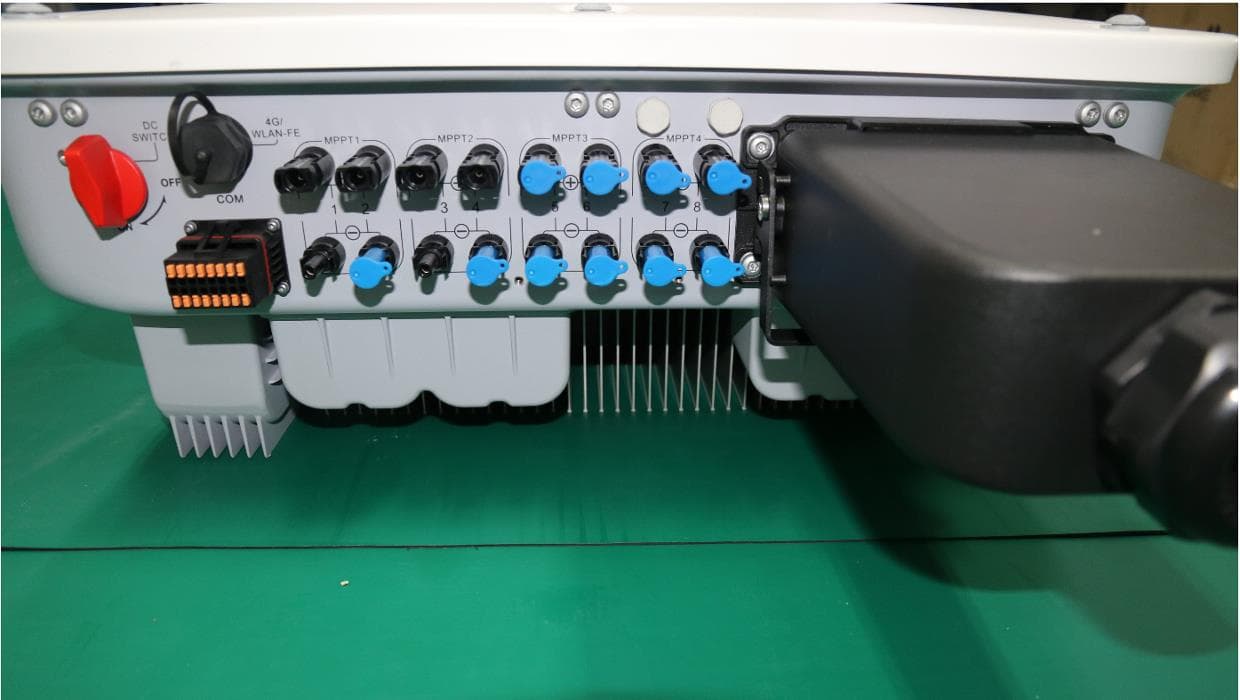
QISSUN2000
Jun 27, 2021Solar Inverter
Equipment Class
DTS - Digital Transmission System
QISCP81-1
Oct 22, 2020Watch Wireless Charger
Equipment Class
DCD - Part 15 Low Power Transmitter Below 1705 kHz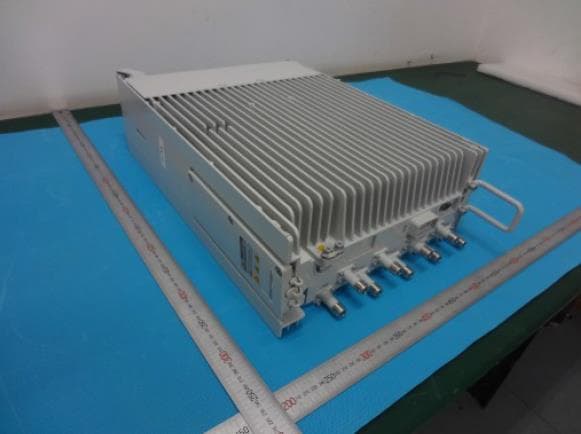
QISRRU3278
Sep 02, 2020Remote Radio Unit
Equipment Class
CBD - Citizens Band Category A and B Devices
QISR2561
Jul 11, 2020Indoor Router
Equipment Class
DTS - Digital Transmission System
QISSMARTLOGGER310
Mar 23, 2020Solar Smart Monitor & Data Logger
Equipment Class
DTS - Digital Transmission System