QISRRU3201-B13Remote Radio Unit
Huawei Technologies Co.,Ltd
Click to zoom
Application Details
- Equipment Class
- TNB - Licensed Non-Broadcast Station Transmitter
- Date of Grant
- Feb 20, 2014
- Application Purpose
- Original Equipment
- Date of Application
- Feb 20, 2014
- Equipment Note
- Remote Radio Unit
- Frequency Range
- 751.00000000 - 751.00000000
- Company
- Huawei Technologies Co.,Ltd
- Country
- China
Documents & Files
Document Text
Text extracted from the exhibit documents filed with the FCC. Open a document above to read the original.
Users Manual
RRU3201 Hardware Maintenance Guide Issue04 Date2011-09-15 HUAWEI TECHNOLOGIES CO., LTD. Copyright © Huawei Technologies Co., Ltd. 2011. All rights reserved. No part of this document may be reproduced or transmitted in any form or by any means without prior written consent of Huawei Technologies Co., Ltd. Trademarks and Permissions and other Huawei trademarks are trademarks of Huawei Technologies Co., Ltd. All other trademarks and trade names mentioned in this document are the property of their respective holders. Notice The purchased products, services and features are stipulated by the contract made between Huawei and the customer. All or part of the products, services and features described in this document may not be within the purchase scope or the usage scope. Unless otherwise specified in the contract, all statements, information, and recommendations in this document are provided "AS IS" without warranties, guarantees or representations of any kind, either express or implied. The information in this document is subject to change without notice. Every effort has been made in the preparation of this document to ensure accuracy of the contents, but all statements, information, and recommendations in this document do not constitute the warranty of any kind, express or implied. Huawei Technologies Co., Ltd. Address:Huawei Industrial Base Bantian, Longgang Shenzhen 518129 People's Republic of China Website:http://www.huawei.com Email:[email protected] Issue 04 (2011-09-15)Huawei Proprietary and Confidential Copyright © Huawei Technologies Co., Ltd. i About This Document Purpose This document describes routine maintenance procedures for an RRU3201 (referred to as RRU in this document), such as equipment preventive maintenance and power-on and power-off operations. It also explains how to replace the RRU and optical modules. Product Versions The following table lists the product versions related to this document. Product Name Product Version DBS3900V100R004 and later versions DBS3900 LTEV100R003C00 and later versions Intended Audience This document is intended for: lSystem engineers lSite maintenance engineers Organization 1 Changes in the RRU3201 Hardware Maintenance Guide This chapter describes the changes in the RRU3201 Hardware Maintenance Guide. 2 Preventative Maintenance Items for an RRU Preventative maintenance for an RRU improves the reliability of the RRU. You are advised to perform scheduled maintenance yearly. 3 Powering On and Off an RRU RRU3201 Hardware Maintenance GuideAbout This Document Issue 04 (2011-09-15)Huawei Proprietary and Confidential Copyright © Huawei Technologies Co., Ltd. ii After an RRU is powered on, check the status of RRU indicators and voltage. Before the RRU is powered off, follow the normal power-off or emergency power-off procedure as required. 4 Replacing an RRU A distributed base station consists of RRUs and a BBU. Replacing an RRU interrupts all the services carried by the RRU, and alarms are generated. 5 Replacing an Optical Module An optical module implements optical-electrical conversion, enabling optical transmission between an RRU and other devices. You must disconnect fiber optic cables from an optical module before replacing the optical module. Disconnecting the fiber optic cables interrupts the transmission of CPRI signals. Conventions Symbol Conventions The symbols that may be found in this document are defined as follows. SymbolDescription Indicates a hazard with a high level of risk, which if not avoided, will result in death or serious injury. Indicates a hazard with a medium or low level of risk, which if not avoided, could result in minor or moderate injury. Indicates a potentially hazardous situation, which if not avoided, could result in equipment damage, data loss, performance degradation, or unexpected results. Indicates a tip that may help you solve a problem or save time. Provides additional information to emphasize or supplement important points of the main text. General Conventions The general conventions that may be found in this document are defined as follows. Convention Description Times New RomanNormal paragraphs are in Times New Roman. BoldfaceNames of files, directories, folders, and users are in boldface. For example, log in as user root. ItalicBook titles are in italics. Courier New Examples of information displayed on the screen are in Courier New. RRU3201 Hardware Maintenance GuideAbout This Document Issue 04 (2011-09-15)Huawei Proprietary and Confidential Copyright © Huawei Technologies Co., Ltd. iii Command Conventions The command conventions that may be found in this document are defined as follows. ConventionDescription BoldfaceThe keywords of a command line are in boldface. ItalicCommand arguments are in italics. [ ]Items (keywords or arguments) in brackets [ ] are optional. { x | y | ... }Optional items are grouped in braces and separated by vertical bars. One item is selected. [ x | y | ... ]Optional items are grouped in brackets and separated by vertical bars. One item is selected or no item is selected. { x | y | ... } * Optional items are grouped in braces and separated by vertical bars. A minimum of one item or a maximum of all items can be selected. [ x | y | ... ] * Optional items are grouped in brackets and separated by vertical bars. Several items or no item can be selected. GUI Conventions The GUI conventions that may be found in this document are defined as follows. Convention Description BoldfaceButtons, menus, parameters, tabs, window, and dialog titles are in boldface. For example, click OK. >Multi-level menus are in boldface and separated by the ">" signs. For example, choose File > Create > Folder. Keyboard Operations The keyboard operations that may be found in this document are defined as follows. Format Description KeyPress the key. For example, press Enter and press Tab. Key 1+Key 2Press the keys concurrently. For example, pressing Ctrl+Alt +A means the three keys should be pressed concurrent…
Text truncated - open the document above for the full version.
Users Manual
RRU3201 Installation Guide Issue06 Date2012-04-16 HUAWEI TECHNOLOGIES CO., LTD. Copyright © Huawei Technologies Co., Ltd. 2012. All rights reserved. No part of this document may be reproduced or transmitted in any form or by any means without prior written consent of Huawei Technologies Co., Ltd. Trademarks and Permissions and other Huawei trademarks are trademarks of Huawei Technologies Co., Ltd. All other trademarks and trade names mentioned in this document are the property of their respective holders. Notice The purchased products, services and features are stipulated by the contract made between Huawei and the customer. All or part of the products, services and features described in this document may not be within the purchase scope or the usage scope. Unless otherwise specified in the contract, all statements, information, and recommendations in this document are provided "AS IS" without warranties, guarantees or representations of any kind, either express or implied. The information in this document is subject to change without notice. Every effort has been made in the preparation of this document to ensure accuracy of the contents, but all statements, information, and recommendations in this document do not constitute the warranty of any kind, express or implied. Huawei Technologies Co., Ltd. Address:Huawei Industrial Base Bantian, Longgang Shenzhen 518129 People's Republic of China Website:http://www.huawei.com Email:[email protected] Issue 06 (2012-04-16)Huawei Proprietary and Confidential Copyright © Huawei Technologies Co., Ltd. i About This Document Purpose This document describes the process of installing a DC RRU3201 (referred to as RRU in this document). Product Versions The following table lists the product versions related to this document. Product NameProduct Version DBS3900V100R004C00 and later versions DBS3900 LTEV100R003C00 and later versions Intended Audience This document is intended for: Base station installation engineers Organization 1 Changes in the RRU3201 Installation Guide This chapter describes the changes in the RRU3201 Installation Guide. 2 Installation Preparations This chapter describes the reference documents, tools, and instruments that must be ready before the installation. In addition, it specifies the skills and prerequisites that installation engineers must have. 3 Information About the Installation Before installing an RRU, you must be familiar with its exterior, ports, installation options, physical supports, and installation clearance requirements. 4 Unpacking the Equipment RRU3201 Installation GuideAbout This Document Issue 06 (2012-04-16)Huawei Proprietary and Confidential Copyright © Huawei Technologies Co., Ltd. ii This chapter describes how to unpack and check the delivered equipment to ensure that all the materials are included and intact. 5 Installation Process The installation process involves installing an RRU and RRU cables, checking the RRU hardware installation, and powering on the RRU. 6 Hoisting an RRU and Related Cables onto a Tower This section describes the procedure for hoisting an RRU and related cables onto a tower and the precautions that must be taken. 7 Installing the RRU This chapter describes the procedure for installing the RRU. The RRU can be installed on a pole, U-steel, angle steel, or wall. The procedure for installing the RRU varies depending on installation options. 8 Installing RRU Cables This chapter describes the procedure for installing RRU cables. 9 Checking the RRU Hardware Installation After an RRU is installed, check the hardware installation. 10 Powering On an RRU After all the devices are installed, check the power-on status of an RRU. 11 Appendix This section describes the procedure for adding OT terminals. Conventions Symbol Conventions The symbols that may be found in this document are defined as follows. Symbol Description Indicates a hazard with a high level of risk, which if not avoided, will result in death or serious injury. Indicates a hazard with a medium or low level of risk, which if not avoided, could result in minor or moderate injury. Indicates a potentially hazardous situation, which if not avoided, could result in equipment damage, data loss, performance degradation, or unexpected results. Indicates a tip that may help you solve a problem or save time. Provides additional information to emphasize or supplement important points of the main text. RRU3201 Installation GuideAbout This Document Issue 06 (2012-04-16)Huawei Proprietary and Confidential Copyright © Huawei Technologies Co., Ltd. iii General Conventions The general conventions that may be found in this document are defined as follows. ConventionDescription Times New RomanNormal paragraphs are in Times New Roman. BoldfaceNames of files, directories, folders, and users are in boldface. For example, log in as user root. ItalicBook titles are in italics. Courier New Examples of information displayed on the screen are in Courier New. Command Conventions The command conventions that may be found in this document are defined as follows. Convention Description BoldfaceThe keywords of a command line are in boldface. ItalicCommand arguments are in italics. [ ]Items (keywords or arguments) in brackets [ ] are optional. { x | y | ... }Optional items are grouped in braces and separated by vertical bars. One item is selected. [ x | y | ... ]Optional items are grouped in brackets and separated by vertical bars. One item is selected or no item is selected. { x | y | ... } * Optional items are grouped in braces and separated by vertical bars. A minimum of one item or a maximum of all items can be selected. [ x | y | ... ] * Optional items are grouped in brackets and separated by vertical bars. Several items or no item can be selected. GUI Conventions The GUI conventions that may be found in this document are defined as follows. Convention Description BoldfaceButtons, menus, parameters, tabs, window, and dialog titles are in boldface. For exampl…
Text truncated - open the document above for the full version.
Users Manual
Compliance and Safety Manual RRU3201 Issue 01 Issue () Huawei Proprietary and Confidential Copyright © Huawei Technologies Co., Ltd. i Copyright © Huawei Technologies Co., Ltd. 2010. All rights reserved. No part of this document may be reproduced or transmitted in any form or by any means without prior written consent of Huawei Technologies Co., Ltd. Trademarks and Permissions and other Huawei trademarks are trademarks of Huawei Technologies Co., Ltd. All other trademarks and trade names mentioned in this document are the property of their respective holders. Notice The purchased products, services and features are stipulated by the contract made between Huawei and the customer. All or part of the products, services and features described in this document may not be within the purchase scope or the usage scope. Unless otherwise specified in the contract, all statements, information, and recommendations in this document are provided "AS IS" without warranties, guarantees or representations of any kind, either express or implied. The information in this document is subject to change without notice. Every effort has been made in the preparation of this document to ensure accuracy of the contents, but all statements, information, and recommendations in this document do not constitute the warranty of any kind, express or implied. Huawei Technologies Co., Ltd. Address: Huawei Industrial Base Bantian, Longgang Shenzhen 518129 People's Republic of China Website: http://www.huawei.com Email: [email protected] 1 Safety Issue () Huawei Proprietary and Confidential Copyright © Huawei Technologies Co., Ltd. 1-1 1 Safety About This Chapter 1.1 Health and Safety 1.2 Equipment Safety 1.3 Electromagnetic Field Exposure 1.1 Health and Safety 1.1.1 Overview 1.1.2 Electrical Safety 1.1.3 Inflammable Environment 1.1.4 Radiation 1.1.5 Working at Heights 1.1.6 Mechanical Safety 1.1.7 Bundling Signal Cables 1.1.1 Overview Introduction This section describes the safety precautions you must take before installing or maintaining Huawei equipment. To ensure safety of humans and the equipment, pay attention to the safety symbols on the equipment and all the safety instructions in this document. The "NOTE", "CAUTION", and "WARNING" marks in other documents do not represent all the safety instructions. They are only supplements to the safety instructions. Installation and maintenance personnel must understand basic safety precautions to avoid hazards. When operating Huawei equipment, in addition to following the general precautions in this document, follow the specific safety instructions given by Huawei. 1 Safety 1-2 Huawei Proprietary and Confidential Copyright © Huawei Technologies Co., Ltd. Issue (01) Only trained and qualified personnel are allowed to install, operate, and maintain Huawei equipment. Local Safety Regulations When operating Huawei equipment, you must follow the local laws and regulations. The safety instructions in this document are only supplements to the local laws and regulations. General Requirements To minimize risk of personal injury and damage to equipment, read and follow all the precautions in this document before performing any installation or maintenance. Ensure that the instructions provided in this document are followed completely. This section also provides guidelines for selecting the measuring and testing devices. Installation The device (or system) must be installed in an access-controlled location. Tighten the thumbscrews by using a tool after initial installation and subsequent access to the panel. Ground Do not damage the ground conductor or operate the device in the absence of a properly installed ground conductor. Conduct the electrical inspection carefully. The device (or system) must be connected permanently to the protection ground before an operation. The cross-sectional area of the protective ground conductor must be at least 4.0 mm2. The device must be fixed securely on the floor or other reliable objects, such as the walls and the mounting racks before operation. When installing the unit, always make the ground connection first and disconnect it last Power Supply For DC-supplied model: The device applies to DC power source that complies with the Safety Extra-Low Voltage (SELV) requirements in IEC 60950-1 based safety standards. Prepared conductors are connected to the terminal block, and only the appropriate AWG/Type of wire is secured with the lug terminals. This device relies on the building’s installation for short-circuit (overcurrent) protection. Ensure that a fuse or circuit breaker no larger than 80 VDC, 30 A for DC supplied model is used on the phase conductors (all current-carrying conductors). For this device, a readily accessible disconnect device shall be incorporated external to the equipment To minimize the risk of fire, use only No. 26 AWG or larger telecommunication line cord. Human Safety Do not operate the device or cables during lightning strikes. 1 Safety Issue () Huawei Proprietary and Confidential Copyright © Huawei Technologies Co., Ltd. 1-3 To avoid electric shock, do not connect safety extra-low voltage (SELV) circuits to telecommunication network voltage (TNV) circuits. Move or lift the chassis by holding its lower edge. Do not hold the handles on certain modules such as power supply, fans, and boards because they cannot support the weight of the device. Do not look into the optical port without eye protection. Do not wear jewelry or watches when you operate the device. Reinforced insulation or double insulation must be provided to isolate DC source from AC mains supply. Operator Only qualified professional personnel are allowed to install, configure, operate, and disassemble the device. Only the personnel authenticated or authorized by Huawei are allowed to replace or change the device of the parts of the device (including the software). Any fault or error that might cause safety problems must…
Text truncated - open the document above for the full version.
Cover Letter(s)
Huawei Technologies Co.,Ltd. Federal Communications Commission 2014-2-19 7435 Oakland Mills Road Columbia MD 21046 Subject: Request for Confidentiality FCC ID: QISRRU3201-B13 To Whom It May Concern: Pursuant to the provisions of Sections 0.457 and 0.459 of the Commission’s rules (47 CFR §§ 0.457, 0.459), we are requesting the Commission to withhold the following attachments as confidential document from public disclosure indefinitely. Schematic diagram Block Diagram Parts list (BOM) Information Operational description Tune-up procedure Above mentioned document contains detailed system and equipment description are considered as proprietary information in operation of the equipment. The public disclosure of above documents might be harmful to our company and would give competitor an unfair advantage in the market. It is our understanding that all measurement test reports, FCC ID label format and correspondent during certification review process cannot be granted as confidential documents and those information will be available for public review once the grant of equipment authorization is issued. Best Regards Zhang Xinghai EMC Laboratory Manager Huawei Technologies Co., Ltd. E-mail: [email protected] Fax: 0086-0755-89650226
External Photos
Photo documentation of External of the RRU3201 Internal : 2014-2-13 华为机密,未经许可不得扩散 第1页, 共3页 Pictures of the RRU3201 Figure 1-1 Front view of the RRU3201 Figure 1-2 Back view of the RRU3201 Photo documentation of External of the RRU3201 Internal : 2014-2-13 华为机密,未经许可不得扩散 第2页, 共3页 Figure 1-3 Left view of the RRU3201 Figure 1-4 Right view of the RRU3201 Photo documentation of External of the RRU3201 Internal : 2014-2-13 华为机密,未经许可不得扩散 第3页, 共3页
ID Label/Location Info
02316822M01_RRU3201 DC -48V 10A 0 2 3 1 6 8 2 2 M 0 1 _ R R U 3 2 0 1 D C - 4 8 V 1 0 A RRU3201 zhuxiaofen zhangxingwei yangsiming A 15-Jan-2014 15-Jan-2014 15-Jan-2014 15-Jan-2014
Internal Photos
Photo documentation of interal of the RRU3201 Internal : 2014-2-13 华为机密,未经许可不得扩散 第1页, 共1页 Photo of the RRU3201 Figure 1-1 TRX view of the RRU3201 Figure 1-2 PA view of the RRU3201
RF Exposure Info
Declaration for Compliance with EMF for RRU3201 Security Level: Public Document No.: SYBH(R) 01184062EB-2 Huawei Proprietary and Confidential Copyright © Huawei Technologies Co., Ltd. Page 1 of 2 Declaration of Electromagnetic Field Health Compliance To whom it may concern, As to the product RRU3201 made by Huawei Technologies Co., Ltd., we declare that it complies with the Basic restrictions/Reference levels for electric, magnetic and electromagnetic fields as specified in following standards(s): Nr. Standard 1 47CFR FCC Part 1 (10-1-12 Edition) 2 RSS-102 (Issue4, March 2010) The compliance is demonstrated based on the following calculation model assessment: 1. The power density according to far-field model is: 2 ),( 4R GP S Where: P = input power of the antenna. G = antenna gain relative to an isotropic antenna. , = elevation and azimuth angles. R = distance from the antenna to the point of investigation. 2. For single or multiple RF sources, the calculated power density should comply with following: 1 , i iLimit i S S Where: i S = the power density when the f is i . iLim it S , = the reference level requirement for power density when f is i . 3. The calculation of the power density or safe distance is: NOTE 1: The RF exposure evaluation is base on the far-field and the radiation exposure is over-estimated. NOTE 2: The maximum output power level is taken into account as a worst case for the purpose of the calculation of power density or safe distance. NOTE 3: The minimum antenna feed cable loss (assumed no cable loss) is taken into account as a worst case for the purpose of the calculation of power density or safe distance. NOTE 4: The maximum antenna radiation exposure orientation and maximum antenna gain is taken into account as a worst case for the purpose of the calculation of power density or safe distance. RF Source Calculation RF Source #1 f = 746 to 756 MHz iLim it S , = 4.97 2 W/m P = 80 W Declaration for Compliance with EMF for RRU3201 Security Level: Public Document No.: SYBH(R) 01184062EB-2 Huawei Proprietary and Confidential Copyright © Huawei Technologies Co., Ltd. Page 2 of 2 RF Source Calculation ),( G = 12.6 (= 11 dBi) ),( GPEIRP = 1008 W (measured max.) , = The worst condition is considered, i.e. the max G is used. i S = 2 ),( 4R GP = 80.2 2 /R 2 W/m iLim it i S S , = 16.14 / 2 R RF Source(s) Combination i iLimit i S S , = 16.14 / 1 2 R R 4 m (the minimum Safe Distance) Person responsible for making this declaration: ____________________________ Hu Wei RF Engineer, EMC Lab Reliability Laboratory of Huawei Technologies Co., Ltd. February 18, 2014
Test Report
RF Test Report Product Name: Remote Radio Unit Product Model: RRU3201 Report Number: SYBH(R)01184062EB-1 FCC ID: QISRRU3201-B13 IC: 6369A-3201B13 Reliability Laboratory of Huawei Technologies Co., Ltd. Administration Building, Headquarters of Huawei Technologies Co., Ltd., Bantian, Longgang District, Shenzhen, 518129, P.R.C Tel: +86 755 28780808 Fax: +86 755 89652518 RF Test Report of RRU3201 FCC ID: QISRRU3201-B13, IC: 6369A-3201B13 Security Level: Public Report No: SYBH(R)01184062EB-1 Huawei Proprietary and Confidential Copyright © Huawei Technologies Co., Ltd. Page 2 of 24 Notice 1. The laboratory has Passed the accreditation by China National Accreditation Service for Conformity Assessment (CNAS). The accreditation number is L0310. 2. The laboratory has Passed the accreditation by The American Association for Laboratory Accreditation (A2LA). The accreditation number is 2174.01. 3. The laboratory has been listed by the US Federal Communications Commission to perform electromagnetic emission measurements. The site recognition number is 97456. 4. The laboratory has been listed by Industry Canada to perform electromagnetic emission measurements. The recognition numbers of test site are 6369A-1, 6369A-2 and 6369A-3. 5. The laboratory has been listed by the VCCI to perform EMC measurements. The accreditation numbers of test site No.1 are R-3892, G-415, C-4361, and T-1348, and the accreditation numbers of test site No.2 are R-3760, G-485, C-4210 and T-1237. 6. The test report is invalid if not marked with the signatures of the persons responsible for preparing and approving the test report. 7. The test report is invalid if there is any evidence of erasure and/or falsification. 8. The test report is only valid for the test samples. 9. Content of the test report, in part or in full, cannot be used for publicity and/or promotional purposes without prior written approval from the laboratory. RF Test Report of RRU3201 FCC ID: QISRRU3201-B13, IC: 6369A-3201B13 Security Level: Public Report No: SYBH(R)01184062EB-1 Huawei Proprietary and Confidential Copyright © Huawei Technologies Co., Ltd. Page 3 of 24 Applicant: Huawei Technologies Co., Ltd. Address: Administration Building, Headquarters of Huawei Technologies Co., Ltd., Bantian, Longgang District, Shenzhen, 518129, P.R.C Product Name: Remote Radio Unit Product Model: RRU3201 Date of Receipt Sample: 2013-12-20 Start Date of Test: 2013-12-20 End Date of Test: 2014-02-17 Test Result: Pass Approved by Senior Engineer: 2014-02-17 Zhang Xinghai Date Name Signature Prepared by: 2014-02-17 Hu Wei Date Name Signature RF Test Report of RRU3201 FCC ID: QISRRU3201-B13, IC: 6369A-3201B13 Security Level: Public Report No: SYBH(R)01184062EB-1 Huawei Proprietary and Confidential Copyright © Huawei Technologies Co., Ltd. Page 4 of 24 Modification Record No. Last Report No. Modification Description 1 --- First report. RF Test Report of RRU3201 FCC ID: QISRRU3201-B13, IC: 6369A-3201B13 Security Level: Public Report No: SYBH(R)01184062EB-1 Huawei Proprietary and Confidential Copyright © Huawei Technologies Co., Ltd. Page 5 of 24 CONTENT 1 General Information ................................................................................................................................................ 6 1.1 Applied Standard........................................................................................................................................ 6 1.2 Test Location ............................................................................................................................................. 6 1.3 Test Environment Condition ....................................................................................................................... 6 2 Test Summary ........................................................................................................................................................ 7 2.1 MBS 700 MHz Upper Band (746-806 MHz) ............................................................................................... 7 3 Description of the Equipment under Test (EUT) ................................................................................................... 13 3.1 General Description ................................................................................................................................. 13 3.2 EUT Identity ............................................................................................................................................. 13 3.3 Technical Specification ............................................................................................................................ 14 4 General Test Conditions / Configurations ............................................................................................................. 16 4.1 Test Modes .............................................................................................................................................. 16 4.2 EUT Configurations .................................................................................................................................. 17 4.3 Test Environments ................................................................................................................................... 18 4.4 Test Setups .............................................................................................................................................. 19 4.5 Test Conditions ........................................................................................................................................ 21 5 Main Test Instruments .......................................................................................................................................... 23 6 Measurement Uncertainty..................................................................................................................................... 24 RF Test Report of RRU320…
Text truncated - open the document above for the full version.
Test Report
RF Test Report of RRU3201 FCC ID: QISRRU3201-B13, IC: 6369A-3201B13 Security Level: Public Report No: SYBH(R)01184062EB-1 Huawei Proprietary and Confidential Copyright © Huawei Technologies Co., Ltd. Page 1 of 85 Appendix A: Transmitter Output Power RF Test Report of RRU3201 FCC ID: QISRRU3201-B13, IC: 6369A-3201B13 Security Level: Public Report No: SYBH(R)01184062EB-1 Huawei Proprietary and Confidential Copyright © Huawei Technologies Co., Ltd. Page 2 of 85 1 Result Table 1.1 Channel Power, Total NOTE: If applicable, the EIPR [W] = 10 ^ ((Channel Power [dBm] + Antenna Gain [dBi] + 10 log10 (N)) / 10 - 3), and the ERP [W] = EIRP [W] / 1.64. N is the number of transmitter output port. EUT Conf. Channel Power per Port [dBm] Channel Power per Port [W] Verdict 1M4_B 45.59 36.14 -- 1M4_M 45.92 39.00 -- 1M4_T 45.58 36.06 -- 3M_B 45.55 35.81 -- 3M_M 45.83 38.20 -- 3M_T 45.69 36.99 -- 5M_B 45.82 38.11 -- 5M_T 45.79 37.85 -- 10M_M 45.72 37.24 -- 1.2 Power Spectral Density NOTE: If applicable, the EIPR [W/MHz] = 10 ^ ((Power Spectral Density [dBm/MHz] + Antenna Gain [dBi] + 10 log10 (N)) / 10 - 3), and the ERP [W/MHz] = EIRP [W/MHz] / 1.64. N is the number of transmitter output port. The maximum Gain is calculated as follow: The Maximum Gain (dBi) = 60 (dBm/MHz)-(45.06 (dBm/MHz) + …
Text truncated - open the document above for the full version.
Contact Information
Applicant
Zhang Xinghai
Test Firm
Huawei Technologies Co., LTDZhou Fengyum
Technical Specifications
| # | Rule Parts | Frequency Range | Power Output | Emission | Tolerance |
|---|---|---|---|---|---|
| 4 | 27 | 751 MHz - 751 MHz | 37.24 W | 8M97D9W | 0.004 ppm |
Other Applications from Huawei Technologies Co.,Ltd
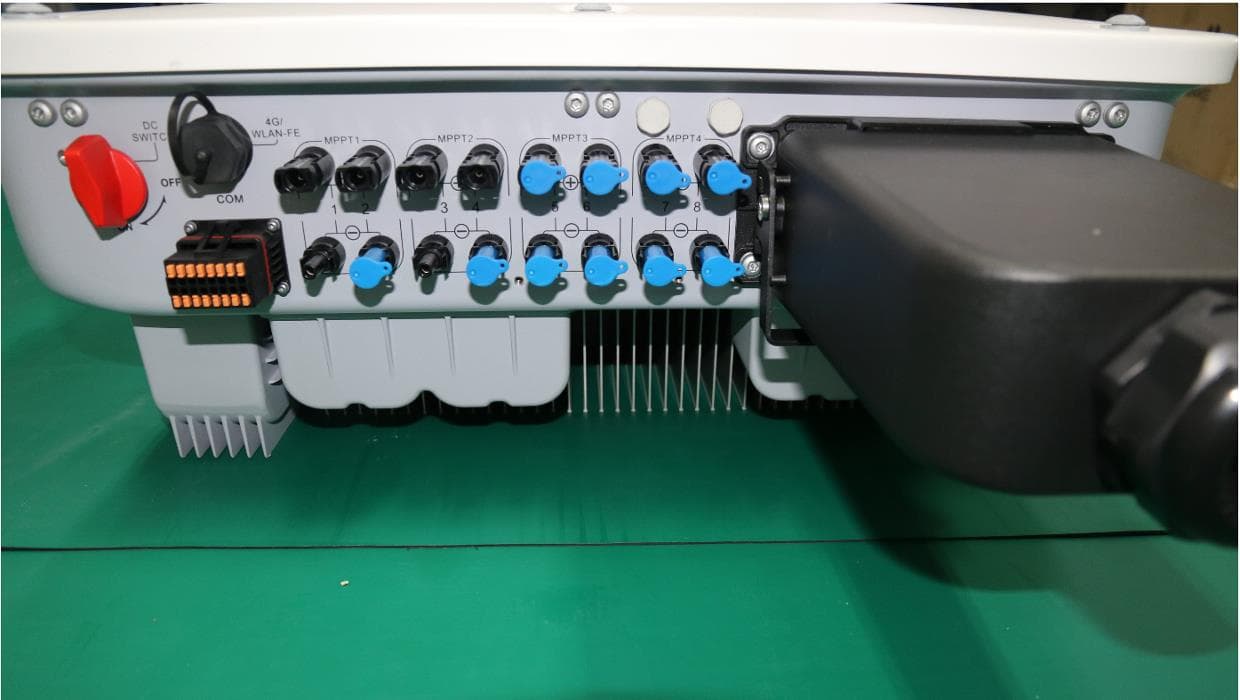
QISSUN2000
Jun 27, 2021Solar Inverter
Equipment Class
DTS - Digital Transmission System
QISCP81-1
Oct 22, 2020Watch Wireless Charger
Equipment Class
DCD - Part 15 Low Power Transmitter Below 1705 kHz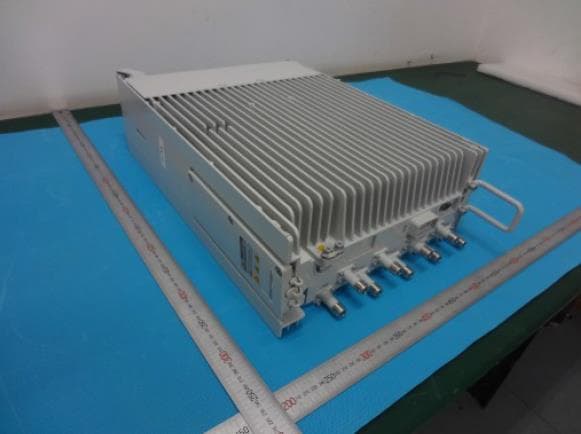
QISRRU3278
Sep 02, 2020Remote Radio Unit
Equipment Class
CBD - Citizens Band Category A and B Devices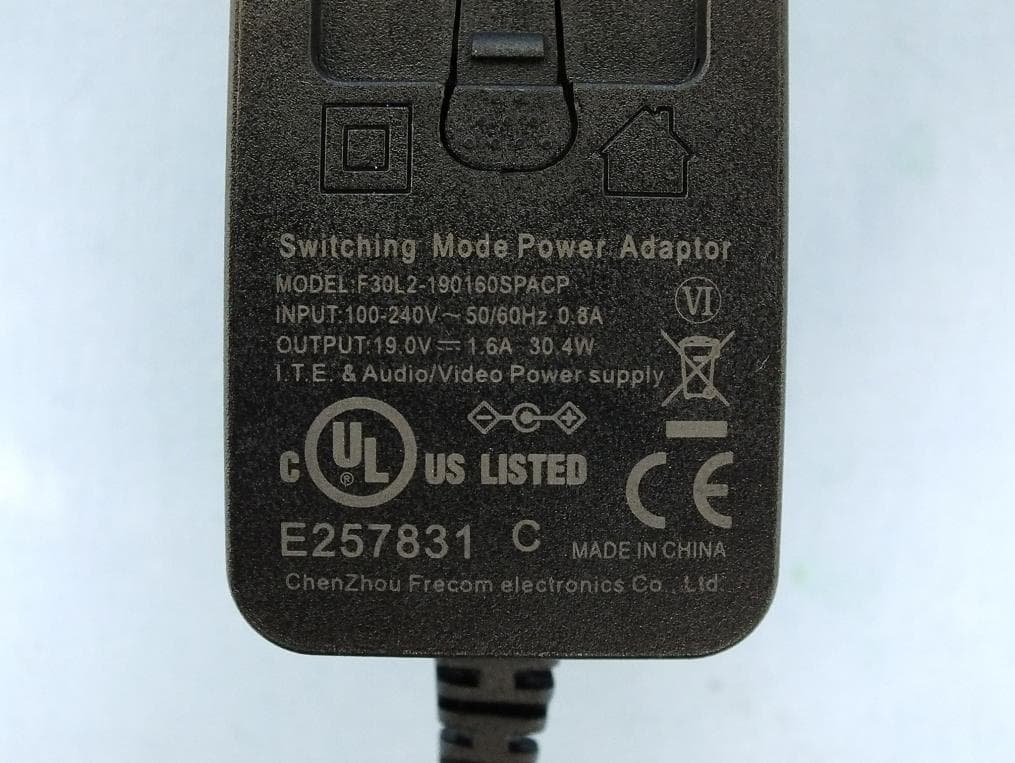
QISR2561
Jul 11, 2020Indoor Router
Equipment Class
DTS - Digital Transmission System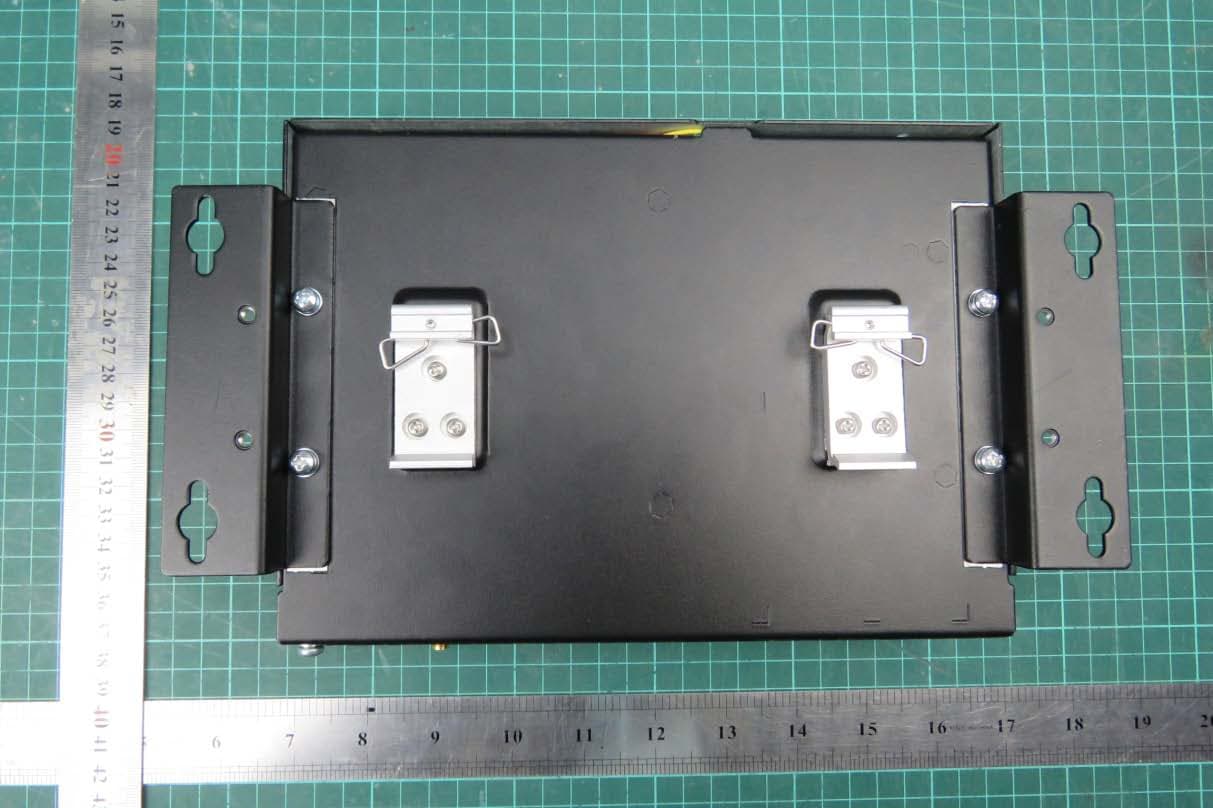
QISSMARTLOGGER310
Mar 23, 2020Solar Smart Monitor & Data Logger
Equipment Class
DTS - Digital Transmission System