QISRRU3256-3600Remote Radio Unit
Huawei Technologies Co.,Ltd
Click to zoom
Application Details
- Equipment Class
- TNB - Licensed Non-Broadcast Station Transmitter
- Date of Grant
- Sep 16, 2015
- Application Purpose
- Original Equipment
- Date of Application
- Aug 12, 2015
- Equipment Note
- Remote Radio Unit
- Frequency Range
- 3650.00000000 - 3700.00000000
- Company
- Huawei Technologies Co.,Ltd
- Country
- China
Documents & Files
Document Text
Text extracted from the exhibit documents filed with the FCC. Open a document above to read the original.
Users Manual
DBS3900(ICR) Installation Guide Issue01 Date2011-03-30 HUAWEI TECHNOLOGIES CO., LTD. Copyright © Huawei Technologies Co., Ltd. 2011. All rights reserved. No part of this document may be reproduced or transmitted in any form or by any means without prior written consent of Huawei Technologies Co., Ltd. Trademarks and Permissions and other Huawei trademarks are trademarks of Huawei Technologies Co., Ltd. All other trademarks and trade names mentioned in this document are the property of their respective holders. Notice The purchased products, services and features are stipulated by the contract made between Huawei and the customer. All or part of the products, services and features described in this document may not be within the purchase scope or the usage scope. Unless otherwise specified in the contract, all statements, information, and recommendations in this document are provided "AS IS" without warranties, guarantees or representations of any kind, either express or implied. The information in this document is subject to change without notice. Every effort has been made in the preparation of this document to ensure accuracy of the contents, but all statements, information, and recommendations in this document do not constitute the warranty of any kind, express or implied. Huawei Technologies Co., Ltd. Address:Huawei Industrial Base Bantian, Longgang Shenzhen 518129 People's Republic of China Website:http://www.huawei.com Email:[email protected] Issue 01 (2011-03-30)Huawei Proprietary and Confidential Copyright © Huawei Technologies Co., Ltd. i About This Document Purpose This document describes the procedures for installing the DBS3900 devices on the Indoor Centralized Rack (ICR). Product Version The following table lists the product versions related to this document. Product Name Product Version DBS3900V100R004 DBS3900 WCDMAV200R013 DBS3900 LTEV100R003C00 DBS3900 GSMV100R013 Intended Audience This document is intended for: lBase station installation engineers Organization 1 Changes in the DBS3900 (ICR) Installation Guide 2 Installation Preparations This chapter describes the tools and instruments required for installation and the skills and prerequisites required for onsite installation engineers. DBS3900(ICR) Installation GuideAbout This Document Issue 01 (2011-03-30)Huawei Proprietary and Confidential Copyright © Huawei Technologies Co., Ltd. iii 3 Information About the Installation This chapter describes the information about the installation, including exterior, installation scenario, and space requirements 4 Unpacking the Equipment Unpack and check the delivered equipment to ensure that all the materials are included and intact. 5 Obtaining the ESN The Electronic Serial Number (ESN) is a unique identifier of a Network Element (NE). Record the ESN for later commissioning of the base station before installation. 6 Installation Process This section describes the process of installing the DBS39000 on the ICR. 7 Assembling the IFS06 This chapter describes the procedure for assembling the IFS06. 8 Installing the IFS06 This chapter describes the procedure for installing the IFS06 on the concrete floor and ESD floor. 9 Installing the Main Bracket for the RRU This chapter describes the procedure for installing the main bracket for the DC RRU and AC RRU. 10 Installing the GPS Surge Protector This chapter describes the procedure for installing the GPS surge protector. 11 Installing the IMB03 This chapter describes the procedure for installing the IMB03. 12 Installing the Equipotential Cable and PGND Cable This chapter describes the procedures for installing the equipotential cable and PGND cable. 13 Installing Devices in the IMB03 This chapter describes the installation of the devices in the IMB03. 14 Installing the RRU This section describes the procedure for installing the AC RRU and DC RRU. 15 Installing Cables This chapter describes the procedure for installing all the cables. 16 Checklist for the DBS3900 Hardware Installation This section describes the checklist for the DBS3900 hardware installation. 17 Performing the DBS3900 Power-On Check After all devices are installed, you need to check the power-on status of the BBU and RRU. 18 Installing the Cover Plate for the IMB03 About This Document DBS3900(ICR) Installation Guide ivHuawei Proprietary and Confidential Copyright © Huawei Technologies Co., Ltd. Issue 01 (2011-03-30) This section describes the procedure for installing the cover plate for the IMB03. Conventions Symbol Conventions The symbols that may be found in this document are defined as follows. SymbolDescription Indicates a hazard with a high level of risk, which if not avoided, will result in death or serious injury. Indicates a hazard with a medium or low level of risk, which if not avoided, could result in minor or moderate injury. Indicates a potentially hazardous situation, which if not avoided, could result in equipment damage, data loss, performance degradation, or unexpected results. Indicates a tip that may help you solve a problem or save time. Provides additional information to emphasize or supplement important points of the main text. General Conventions The general conventions that may be found in this document are defined as follows. Convention Description Times New RomanNormal paragraphs are in Times New Roman. BoldfaceNames of files, directories, folders, and users are in boldface. For example, log in as user root. ItalicBook titles are in italics. Courier New Examples of information displayed on the screen are in Courier New. Command Conventions The command conventions that may be found in this document are defined as follows. Convention Description BoldfaceThe keywords of a command line are in boldface. ItalicCommand arguments are in italics. DBS3900(ICR) Installation GuideAbout This Document Issue 01 (2011-03-30)Huawei Proprietary and Confidential Copyright © Huawei Technologies Co., Ltd. v ConventionDescription [ ]Items (keywords or arguments) in brack…
Text truncated - open the document above for the full version.
Users Manual
Regulatory Compliance Statement RRU3256 Issue: 01 Date:2015-6-29 HUAWEI TECHNOLOGIES CO., LTD. Issue (01) Huawei Proprietary and Confidential Copyright © Huawei Technologies Co., Ltd. i Copyright © Huawei Technologies Co., Ltd. 2010. All rights reserved. No part of this document may be reproduced or transmitted in any form or by any means without prior written consent of Huawei Technologies Co., Ltd. Trademarks and Permissions and other Huawei trademarks are trademarks of Huawei Technologies Co., Ltd. All other trademarks and trade names mentioned in this document are the property of their respective holders. Notice The purchased products, services and features are stipulated by the contract made between Huawei and the customer. All or part of the products, services and features described in this document may not be within the purchase scope or the usage scope. Unless otherwise specified in the contract, all statements, information, and recommendations in this document are provided "AS IS" without warranties, guarantees or representations of any kind, either express or implied. The information in this document is subject to change without notice. Every effort has been made in the preparation of this document to ensure accuracy of the contents, but all statements, information, and recommendations in this document do not constitute the warranty of any kind, express or implied. Huawei Technologies Co., Ltd. Address: Huawei Industrial Base Bantian, Longgang Shenzhen 518129 People's Republic of China Website: http://www.huawei.com Email: [email protected] 1 Regulatory Compliance Statement Issue (01) Huawei Proprietary and Confidential Copyright © Huawei Technologies Co., Ltd. 1-1 1 Regulatory Compliance Statement About This Chapter 1.1 Declaration of Conformity to European Directives 1.1 Declaration of Conformity to European Directives Figure 1-1 Declaration of Conformity to European Directives Blank, because CE is under testing 2 Regulatory Compliance Information Issue (01) Huawei Proprietary and Confidential Copyright © Huawei Technologies Co., Ltd. 2-1 2 Regulatory Compliance Information About This Chapter 2.1 Regulatory Compliance Standards 2.2 European Regulatory Compliance 2.3 U.S.A Regulatory Compliance 2.4 Japanese Regulatory Compliance 2.5 CISPR 22 Compliance 2.6 China RoHS hazardous substance table 2.7 India RoHS hazardous substance table 2.8 Other Markets 2.1 Regulatory Compliance Standards Product complies with the standards listed in Table 2-1. 2 Regulatory Compliance Information 2-2 Huawei Proprietary and Confidential Copyright © Huawei Technologies Co., Ltd. Issue (01) Table 2-1 Regulatory compliance standards Discipline Standards EMC CISPR22 Class B CISPR24 EN55022 Class B EN50024 ETSI EN 301 489 Class B CFR 47 FCC Part 15 Class B AS/NZS CISPR22 Class B GB9254 Class B VCCI Class B CNS 13438 Class B IEC/EN61000-6-1 IEC/EN61000-6-2 IEC/EN61000-6-3 IEC/EN61000-6-4 Safety IEC 60950-1 IEC60950-22 IEC/EN60215 IEC/EN41003 EN 60950-1 UL 60950-1 CSA C22.2 No 60950-1 AS/NZS 60950.1 BS EN 60950-1 IS 13252 GB4943 Laser safety FDA rules, 21 CFR 1040.10 and 1040.11 IEC60825-1, IEC60825-2, EN60825-1, EN60825-2 GB7247 RF ETSI EN 301 908 FCC Part 2 FCC Part 27 2 Regulatory Compliance Information Issue (01) Huawei Proprietary and Confidential Copyright © Huawei Technologies Co., Ltd. 2-3 Discipline Standards Health ICNIRP Guideline 1999-519-EC EN 50385 OET Bulletin 65 FCC Part 1 IEEE Std C95.1 EN 60215 Environmental protection 2011/65/EU (RoHS) EC NO. 1907/2006 (REACH) 2002/96/EC (WEEE) Grounding ITU-T K.27 ETSI EN 300 253 NOTE EMC: electromagnetic compatibility NEBS: Network Equipment Build Standard RF: radio frequency CISPR: International Special Committee on Radio Interference EN: European Standard ETSI: European Telecommunications Standards Institute CFR: Code of Federal Regulations FCC: Federal Communication Commission IEC: International Electrotechnical Commission AS/NZS: Australian/New Zealand Standard VCCI: Voluntary Control Council for Interference CNS: Chinese National Standard UL: Underwriters Laboratories CSA: Canadian Standards Association BS: British Standard IS: Indian Standard GR: General Requirement FDA: Food and Drug Administration BTS: Base Transceiver Station GSM: Global System for Mobile communications WLAN: wireless local area network ICNIRP: International Commission on Non-Ionizing Radiation Protection OET: Office of Engineering Technology IEEE: Institute of Electrical and Electronics Engineers RoHS: restriction of the use of certain hazardous substances 2 Regulatory Compliance Information 2-4 Huawei Proprietary and Confidential Copyright © Huawei Technologies Co., Ltd. Issue (01) 2.2 European Regulatory Compliance Product complies with the following European directives and regulations. 2004/108/EC (EMC) 2006/95/EC (low voltage) 1999/5/EC (R&TTE) 2011/65/EU (RoHS) EC NO. 1907/2006 (REACH) 2002/96/EC (WEEE) Product complies with Directive 2002/95/EC, 2011/65/EU and other similar regulations from the countries outside the European Union, on the RoHS in electrical and electronic equipment. The device does not contain lead, mercury, cadmium, and hexavalent chromium and brominated flame retardants (Polybrominated Biphenyls (PBB) or Polybrominated Diphenyl Ethers (PBDE)) except for those exempted applications allowed by RoHS directive for technical reasons. Product complies with Regulation EC NO. 1907/2006 (REACH) and other similar regulations from the countries outside the European Union. Huawei will notify to the European Chemical Agency (ECHA) or the customer when necessary and regulation requires. Product complies with Directive 2002/96/EC on waste electrical and electronic equipment (WEEE). Huawei is responsible for recycling its end-of-life devices, and please contact Huawei local service center when recycling is required. Huawei strictly complies with the EU Waste Electrica…
Text truncated - open the document above for the full version.
Cover Letter(s)
QA-FR-170-B Huawei Technologies Co., Ltd. ADD: Administration Building, Headquarters of Huawei Technologies Co., Ltd., Bantian, Longgang District, Shenzhen, 518129, China TEL: +86-755-2897-0299 FAX: +86-755-8965-0226 FCC Authorization Date: 2015-6-30 FEDERAL COMMUNICATIONS COMMISSION Authorization and Evaluation Division 7435 Oakland Mills Road Columbia, MD 21046 Subject: Agent Authorization To whom it may concern: We, Huawei Technologies Co., Ltd., the undersigned, Hereby authorizes Bay Area Compliance Laboratories Corporation to act on its behalf in all matters relating to application for Equipment authorization, including the signing of all documents relating to these matters. All acts carried out by Bay Area Compliance Laboratories Corp. on our behalf shall have the same effect as our own action. We, the undersigned, hereby certify that we are not subject to a denial of federal benefits, that includes FCC benefits, pursuant to Section 5301 of the Anti-Drug Abuse Act of 1988, 21 U.S.C. 862. This authorization is valid until further written notice from the applicant. Sincerely Yours, Client’s signature Zhang, Xinghai EMC Laboratory Manager Tel: +86-755-2897-0299 Email:[email protected] Add: Administration Building, Headquarters of Huawei Technologies Co., Ltd., Bantian, Longgang District, Shenzhen, 518129, China
Cover Letter(s)
QA-FR-172-A Huawei Technologies Co., Ltd. Add: Administration Building, Headquarters of Huawei Technologies Co., Ltd., Bantian, Longgang District,Shenzhen, 518129, China Tel: +86-755-2897-0299 Fax: +86-755-8965-0226 FCC Confidential Authorization Date: 2015-6-20 FEDERAL COMMUNICATIONS COMMISSION Authorization and Evaluation Division 7435 Oakland Mills Road Columbia, MD 21046 Subject: Confidentiality Request regarding application for certification of FCC ID: QISRRU3256-3600 In accordance with Sections 0.457 and 0.459 of the Commission’s Rules, Huawei Technologies Co., Ltd. hereby requests long-term confidential treatment of information accompanying this application as outlined below: • Block Diagram • Schematics • Operation Description As well as short-term confidential treatment of information accompanying this application as outlined below: • Internal Photos • User’s Manual • External Photos • Test Set-up Photos The above materials contain proprietary and confidential information not customarily released to the public. The public disclosure of these materials provides unjustified benefits to its competitors in the market. Sincerely, Signature: Zhang, Xinghai EMC Laboratory Manager Tel: +86-755-2897-0299 Email:[email protected] Add: Administration Building, Headquarters of Huawei Technologies Co., Ltd., Bantian, Longgang District, Shenzhen, 518129, China •Part list •Tune up procedure
External Photos
EUT EXTERNAL PHOTOGRAPHS
ID Label/Location Info
EXHIBIT A - FCC ID LABELING AND LOCATION FCC ID Label Proposed FCC ID Label Location The label shown shall be permanently affixed at a conspicuous location on the device and be readily visible to the user at the time purchase (Labeling requirements per 2.925) Label Here
Internal Photos
EUT INTERNAL PHOTOGRAPHS
Operational Description
Unrestricted Certification under Part 90Z (3650-3700 Band) In order to ensure that a device complies with the requirements of unrestricted contention based protocol, the following information should be provided in the application. 2.1. Unrestricted Protocol Description Address the key requirements for operation using unrestricted contention based protocol. Please note that this requires recognizing other systems (both similar to yours and different from yours) that operate on a co-channel. Indicate the strategy for sharing the spectrum in terms of: (1) Does the system use spectrum sensing to determine if the other devices are transmitting and then find ways to share the bandwidth, or (2) Does the system have some other strategy? 【Answer】(1)System detects co-channel other systems by which used Listen before Talk(LBT)contention based protocol,and then improves spectrum sharing by forcing frequent detecting times before occupying or release. It recognizes other operating co-channel systems using received power spectrumregardless of similar or different system. (2)System can also use technology that collaborates with power control and scheduling technologies to mitigate inter-system interference. 2.2. Threshold detection to determine occupancy Describe how your system determines if another system is using the spectrum. At what detection level – relative to 0 dBi receive antenna gain (busy channel threshold), does the device determine if another system is operating on the spectrum? 【Answer】When the Listen before Talk (LBT) configuration is set to On, the system detects whether there are other systems using the spectrum within the working bandwidth. The following is the LBT algorithm based on configurable thresholds: 1)LbtNiHighThreshold: default -85 dBm/MHz, interference threshold for turning off down link transmission. When detected interference level is above this threshold, DL transmission will be turned off. 2)LbtNiLowThreshold: default -90 dBm/MHz, interference threshold for turning on down link transmission. When detected interference level is below this threshold, DL transmission will be turned on. How long does the system observe to determine if the channel is busy – at the initial time and in between communications? 【Answer】The system makes the determination based on observation in 5-10 sec for both initial transmission and in between communications. What is the bandwidth being monitored versus bandwidth occupied for all modes of operation? 【Answer】The configured channel bandwidth, which is the occupied bandwidth at full traffic, will be used for monitoring. How much variability is provided to the system operator to adjust busy channel detection threshold? 【Answer】The adjustable range for busy channel detection threshold by the system operator is 60 dB. What is the operating system threshold (receive threshold) compared to the monitoring threshold (busy channel threshold)? 【Answer】The operating system threshold is -3 dB or higher than the monitoring threshold. What additional checks does the system perform to determine if the spectrum is being used before initiating a transmission? 【Answer】Before initiate a transmission, the system monitors the interference level in 10 ms intervals. It will only transmit if the average interference level in 5 seconds is below the LbtNiHighThreshold. Does the master and the client perform the threshold detection? If master only performs the detection how does it determine if the client may interfere with the other system (hidden node detection mechanism)? 【Answer】Only the master performs interference monitoring. Although in theory it is possible that a client on the edge of coverage of a master can interfere with another master belonging to a different system while the masters cannot hear from each other, which is known as the Hidden Node issue. It is extremely unlikely for that to occur in a WLL network deployment because the propagation losses between the masters are much lower due to higher antenna heights and higher antenna gains. In addition the masters typically transmit higher power than the clients, and the clients are typically equipped with directional antennas pointing at the serving masters and are power controlled by the serving masters. 2.3.Action taken when occupancy is determined What action does your system take when it determines occupancy? Does it vacate the channel or does it have some back-off and retry strategy? What is the impact of traffic on the spectrum sensing or avoidance performance? 【Answer】The system stops transmission when it determines occupancy by other systems. It vacates the channel and starts to monitor the channel to see whether it is released by other systems. It resumes transmissionif it determines that the channel becomes available. The carried traffic has no impact on the performance of spectrum sensing or avoidance. If you use other means, please describe how the device determines the existence of other systems and what steps it takes to either share the channel or avoid its use. 【Answer】No other means is used to determine the existence of other systems. Describe any mechanism that would limit a transmission from a remote station if only the master detects occupancy (hidden node avoidance mechanism). 【Answer】Although in theory it is possible that a client on the edge of coverage of a master can interfere with another master belonging to a different system while the masters cannot hear from each other, which is known as the Hidden Node issue. It is extremely unlikely for that to occur in a WLL network deployment because the propagation losses between the masters are much lower due to higher antenna heights and higher antenna gains. In addition the masters typically transmit higher power than the clients, and the clients are typically equipped with directional antennas pointing at the serving masters and are power controlled by the serving masters. 2.4. Opportunities for other transmitters to operate When descr…
Text truncated - open the document above for the full version.
RF Exposure Info
Declaration of Compliance for RF Exposure Evaluation for RRU3256 Security Level: Public Document No.: SYBH(R)01824744EB-2 Huawei Proprietary and Confidential Copyright © Huawei Technologies Co., Ltd. Page 1 of 3 Declaration of Compliance for RF Exposure Evaluation for RRU3256 - SYBH(R)01824744EB-2 To whom it may concern, As to the product RRU3256 made by Huawei Technologies Co., Ltd. as the applicant and Huawei Technologies Co., Ltd. as the manufacturer, we declare that it complies with the following standards(s): 47CFR FCC Part 1 & OET Bulletin 65 The compliance is demonstrated based on the following calculation model assessment: 1. The power density according to far-field model is: 2 ),( 4R GP S Where: P = input power of the antenna. G = antenna gain relative to an isotropic antenna. , = elevation and azimuth angles. R = distance from the antenna to the point of investigation. 2. For single or multiple RF sources, the calculated power density should comply with following: 1 , i iLimit i S S Where: i S = the power density when the f is i . iLimit S , = the reference level requirement for power density when f is i . f = operating frequency. 3. The calculation of the power density or safe distance is: NOTE 1: The RF exposure evaluation is base on the far-field and the radiation exposure is over-estimated. NOTE 2: The maximum output power level is taken into account as a worst case for the purpose of the calculation of power density or safe distance. NOTE 3: The minimum antenna feed cable loss (assumed no cable loss) is taken into account as a worst case for the purpose of the calculation of power density or safe distance. NOTE 4: The maximum antenna radiation exposure orientation and maximum antenna gain is taken into account as a worst case for the purpose of the calculation of power density or safe distance. RF Source Calculation for Individual Source RF Source #1 f = 3650 to 3700 MHz Declaration of Compliance for RF Exposure Evaluation for RRU3256 Security Level: Public Document No.: SYBH(R)01824744EB-2 Huawei Proprietary and Confidential Copyright © Huawei Technologies Co., Ltd. Page 2 of 3 iLimit S , = 10 2 W/m P , ),( G = ),( GP : P (*) = 1.17 W (=30.7 dBm, per port) ),( G = 10 (=10 dBi) _______________________ (*) : The value is from: measured max (See relevant RF report), rated + declared tolerance, max allowed by RF standard. , = The worst condition is considered, i.e. the max G is used. i S = 2 ),( / 4 R GP = 0.93 2 /R 2 W/m iLimit i S S , = 0.093 / 2 R RF Source #2 (same as RF source #1) RF Source #3 (same as RF source #1) RF Source #4 (same as RF source #1) RF Sources Calculation for Simultaneous Transmission Sources RF Source(s) Combination i iLimit i S S , = 4 * 0.093 / 2 R Whole Product Calculation for Whole Product Whole Product Limit S S = 0.372 / 1 2 R R 0.61 m (the minimum Safe Distance) NOTE: The result is the worst case of each individual source and simultaneous transmission sources (if applicable). Declaration of Compliance for RF Exposure Evaluation for RRU3256 Security Level: Public Document No.: SYBH(R)01824744EB-2 Huawei Proprietary and Confidential Copyright © Huawei Technologies Co., Ltd. Page 3 of 3 Beyond the specified distance showed above: Considering the lower RF field exposure levels and relevant research results collected to date by international organizations, there is no convincing scientific evidence that the RF signals from this product cause adverse effects on human health. Person responsible for making this declaration: Print Name : Liang Changguan RF Engineer, EMC Lab Reliability Laboratory of Huawei Technologies Co., Ltd. June 27, 2015
Test Report
RF Test Report of RRU3256 FCC ID: QISRRU3256-3600 Security Level: Public Report No: SYBH(R)01824744EB-1 Huawei Proprietary and Confidential Copyright © Huawei Technologies Co., Ltd. Page 1 of 53 Appendix A: Transmitter Output Power RF Test Report of RRU3256 FCC ID: QISRRU3256-3600 Security Level: Public Report No: SYBH(R)01824744EB-1 Huawei Proprietary and Confidential Copyright © Huawei Technologies Co., Ltd. Page 2 of 53 1 Result Table 1.1 Channel Power, Total NOTE 1: If applicable, the EIRP [W] = 10 ^ ((Channel Power [dBm] + Antenna Gain [dBi] + Combined Gain [dB] – Cable Loss [dB]) / 10 - 3), and the ERP [W] = EIRP [W] / 1.64. Combine Gain= antenna channel number Combine Gain, Cable Loss= feeder antenna cable loss. NOTE 2: When the EUT is put into service, the practical maximum antenna gain may exceed the value as below, and if exceed, the combination of the practical output power and the practical antenna gain should NOT exceed the required ERP/EIRP limit. EUT Conf. Output Power [dBm] Antenna Gain [dBi] Combine Gain [dB] Cable Loss [dB] EIRP [dBm] EIRP [W] Limit [W] Verdict 1L_20M_B 26.62 10 6 1.1 41.52 14.19 ≤ 20 Pass 1L_20M_M 26.85 10 6 1.1 41.75 14.96 ≤ 20 Pass 1L_20M_T 26.99 10 6 1.1 41.88 15.45 ≤ 20 Pass 2L_20M_10M_B 28.25 10 6 1.1 43.15 20.65 ≤ 30 Pass 2L_20M_10M_M 28.35 10 6 1.1 43.25 21.13 ≤ 30 Pass 2L_20M_10M_T 28.29 10 6 1.1 43.19 20.84 ≤ 30 Pass 2L_20M_20M_B 29.53 10 6 1.1 44.43 27.73 ≤ 40 Pass 2L_20M_20M_T 29.47 10 6 1.1 44.37 27.35 ≤ 40 Pass 3L_20M_20M_10M 30.7 10 6 1.1 45.6 36.31 ≤ 50 Pass 1.2 Power Spectral Density NOTE 1: If applicable, the EIRP [W/MHz] = 10 ^ ((Power Spectral Density [dBm/MHz] + Antenna Gain [dBi] + Combined Gain [dB] – Cable Loss [dB]) / 10 - 3), and the ERP [W/MHz] = EIRP [W/MHz] / 1.64. Combine Gain= antenna channel number Combine Gain, Cable Loss= feeder antenna cable loss. NOTE 2: When the EUT is put into service, the practical maximum antenna gain may exceed the value as below, and if exceed, the combination of the practical output power and the practical antenna gain should NOT exceed the required ERP/EIRP limit. EUT Conf. Power Spectral Density [dBm/MHz] Antenna Gain [dBi] Combine Gain [dB] Cable Loss [dB] EIRP [W] Limit [W/MHz] Verdict 1L_20M_B 14.75 10 6 1.1 0.92 ≤ 1 Pass 1L_20M_M 14.49 10 6 1.1 0.87 ≤ 1 Pass 1L_20M_T 15.04 10 6 1.1 0.98 ≤ 1 Pass 2L_20M_10M_B 14.54 10 6 1.1 0.88 ≤ 1 Pass 2L_20M_10M_M 14.31 10 6 1.1 0.83 ≤ 1 Pass 2L_20M_10M_T 14.67 10 6 1.1 0.90 ≤ 1 Pass RF Test Report of RRU3256 FCC ID: QISRRU3256-3600 Security Level: Public Report No: SYBH(R)01824744EB-1 Huawei Proprietary and Confidential Copyright © Huawei Technologies Co., Ltd. Page 3 of 53 EUT Conf. Power Spectral Density [dBm/MHz] Antenna Gain [dBi] Combine Gain [dB] Cable Loss [dB] EIRP [W] Limit [W/MHz] Verdict 2L_20M_20M_B 14.71 10 6 1.1 0.91 ≤ 1 Pass 2L_20M_20M_T 14.38 10 6 1.1 0.85 ≤ 1 Pass 3L_20M_20M_10M 14.41 10 6 1.1 0.85 ≤ 1 Pass RF Test Report of RRU3256 FCC ID: QISRRU3256-3600 Security Level: Public Report No: SYBH(R)01824744EB-1 Huawei Proprietary and Confidential Copyright © Huawei Technologies Co., Ltd. Page 4 of 53 2 Test Plot NOTE: Only the test plots for the measurements of Spectral Density and Peak-to-Average Ratio are supplied. 2.1 Power Spectral Density 2.1.1 1L_20M_B RF Test Report of RRU3256 FCC ID: QISRRU3256-3600 Security Level: Public Report No: SYBH(R)01824744EB-1 Huawei Proprietary and Confidential Copyright © Huawei Technologies Co., Ltd. Page 5 of 53 2.1.2 1L_20M_M RF Test Report of RRU3256 FCC ID: QISRRU3256-3600 Security Level: Public Report No: SYBH(R)01824744EB-1 Huawei Proprietary and Confidential Copyright © Huawei Technologies Co., Ltd. Page 6 of 53 2.1.3 1L_20M_T RF Test Report of RRU3256 FCC ID: QISRRU3256-3600 Security Level: Public Report No: SYBH(R)01824744EB-1 Huawei Proprietary and Confidential Copyright © Huawei Technologies Co., Ltd. Page 7 of 53 2.1.4 2L_20M_10M_B RF Test Report of RRU3256 FCC ID: QISRRU3256-3600 Security Level: Public Report No: SYBH(R)01824744EB-1 Huawei Proprietary and Confidential Copyright © Huawei Technologies Co., Ltd. Page 8 of 53 2.1.5 2L_20M_10M_M RF Test Report of RRU3256 FCC ID: QISRRU3256-3600 Security Level: Public Report No: SYBH(R)01824744EB-1 Huawei Proprietary and Confidential Copyright © Huawei Technologies Co., Ltd. Page 9 of 53 2.1.6 2L_20M_10M_T RF Test Report of RRU3256 FCC ID: QISRRU3256-3600 Security Level: Public Report No: SYBH(R)01824744EB-1 Huawei Proprietary and Confidential Copyright © Huawei Technologies Co., Ltd. Page 10 of 53 2.1.7 2L_20M_20M_B RF Test Report of RRU3256 FCC ID: QISRRU3256-3600 Security Level: Public Report No: SYBH(R)01824744EB-1 Huawei Proprietary and Confidential Copyright © Huawei Technologies Co., Ltd. Page 11 of 53 2.1.8 2L_20M_20M_T RF Test Report of RRU3256 FCC ID: QISRRU3256-3600 Security Level: Public Report No: SYBH(R)01824744EB-1 Huawei Proprietary and Confidential Copyright © Huawei Technologies Co., Ltd. Page 12 of 53 2.1.9 3L_20M_20M_10M RF Test Report of RRU3256 FCC ID: QISRRU3256-3600 Security Level: Public Report No: SYBH(R)01824744EB-1 Huawei Proprietary and Confidential Copyright © Huawei Technologies Co., Ltd. Page 13 of 53 Appendix B: Bandwidth RF Test Report of RRU3256 FCC ID: QISRRU3256-360…
Text truncated - open the document above for the full version.
Contact Information
Applicant
Zhang Xinghai
Test Firm
Huawei Technologies Co., LTDZhou Fengyum
Technical Specifications
| # | Rule Parts | Frequency Range | Power Output | Emission | Tolerance |
|---|---|---|---|---|---|
| 1 | 90 | 3.65 GHz - 3.70 GHz | 1.25 W | 17M9D9W | 0.0050000000 ppm |
Other Applications from Huawei Technologies Co.,Ltd
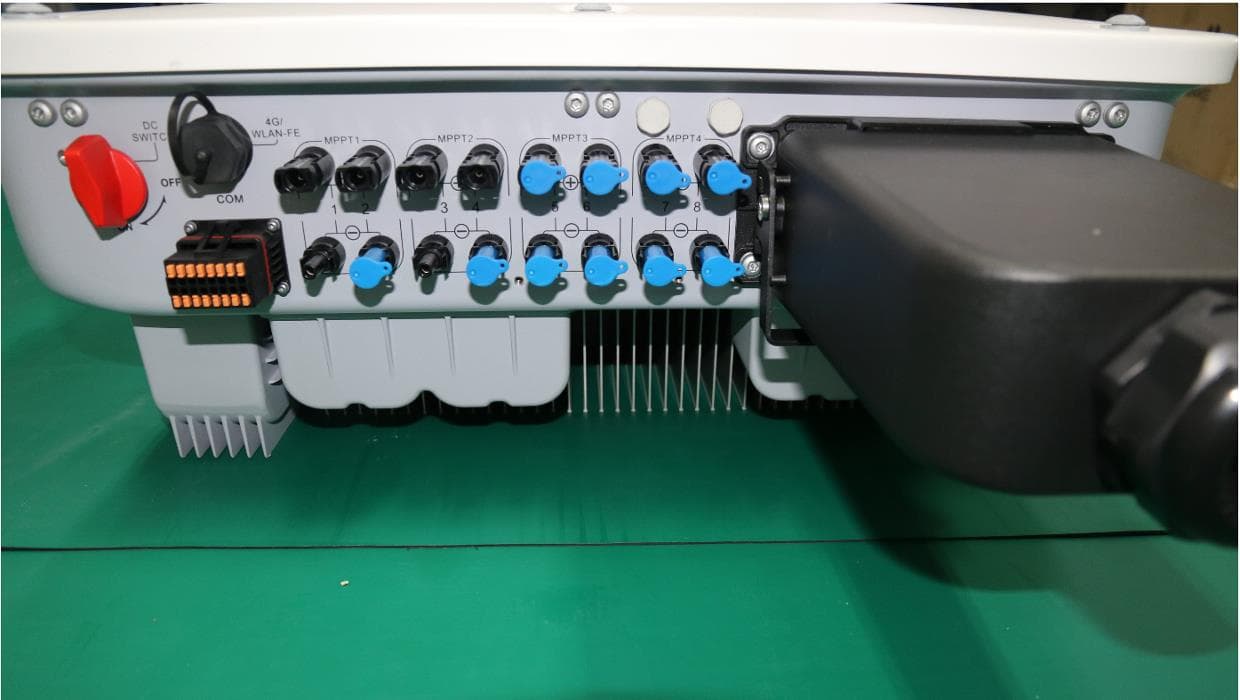
QISSUN2000
Jun 27, 2021Solar Inverter
Equipment Class
DTS - Digital Transmission System
QISCP81-1
Oct 22, 2020Watch Wireless Charger
Equipment Class
DCD - Part 15 Low Power Transmitter Below 1705 kHz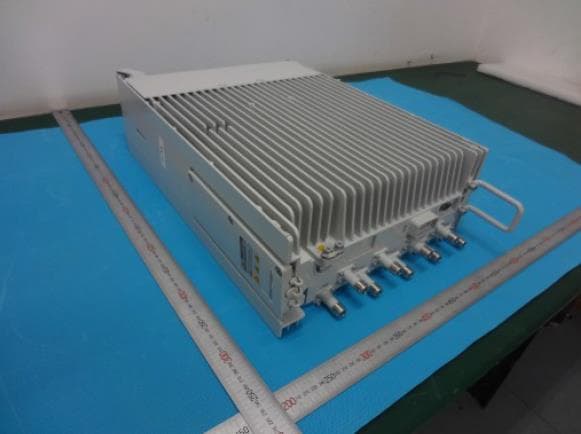
QISRRU3278
Sep 02, 2020Remote Radio Unit
Equipment Class
CBD - Citizens Band Category A and B Devices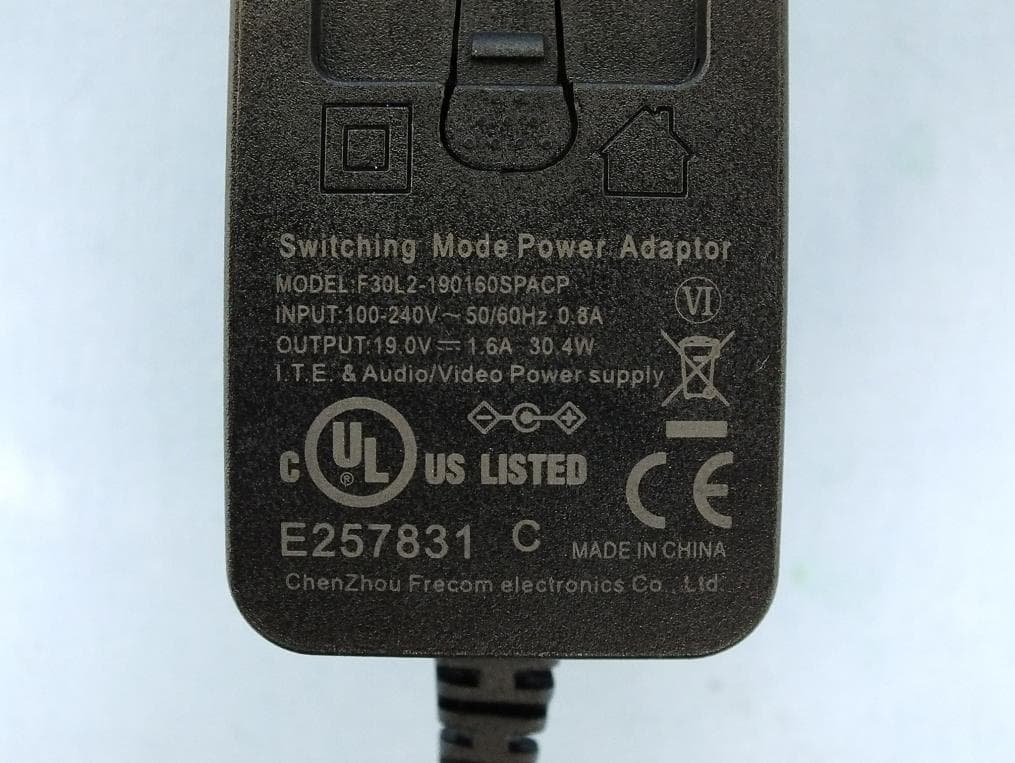
QISR2561
Jul 11, 2020Indoor Router
Equipment Class
DTS - Digital Transmission System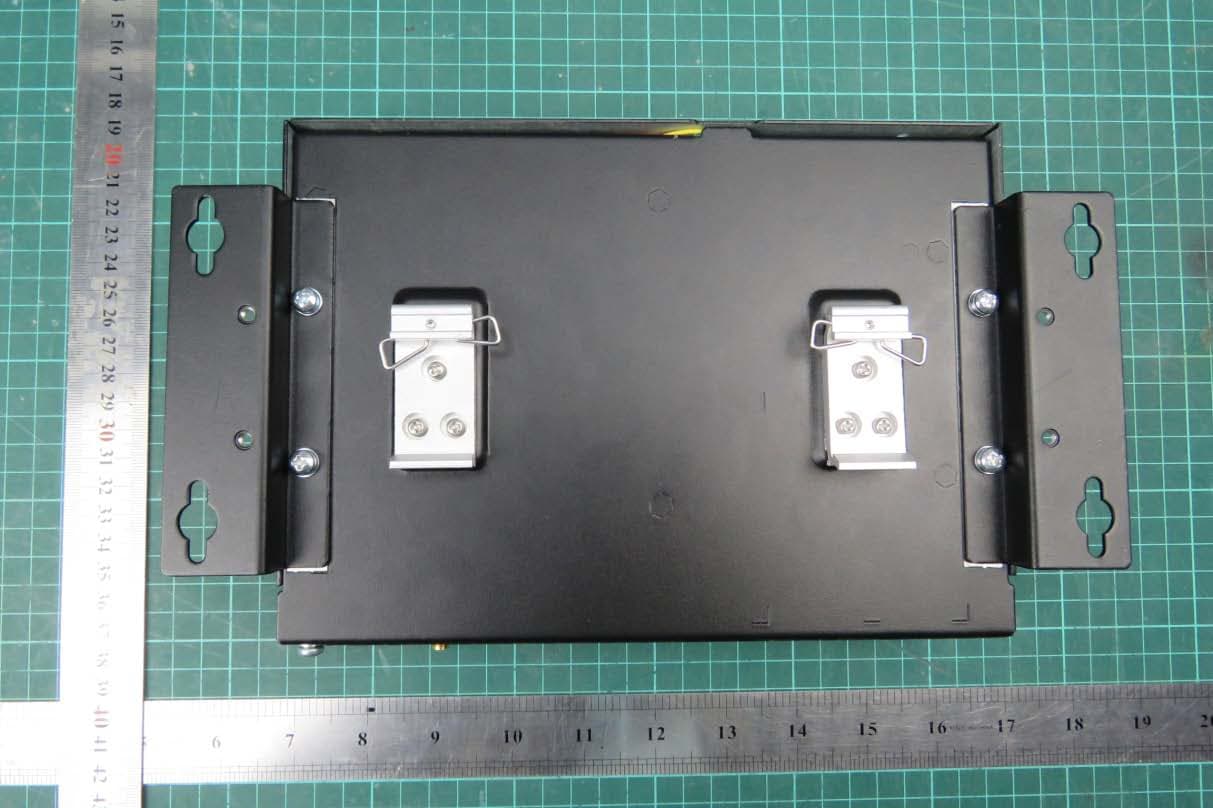
QISSMARTLOGGER310
Mar 23, 2020Solar Smart Monitor & Data Logger
Equipment Class
DTS - Digital Transmission System