QISU5760UMTS Mobile Phone
Huawei Technologies Co.,Ltd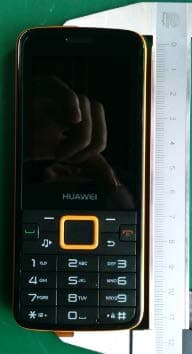
Click to zoom
Application Details
- Equipment Class
- PCE - PCS Licensed Transmitter held to ear
- Date of Grant
- Sep 21, 2014
- Application Purpose
- Original Equipment
- Date of Application
- Sep 21, 2014
- Equipment Note
- UMTS Mobile Phone
- Frequency Range
- 1850.20000000 - 1909.80000000
- Company
- Huawei Technologies Co.,Ltd
- Country
- China
Documents & Files
Document Text
Text extracted from the exhibit documents filed with the FCC. Open a document above to read the original.
Users Manual
Quick Start Guide Orinoquia U5760 Copyright © Industria Electrónica Orinoquia S.A. 2014. All rights reserved. No part of this manual may be reproduced or transmitted in any form or by any means without prior written consent of Industria Electrónica Orinoquia S.A. The product described in this manual may include copyrighted software of Industria Electrónica Orinoquia S.A. and possible licensors. Customers shall not in any manner reproduce, distribute, modify, decompile, disassemble, decrypt, extract, reverse engineer, lease, assign, or sublicense the said software, unless such restrictions are prohibited by applicable laws or such actions are approved by respective copyright holders. Trademarks and Permissions and Orinoquia are trademarks or registered trademarks of Industria Electrónica Orinoquia S.A. The Bluetooth® word mark and logos are registered trademarks owned by Bluetooth SIG, Inc. and any use of such marks by Industria Electrónica Orinoquia S.A. is under license. Other trademarks, product, service and company names mentioned may be the property of their respective owners. Notice Some features of the product and its accessories described herein rely on the software installed, capacities and settings of the local network, and therefore may not be activated or may be limited by local network operators or network service providers. Thus, the descriptions herein may not exactly match the product or its accessories which you purchase. Industria Electrónica Orinoquia S.A. reserves the right to change or modify any information or specifications contained in this manual without prior notice and without any liability. DISCLAIMER ALL CONTENTS OF THIS MANUAL ARE PROVIDED "AS IS". EXCEPT AS REQUIRED BY APPLICABLE LAWS, NO WARRANTIES OF ANY KIND, EITHER EXPRESS OR IMPLIED, INCLUDING BUT NOT LIMITED TO, THE IMPLIED WARRANTIES OF MERCHANTABILITY AND FITNESS FOR A PARTICULAR PURPOSE, ARE MADE IN RELATION TO THE ACCURACY, RELIABILITY OR CONTENTS OF THIS MANUAL. TO THE MAXIMUM EXTENT PERMITTED BY APPLICABLE LAW, IN NO EVENT SHALL INDUSTRIA ELECTRÓNICA ORINOQUIA S.A. BE LIABLE FOR ANY SPECIAL, INCIDENTAL, INDIRECT, OR CONSEQUENTIAL DAMAGES, OR LOSS OF PROFITS, BUSINESS, REVENUE, DATA, GOODWILL SAVINGS OR ANTICIPATED SAVINGS REGARDLESS OF WHETHER SUCH LOSSES ARE FORSEEABLE OR NOT. THE MAXIMUM LIABILITY (THIS LIMITATION SHALL NOT APPLY TO LIABILITY FOR PERSONAL INJURY TO THE EXTENT APPLICABLE LAW PROHIBITS SUCH A LIMITATION) OF INDUSTRIA ELECTRÓNICA ORINOQUIA S.A. ARISING FROM THE USE OF THE PRODUCT DESCRIBED IN THIS MANUAL SHALL BE LIMITED TO THE AMOUNT PAID BY CUSTOMERS FOR THE PURCHASE OF THIS PRODUCT. Import and Export Regulations Customers shall comply with all applicable export or import laws and regulations and be responsible to obtain all necessary governmental permits and licenses in order to export, re-export or import the product mentioned in this manual including the software and technical data therein. Safety Precaution Please read these safety precautions carefully before operating your phone. Do not crush, throw, or puncture your phone. Avoid dropping, squeezing, or bending it also. Your phone is not meant for use in a damp environment, such as the bathroom. Do not submerge your phone in liquid of any sort and avoid getting your phone wet. Avoid using your mobile phone in areas where it may cause interference or present a hazard. Follow local laws and regulations. Avoid using your phone while driving. Your safety should always be your top priority. Follow any rules or regulations in hospitals and health care facilities. Power off your phone near any medical apparatus. Power off your phone in an aircraft. The phone may interfere with the aircraft's control equipment and navigation system. Power off your phone near high-precision electronic devices. The phone may affect the performance of these devices. Do not attempt to disassemble your phone or its accessories. Only qualified personnel are allowed to service or repair the phone. Do not place your phone or its accessories in containers with a strong electromagnetic field. Do not place magnetic storage media near your phone. Radio waves from the phone may erase the information stored on them. Do not expose your phone to extreme temperatures or use it at a location with flammable materials, such as a gas station. Keep your phone and its accessories away from children. Do not allow young children to use your phone without adult supervision. Use only approved batteries and chargers to avoid the risk of explosions. Observe any laws or regulations on the use of wireless devices. Respect the privacy and legal rights of others when using your phone. To prevent damage to your phone or your computer, follow all instructions pertaining to the USB cable. 1 1 Your Phone 1 Earpiece 2 Screen 3 Confirm key 4 Left soft key 5 Call/Answer key 6 Music key 7 Number keys 8 * key 9 Microphone 10 # key 2 11 Back key 12 End/Power key 13 Right soft key 14 Navigation keys 15 Camera 16 Loudspeaker 17 Headset jack 18 Charger jack/USB port 3 2 Installing the SIM Card and Battery Before you begin to use your phone, a SIM card must be inserted. Follow the steps laid out below to insert your SIM card into the phone. Power off your phone before attempting to remove the battery or SIM card. a b 4 3 Inserting the microSD Card a b b a 4 Charging the Battery When the battery icon changes to or the charging animation becomes static, the battery is fully charged. If the battery has not been used for a long time or if the battery power is completely depleted, the charging icon may take several minutes to appear after you start charging. 5 5 Keys and Functions In this guide, the navigation keys of the phone are indicated by , , , , , . Press To Select the option displayed in the lower left corner of the screen. Select the option displayed in the lower right corner of the screen. Dial a number or answer a call. Access call logs in standby mode. Power the phone on or off (p…
Text truncated - open the document above for the full version.
Cover Letter(s)
MET Laboratories TCB - Samples Long Term Confidentiality Request Letter 2014-09-16 MET Laboratories, Inc. 914 West Patapsco Avenue Baltimore, MD 21230 RE: CONFIDENTIALITY REQUEST FOR (UMTS Mobile Phone/HUAWEI U5760 U5760 ORINO QUIA JASPE # FCC ID: QISU5760) To Whom It May Concern: This letter serves as an official request for confidentiality under sections 0.457 and 0.459 of CFR 47. We have requested that: 1. Schematics 2. Block Diagram 3. Operational Description 4. BOM List 5. Tune up procedure required to be submitted with this application be permanently withheld from public review. Please contact me if there is any information you may need. Sincerely, _________________________ Zhang Xinghai/manager HUAWEI TECHNOLOGIES CO., LTD.
Cover Letter(s)
Huawei Technologies Co., Ltd Huawei Industrial Base,Bantian Longgang,Shenzhen 518129, P.R China +86 755 28780808 www.huawei.com Declaration of Letter Product Type: UMTS Mobile Phone Model No.: HUAWEI U5760, U5760, ORINO QUIA JASPE The three models were identical, only difference is the model name. And the three models have the same technical construction, including software design, RF module, antennas, circuit design and PCB layout. There are no differences between the three models (HUAWEI U5760, U5760, ORINO QUIA JASPE) on electrical and mechanical construction. Sincerely, For and Behalf of: Huawei Technologies Co., Ltd. Huawei Industrial Base, Bantian Longgang, Shenzhen 518129, P.R China
External Photos
HUAWEI U5760,U5760,ORINO QUIA JASPE UMTS Mobile Phone SECRET 2013-04-03 Page1, Total2 External Photos of HUAWEI U5760, U5760, ORINO QUIA JASPE HUAWEI U5760,U5760,ORINO QUIA JASPE UMTS Mobile Phone SECRET 2013-04-03 Page2, Total2
ID Label/Location Info
HUAWEI U5760,U5760,ORINO QUIA JASPE UMTS Mobile Phone SECRET 2013-04-03 Page1, Total2 HUAWEI U5760,U5760,ORINO QUIA JASPE Label & Label Location: HUAWEI U5760,U5760,ORINO QUIA JASPE UMTS Mobile Phone SECRET 2013-04-03 Page2, Total2
Internal Photos
HUAWEI U5760, U5760, ORINO QUIA JASPE UMTS Mobile Phone SECRET 2013-04-03 Page1, Total4 Internal Photos of HUAWEI U5760, U5760, ORINO QUIA JASPE HUAWEI U5760, U5760, ORINO QUIA JASPE UMTS Mobile Phone SECRET 2013-04-03 Page2, Total4 HUAWEI U5760, U5760, ORINO QUIA JASPE UMTS Mobile Phone SECRET 2013-04-03 Page3, Total4 HUAWEI U5760, U5760, ORINO QUIA JASPE UMTS Mobile Phone SECRET 2013-04-03 Page4, Total4
RF Exposure Info
Report No.: SYBH (Z-SAR)023082014-2 FCC ID:QIS U5760 Appendix A. System Check Plots Table of contents SystemPerformanceCheck-D835-EX-Head SystemPerformanceCheck-D835-EX-Body SystemPerformanceCheck-D1900-EX-Head SystemPerformanceCheck-D1900-EX-Body Date: 2014-9-6 Test Laboratory: HUAWEI SAR/HAC Lab SystemPerformanceCheck-D835-EX-Head DUT: Dipole 835 MHz D835V2; Type: D835V2; Serial: D835V2 - SN:4d059 Communication System: UID 0, CW; Frequency: 835 MHz;Duty Cycle: 1:1 Medium parameters used: f = 835 MHz; σ = 0.898 S/m; ε r = 40.713; ρ = 1000 kg/m 3 Phantom section: Flat Section DASY Configuration: lProbe: EX3DV4 - SN3898; ConvF(10.32, 10.32, 10.32); Calibrated: 2014-3- 10; lSensor-Surface: 3mm (Mechanical Surface Detection), z = 1.0, 31.0 lElectronics: DAE4 Sn852; Calibrated: 2014-4- 30 lPhantom: SAM4; Type: SAM; Serial: TP-1620 lDASY52 52.8.8(1222); SEMCAD X 14.6.10(7331) Configuration/d=15mm, Pin=250mW/Area Scan (6x12x1): Measurement grid: dx=15mm, dy=15mm Maximum value of SAR (measured) = 2.68 W/kg Configuration/d=15mm, Pin=250mW/Zoom Scan (5x5x7)/Cube 0: Measurement grid: dx=8mm, dy=8mm, dz=5mm Reference Value = 51.77 V/m; Power Drift = 0.07 dB Peak SAR (extrapolated) = 3.55 W/kg SAR(1 g) = 2.36 W/kg; SAR(10 g) = 1.54 W/kg Maximum value of SAR (measured) = 2.77 W/kg 0 dB = 2.68 W/kg = 4.28 dBW/kg Date: 2014-9-8 Test Laboratory: HUAWEI SAR/HAC Lab SystemPerformanceCheck-D835-EX-Body DUT: Dipole 835 MHz D835V2; Type: D835V2; Serial: D835V2 - SN:4d059 Communication System: UID 0, CW; Frequency: 835 MHz;Duty Cycle: 1:1 Medium parameters used: f = 835 MHz; σ = 0.952 S/m; ε r = 53.179; ρ = 1000 kg/m 3 Phantom section: Flat Section DASY Configuration: lProbe: EX3DV4 - SN3898; ConvF(10.18, 10.18, 10.18); Calibrated: 2014-3- 10; lSensor-Surface: 3mm (Mechanical Surface Detection), z = 1.0, 31.0 lElectronics: DAE4 Sn852; Calibrated: 2014-4- 30 lPhantom: SAM4; Type: SAM; Serial: TP-1620 lDASY52 52.8.8(1222); SEMCAD X 14.6.10(7331) Configuration/d=15mm, Pin=250mW/Area Scan (6x14x1): Measurement grid: dx=15mm, dy=15mm Maximum value of SAR (measured) = 2.84 W/kg Configuration/d=15mm, Pin=250mW/Zoom Scan (5x5x7)/Cube 0: Measurement grid: dx=8mm, dy=8mm, dz=5mm Reference Value = 49.40 V/m; Power Drift = -0.03 dB Peak SAR (extrapolated) = 3.62 W/kg SAR(1 g) = 2.47 W/kg; SAR(10 g) = 1.63 W/kg Maximum value of SAR (measured) = 2.89 W/kg 0 dB = 2.84 W/kg = 4.53 dBW/kg Date: 2014-9-6 Test Laboratory: HUAWEI SAR/HAC Lab SystemPerformanceCheck-D1900-EX-Head DUT: Dipole 1900 MHz D1900V2; Type: D1900V2; Serial: D1900V2 - SN:5d143 Communication System: UID 0, CW; Frequency: 1900 MHz;Duty Cycle: 1:1 Medium parameters used: f = 1900 MHz; σ = 1.431 S/m; ε r = 40.863; ρ = 1000 kg/m 3 Phantom section: Flat Section DASY Configuration: lProbe: EX3DV4 - SN3898; ConvF(8.2, 8.2, 8.2); Calibrated: 2014-3- 10; lSensor-Surface: 3mm (Mechanical Surface Detection), z = 1.0, 31.0 lElectronics: DAE4 Sn852; Calibrated: 2014-4- 30 lPhantom: SAM3; Type: SAM; Serial: TP-1597 lDASY52 52.8.8(1222); SEMCAD X 14.6.10(7331) Configuration/d=10mm, Pin=250mW/Area Scan (5x9x1): Measurement grid: dx=15mm, dy=15mm Maximum value of SAR (measured) = 11.6 W/kg Configuration/d=10mm, Pin=250mW/Zoom Scan (5x5x7)/Cube 0: Measurement grid: dx=8mm, dy=8mm, dz=5mm Reference Value = 84.26 V/m; Power Drift = 0.16 dB Peak SAR (extrapolated) = 17.2 W/kg SAR(1 g) = 9.8 W/kg; SAR(10 g) = 5.17 W/kg Maximum value of SAR (measured) = 12.3 W/kg 0 dB = 11.6 W/kg = 10.66 dBW/kg Date: 2014-9-9 Test Laboratory: HUAWEI SAR/HAC Lab SystemPerformanceCheck-D1900-EX-Body DUT: Dipole 1900 MHz D1900V2; Type: D1900V2; Serial: D1900V2 - SN:5d143 Communication System: UID 0, CW (0); Frequency: 1900 MHz;Duty Cycle: 1:1 Medium parameters used: f = 1900 MHz; σ = 1.511 S/m; ε r = 51.009; ρ = 1000 kg/m 3 Phantom section: Flat Section DASY Configuration: lProbe: EX3DV4 - SN3898; ConvF(7.83, 7.83, 7.83); Calibrated: 2014-3- 10; lSensor-Surface: 3mm (Mechanical Surface Detection), z = 1.0, 31.0 lElectronics: DAE4 Sn852; Calibrated: 2014-4- 30 lPhantom: SAM3; Type: SAM; Serial: TP-1597 lDASY52 52.8.8(1222); SEMCAD X 14.6.10(7331) Configuration/d=10mm, Pin=250mW/Area Scan (6x9x1): Measurement grid: dx=15mm, dy=15mm Maximum value of SAR (measured) = 10.7 W/kg Configuration/d=10mm, Pin=250mW/Zoom Scan (5x5x7)/Cube 0: Measurement grid: dx=8mm, dy=8mm, dz=5mm Reference Value = 81.89 V/m; Power Drift = 0.14 dB Peak SAR (extrapolated) = 15.6 W/kg SAR(1 g) = 9.44 W/kg; SAR(10 g) = 5.03 W/kg Maximum value of SAR (measured) = 11.6 W/kg 0 dB = 10.7 W/kg = 10.30 dBW/kg
RF Exposure Info
Report No.:SYBH (Z-SAR)023082014-2 FCC ID: QISU5760 Appendix B. SAR Measurement Plots Table of contents GSM850 Head GSM850 Body GSM1900 Head GSM1900 Body UMTS Band V Head UMTS Band V Body UMTS Band II Head UMTS Band II Body Date: 2014-9- 6 Test Laboratory: HUAWEI SAR/HAC Lab U5760 GSM850 251CH Right hand touch cheek DUT: HUAWEI U5760, U5760; Type: UMTS Mobile Phone; Serial: SAR1 Communication System: UID 0, HW-GSM\GPRS\EGPRS-1TS (0); Frequency: 848.8 MHz;Duty Cycle: 1:8.30042 Medium parameters used: f = 849 MHz; σ = 0.905 S/m; ε r = 40.819; ρ = 1000 kg/m 3 Phantom section: Right Section DASY Configuration: lProbe: EX3DV4 - SN3898; ConvF(10.32, 10.32, 10.32); Calibrated: 2014-3- 10; lSensor-Surface: 3mm (Mechanical Surface Detection), z = 1.0, 31.0 lElectronics: DAE4 Sn852; Calibrated: 2014-4- 30 lPhantom: SAM4; Type: SAM; Serial: TP-1620 lDASY52 52.8.8(1222); SEMCAD X 14.6.10(7331) Configuration/Head/Area Scan (6x10x1): Measurement grid: dx=15mm, dy=15mm Maximum value of SAR (measured) = 0.933 W/kg Configuration/Head/Zoom Scan (5x5x7)/Cube 0: Measurement grid: dx=8mm, dy=8mm, dz=5mm Reference Value = 12.25 V/m; Power Drift = 0.02 dB Peak SAR (extrapolated) = 1.13 W/kg SAR(1 g) = 0.878 W/kg; SAR(10 g) = 0.646 W/kg Maximum value of SAR (measured) = 0.976 W/kg 0 dB = 0.976 W/kg = -0.11 dBW/kg Date: 2014-9-8 Test Laboratory: HUAWEI SAR/HAC Lab U5760 GSM850 251CH Back Side 15mm with battery 2# DUT: HUAWEI U5760, U5760; Type: UMTS Mobile Phone; Serial: SAR1 Communication System: UID 0, HW-GSM\GPRS\EGPRS-1TS (0); Frequency: 848.8 MHz;Duty Cycle: 1:8.30042 Medium parameters used: f = 849 MHz; σ = 0.957 S/m; ε r = 53.071; ρ = 1000 kg/m 3 Phantom section: Flat Section DASY Configuration: lProbe: EX3DV4 - SN3898; ConvF(10.18, 10.18, 10.18); Calibrated: 2014-3- 10; lSensor-Surface: 3mm (Mechanical Surface Detection), z = 1.0, 31.0 lElectronics: DAE4 Sn852; Calibrated: 2014-4- 30 lPhantom: SAM4; Type: SAM; Serial: TP-1620 lDASY52 52.8.8(1222); SEMCAD X 14.6.10(7331) Configuration/Body/Area Scan (6x10x1): Measurement grid: dx=15mm, dy=15mm Maximum value of SAR (measured) = 1.07 W/kg Configuration/Body/Zoom Scan (5x5x7)/Cube 0: Measurement grid: dx=8mm, dy=8mm, dz=5mm Reference Value = 30.18 V/m; Power Drift = -0.02 dB Peak SAR (extrapolated) = 1.28 W/kg SAR(1 g) = 0.973 W/kg; SAR(10 g) = 0.699 W/kg Maximum value of SAR (measured) = 1.09 W/kg 0 dB = 1.07 W/kg = 0.28 dBW/kg Date: 2014-9- 6 Test Laboratory: HUAWEI SAR/HAC Lab U5760 GSM1900 512CH Right hand touch cheek with battery 2# DUT: HUAWEI U5760, U5760; Type: UMTS Mobile Phone; Serial: SAR1 Communication System: UID 0, HW-GSM\GPRS\EGPRS-1TS (0); Frequency: 1850.2 MHz;Duty Cycle: 1:8.30042 Medium parameters used (interpolated): f = 1850.2 MHz; σ = 1.39 S/m; ε r = 41.036; ρ = 1000 kg/m 3 Phantom section: Right Section DASY Configuration: lProbe: EX3DV4 - SN3898; ConvF(8.2, 8.2, 8.2); Calibrated: 2014-3- 10; lSensor-Surface: 3mm (Mechanical Surface Detection), z = 1.0, 31.0 lElectronics: DAE4 Sn852; Calibrated: 2014-4- 30 lPhantom: SAM3; Type: SAM; Serial: TP-1597 lDASY52 52.8.8(1222); SEMCAD X 14.6.10(7331) Configuration/Head/Area Scan (7x11x1): Measurement grid: dx=15mm, dy=15mm Info: Interpolated medium parameters used for SAR evaluation. Maximum value of SAR (measured) = 0.476 W/kg Configuration/Head/Zoom Scan (5x5x7)/Cube 0: Measurement grid: dx=8mm, dy=8mm, dz=5mm Reference Value = 6.894 V/m; Power Drift = -0.06 dB Peak SAR (extrapolated) = 0.620 W/kg SAR(1 g) = 0.427 W/kg; SAR(10 g) = 0.264 W/kg Info: Interpolated medium parameters used for SAR evaluation. Maximum value of SAR (measured) = 0.501 W/kg 0 dB = 0.476 W/kg = -3.22 dBW/kg Date: 2014-9- 9 Test Laboratory: HUAWEI SAR/HAC Lab U5760 GSM1900 512CH Back Side 15mm with battery #2 DUT: HUAWEI U5760, U5760; Type: UMTS Mobile Phone; Serial: SAR1 Communication System: UID 0, HW-GSM\GPRS\EGPRS-1TS (0); Frequency: 1850.2 MHz;Duty Cycle: 1:8.30042 Medium parameters used (interpolated): f = 1850.2 MHz; σ = 1.462 S/m; ε r = 51.128; ρ = 1000 kg/m 3 Phantom section: Flat Section DASY Configuration: lProbe: EX3DV4 - SN3898; ConvF(7.83, 7.83, 7.83); Calibrated: 2014-3- 10; lSensor-Surface: 3mm (Mechanical Surface Detection), z = 1.0, 31.0 lElectronics: DAE4 Sn852; Calibrated: 2014-4- 30 lPhantom: SAM3; Type: SAM; Serial: TP-1597 lDASY52 52.8.8(1222); SEMCAD X 14.6.10(7331) Configuration/Body/Area Scan (7x11x1): Measurement grid: dx=15mm, dy=15mm Info: Interpolated medium parameters used for SAR evaluation. Maximum value of SAR (measured) = 0.194 W/kg Configuration/Body/Zoom Scan (5x5x7)/Cube 0: Measurement grid: dx=8mm, dy=8mm, dz=5mm Reference Value = 4.428 V/m; Power Drift = -0.04 dB Peak SAR (extrapolated) = 0.299 W/kg SAR(1 g) = 0.195 W/kg; SAR(10 g) = 0.119 W/kg Info: Interpolated medium parameters used for SAR evaluation. Maximum value of SAR (measured) = 0.230 W/kg 0 dB = 0.194 W/kg = -7.11 dBW/kg Date: 2014-9- 6 Test Laboratory: HUAWEI SAR/HAC Lab U5760 UMTS Band V 4233CH Right hand touch cheek with battery 2# DUT: HUAWEI U5760, U5760; Type: UMTS Mobile Phone; Serial: SAR1 Communication System: UID 0, HW-UMTS-FDD(WCDMA) (0); Frequency: 846.6 MHz;Duty Cycle: 1:1 Medium parameters used: f = 847 MHz; σ = 0.91 S/m; ε r = 40.678; ρ = 1000 kg/m 3 Phantom section: Right Section DASY Configuration: lProbe: EX3DV4 - SN3898; ConvF(10.32, 10.32, 10.32); Calibrated: 2014-3- 10; lSensor-Surface: 3mm (Mechanical Surface Detection), z = 1.0, 31.0 lElectronics: DAE4 Sn852; Calibrated: 2014-4- 30 lPhantom: SAM4; Type: SAM; Serial: TP-1620 lDASY52 52.8.8(1222); SEMCAD X 14.6.10(7331) Configuration/Head/Area Scan (6x10x1): Measurement grid: dx=15mm, dy=15mm Maximum value of SAR (measured) = 0.842 W/kg Configuration/Head/Zoom Scan (5x5x7)/Cube 0: Measurement grid: dx=8mm, dy=8mm, dz=5mm Reference Value = 11.70 V/m; Power Drift = 0.01 dB Peak SAR (extrapolated) = 1.01 W/kg SAR(1 g) = 0.800 W/kg; SAR(10 g) = 0.586 W/kg Maximum value of SAR (measured) = 0.892 W/kg 0 dB = 0.842 W/kg = -0.75 dBW/kg Date: 2014-9- 9 Test …
Text truncated - open the document above for the full version.
RF Exposure Info
Justification of the extended calibration of Dipole D 835V2 SN:4d059 Per KDB 865664, we have Measured the Impedance and Return Loss as below, and the r etur n los s is <-20dB, with 20% of prior calibration; t he real or imaginary parts of t he impedance is with 5 ohm of prior calibr ation . Therefore the verification result should support extended calibration. Dipole835Head TST Target Value Measured Value Difference Impedance transformed to feed point 51.7Ω-2.7jΩ 50.43Ω-2.79jΩ R=-1.27Ω, X=-0.09Ω Return Loss -30.2dB -30.16dB 0.13% Dipole835 Body TST Target Value Measured Value Difference Impedance transformed to feed point 47.1Ω-4.7jΩ 46.74Ω-4.96jΩ R=-0.36Ω, X=-0.26Ω Return Loss -24.9dB -24.63dB 1.08% Measured Date 2013-05-02 2014-05-01 ----- Impedance Test-Head Return Loss Test-Head
RF Exposure Info
Justification of the extended calibration of Dipole D1900V2 SN: 5d143 Per KDB 865664, we have Measured the Impedance and Return Loss as below, and the return loss is <-20dB, with 20% of prior calibration; the real or imaginary parts of the impedance is with 5 ohm of prior calibration. Therefore the verification result should support extended calibration. Dipole1900 Head TST Target Value Measured Value Difference Impedance transformed to feed point 53.5Ω+5.8jΩ 53.26Ω+5.99jΩ R=-0.24Ω, X=0.19Ω Return Loss -23.7dB -25.10dB -5.91% Dipole1900 Body TST Target Value Measured Value Difference Impedance transformed to feed point 48.4Ω+6.1jΩ 50.44Ω+6.40jΩ R=2.04Ω, X=0.3Ω Return Loss -23.9dB -24.91dB -4.23% Measured Date 2011-09-26 2013-09-12 ----- Impedance Test-Head Return Loss Test-Head Impedance Test-Body Return Loss Test-Body
RF Exposure Info
Report No.:SYBH (Z-SAR)023082014-2 FCC ID:QISU5760 Appendix D. Photo documentation Table of contents Test Facility Test Positions Liquid depth Test Facility Photo 1: Measurement System DASY5 Test Positions Photo 2: Front View Photo 3: Back View Photo 4: Left hand touch cheek Photo 5: Left hand tilt 15° Photo 6:Right hand touch cheek Photo 7: Right hand tilt 15° Photo 8: Front Side(15mm) Photo 9: Back Side(15mm) Photo 10: Back Side with Headset(15mm) NA NA Liquid depth Photo 11:HSL 835MHz depth (15.2cm) Photo 12:MSL 835MHz depth (15.1cm) Photo 13:HSL 1900MHz depth (15.3cm) Photo 14:MSL 1900MHz depth (15.1cm)
RF Exposure Info
Administration Building, Headquarters of Huawei Technologies Co., Ltd., Bantian, Longgang District, Shenzhen, 518129, P.R.C Tel: +86 755 28780808 Fax: +86 755 89652518 FCC SAR Compliance Test Report Product Name: UMTS Mobile Phone Model: HUAWEI U5760, U5760, ORINO QUIA JASPE Report No.: SYBH(Z-SAR)023082014-2 FCC ID: QISU5760 APPROVED (Lab Manager) PREPARED (Test Engineer) BY DATE 2014-09-15 2014-09-15 The test results of this test report relate exclusively to the item(s) tested . The HUAWEI does not assume responsibility for any conclusions and generalisations drawn from the test results with regard to other specimens or samples of the type of the equipment represented by the test item. The test report may only be reproduced or published in full. Reproduction or publication of extracts from the report requires the prior written approval of HUAWEI. Reliability Laboratory of Huawei Technologies Co., Ltd. Report No.: SYBH(Z-SAR)023082014-2 FCC ID:QISU5760 2014-09-15 Page 2 of 40 Table of Contents 1 General Information ............................................................................................................................................... 4 1.1 Statement of Compliance .............................................................................................................................. 4 1.2 RF exposure limits ......................................................................................................................................... 5 1.3 EUT Description ............................................................................................................................................ 6 1.3.1 General Description ............................................................................................................................... 7 1.4 Test specification(s) ...................................................................................................................................... 8 1.5 Testing laboratory .......................................................................................................................................... 8 1.6 Applicant and Manufacturer .......................................................................................................................... 8 1.7 Application details .......................................................................................................................................... 8 1.8 Ambient Condition ........................................................................................................................................ 8 2 SAR Measurement System ................................................................................................................................... 9 2.1 SAR Measurement Set-up ............................................................................................................................ 9 2.2 Test environment ......................................................................................................................................... 10 2.3 Data Acquisition Electronics description .................................................................................................... 10 2.4 Probe description ......................................................................................................................................... 11 2.5 Phantom description .................................................................................................................................... 12 2.6 Device holder description ............................................................................................................................ 13 2.7 Test Equipment List ..................................................................................................................................... 14 3 SAR Measurement Procedure ............................................................................................................................ 15 3.1 Scanning procedure .................................................................................................................................... 15 3.2 Spatial Peak SAR Evaluation ...................................................................................................................... 16 3.3 Data Storage and Evaluation ...................................................................................................................... 17 4 System Verification Procedure ............................................................................................................................ 19 4.1 Tissue Verification ....................................................................................................................................... 19 4.2 System Check ............................................................................................................................................. 21 4.3 System check Procedure............................................................................................................................. 22 5 SAR measurement variability and uncertainty .................................................................................................... 23 5.1 SAR measurement variability ...................................................................................................................... 23 5.2 SAR measurement uncertainty ................................................................................................................... 23 6 SAR Test Configuration ....................................................................................................................................... 24 6.1 GSM Test Configuration .............................................................................................................................. 24 6.2 UMTS Test Configuration .........................................…
Text truncated - open the document above for the full version.
Test Report
RF Test Report of HUAWEI U5760, U5760, ORINO QUIA JASPE Report No: SYBH(Z-RF)015082014-2001 Huawei Proprietary and Confidential Copyright © Huawei Technologies Co., Ltd. Page 1 of 122 Appendix for test report RF Test Report of HUAWEI U5760, U5760, ORINO QUIA JASPE Report No: SYBH(Z-RF)015082014-2001 Huawei Proprietary and Confidential Copyright © Huawei Technologies Co., Ltd. Page 2 of 122 1Appendix_A: Effective (Isotropic) Radiated Power Output Data Part I - Test Results Test Band Test Mode Test Channel Conducted Power [dBm] ERP [dBm] Limit [dBm] Verdict GSM850 GSM/TM1 LCH 32.11 29.96 38.5 PA SS MCH 32.15 30 38.5 PA SS HCH 32.03 29.88 38.5 PA SS GSM/TM2 LCH 24.92 22.77 38.5 PA SS MCH 24.89 22.74 38.5 PA SS HCH 24.88 22.73 38.5 PA SS WCDMA850 UMTS/TM1 LCH 22.31 20.16 38.5 PA SS MCH 22.26 20.11 38.5 PA SS HCH 22.29 20.14 38.5 PA SS Test Band Test Mode Test Channel Conducted Power [dBm] EIRP [dBm] Limit [dBm] Verdict GSM1900 GSM/TM1 LCH 29.22 30.22 33 PA SS MCH 29.27 30.27 33 PA SS HCH 29.23 30.23 33 PA SS GSM/TM2 LCH 23.38 24.38 33 PA SS MCH 23.8 24.8 33 PA SS HCH 23.77 24.77 33 PA SS WCDMA1900 UMTS/TM1 LCH 21.87 22.87 33 PA SS MCH 21.91 22.91 33 PA SS HCH 22.07 23.07 33 PA SS RF Test Report of HUAWEI U5760, U5760, ORINO QUIA JASPE Report No: SYBH(Z-RF)015082014-2001 Huawei Proprietary and Confidential Copyright © Huawei Technologies Co., Ltd. Page 3 of 122 Note1: a, For getting the ERP (Efficient Radiated Power) or EIRP (Efficient Isotropic Radiated Power) in substitution method, the following formula should be taken to calculate it, ERP [dBm] = SGP [dBm] - Cable Loss [dB] + Gain [dBd] EIRP [dBm] = SGP [dBm] - Cable Loss [dB] + Gain [dBi] b, SGP=Signal Generator Level Note2: RBW > emission bandwidth, VBW > 3 x RBW. Detector: RMS RF Test Report of HUAWEI U5760, U5760, ORINO QUIA JASPE Report No: SYBH(Z-RF)015082014-2001 Huawei Proprietary and Confidential Copyright © Huawei Technologies Co., Ltd. Page 4 of 122 2Appendix_B: Peak-to-Average Ratio Part I - Test Results Test Band Test Mode Test Channel Measured[dB] Limit [dB] Verdict GSM850 GSM/TM1 LCH 0.13 13 PA SS MCH 0.14 13 PA SS HCH 0.12 13 PA SS GSM/TM2 LCH 3.12 13 PA SS MCH 3.1 13 PA SS HCH 3.09 13 PA SS WCDMA850 UMTS/TM1 LCH 3.36 13 PA SS MCH 3.38 13 PA SS HCH 3.32 13 PA SS GSM1900 GSM/TM1 LCH 0.14 13 PA SS MCH 0.14 13 PA SS HCH 0.14 13 PA SS GSM/TM2 LCH 3.22 13 PA SS MCH 3.12 13 PA SS HCH 3.21 13 PA SS WCDMA1900 UMTS/TM1 LCH 3.32 13 PA SS MCH 3.36 13 PA SS HCH 3.28 13 PA SS RF Test Report of HUAWEI U5760, U5760, ORINO QUIA JASPE Report No: SYBH(Z-RF)015082014-2001 Huawei Proprietary and Confidential Copyright © Huawei Technologies Co., Ltd. Page 5 of 122 3Appendix_C: Modulation Characteristics Part I - Test Plots 3.1 For GSM 3.1.1 Test Band = GSM850 3.1.1.1 Test Mode = GSM/TM1 3.1.1.1.1 Test Channel = MCH RF Test Report of HUAWEI U5760, U5760, ORINO QUIA JASPE Report No: SYBH(Z-RF)015082014-2001 Huawei Propr…
Text truncated - open the document above for the full version.
Contact Information
Applicant
Zhang Xinghai
Technical Contact
Huawei Technologies Co., Ltd.Qin shengni
[email protected]075536836555
Administration Building, Headquarters of Huawei · Longgang District, Shenzhen · China
Test Firm
Huawei Technologies Co., LTDZhou Fengyum
Technical Specifications
| # | Rule Parts | Frequency Range | Power Output | Emission | Tolerance |
|---|---|---|---|---|---|
| 6 | 24E | 1.85 GHz - 1.91 GHz | 1.06 W | 246KGXW | 26.93 Hz |
Other Applications from Huawei Technologies Co.,Ltd
QISSUN2000
Jun 27, 2021Solar Inverter
Equipment Class
DTS - Digital Transmission System
QISCP81-1
Oct 22, 2020Watch Wireless Charger
Equipment Class
DCD - Part 15 Low Power Transmitter Below 1705 kHz
QISRRU3278
Sep 02, 2020Remote Radio Unit
Equipment Class
CBD - Citizens Band Category A and B Devices
QISR2561
Jul 11, 2020Indoor Router
Equipment Class
DTS - Digital Transmission System
QISSMARTLOGGER310
Mar 23, 2020Solar Smart Monitor & Data Logger
Equipment Class
DTS - Digital Transmission System