XYEEPIRB1Emergency Position Indicating Radio Beacon (EPIRB)
Ocean Signal Ltd.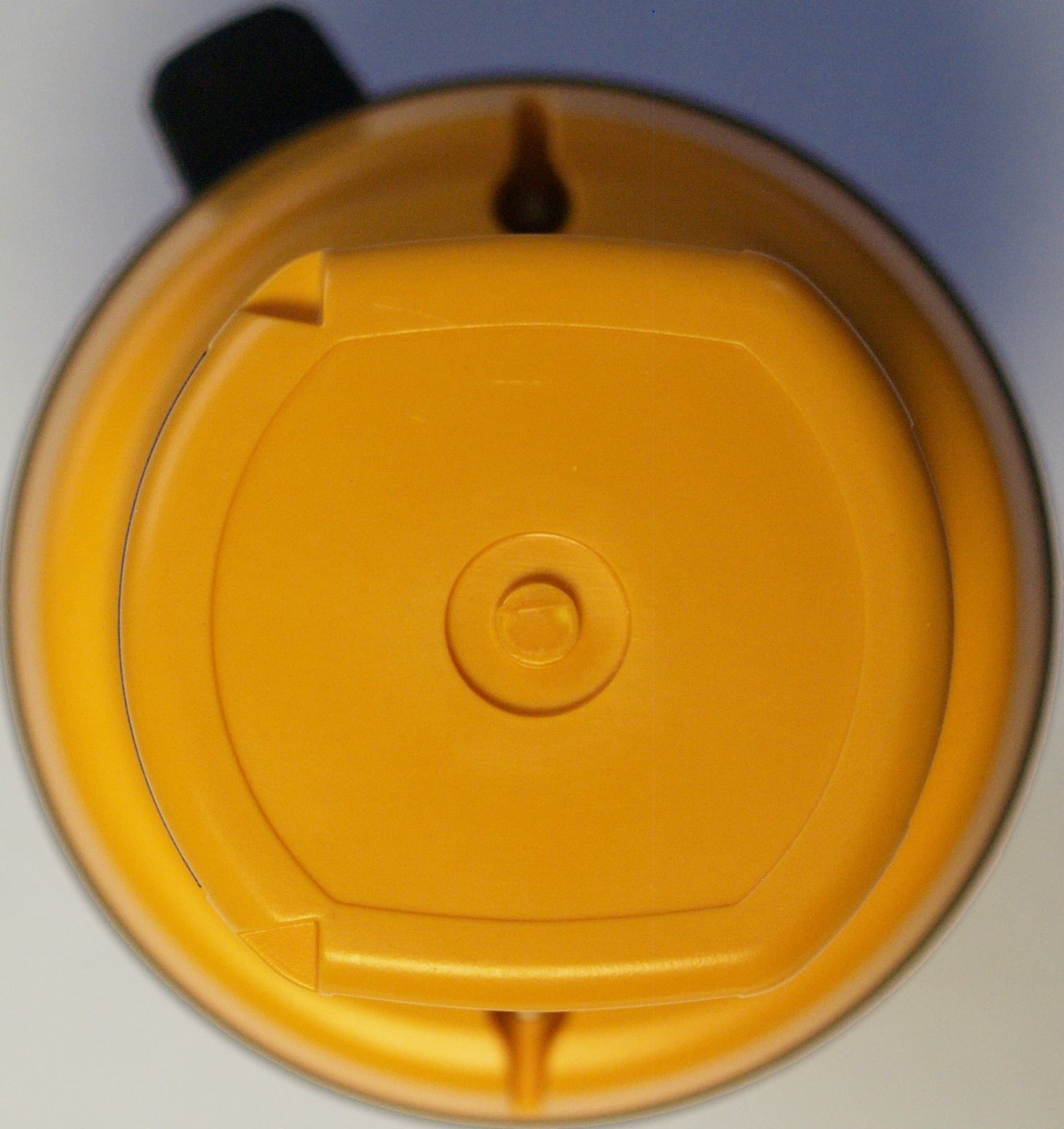
Click to zoom
Application Details
- Equipment Class
- GEP - 406 MHz EPIRB
- Date of Grant
- Dec 02, 2014
- Application Purpose
- Original Equipment
- Date of Application
- Dec 01, 2014
- Equipment Note
- Emergency Position Indicating Radio Beacon (EPIRB)
- Frequency Range
- 121.50000000 - 121.50000000
- Company
- Ocean Signal Ltd.
- Country
- United Kingdom
Documents & Files
Document Text
Text extracted from the exhibit documents filed with the FCC. Open a document above to read the original.
Users Manual
User Manual Emergency Position Indicating Radio Beacon English EPIRB1 www.oceansignal.com © 2014 Ocean Signal Ltd The technical data, information and illustrations contained in this manual were believed to be correct at the time of print. Ocean Signal Ltd reserve the right to change specifications and other information contained in this manual as part of our continual improvement process. No part of this manual may be reproduced, stored in a retrieval system or transmitted in any form, electronic or otherwise, without the prior permission of Ocean Signal Ltd. No liability can be accepted for any inaccuracies or omissions in this manual. Ocean Signal® and rescueME® are registered trademarks of Ocean Signal Ltd. For ease of access please record details of your EPIRB here. Owners Name: ....................................................... Vessel Name: ....................................................... Beacon HEX ID (UIN): ....................................................... EPIRB1 User Manual 3Version 00.02 09/06/2014 IN CASE OF EMERGENCY USE ONLY IN SITUATIONS OF GRAVE OR IMMINENT DANGER l Remove the EPIRB from the bracket l Pull the antenna out from the body to its full extent* using the red tab l Remove break off tab l Lift the flap up l Press the ON key (5) for one second to activate the beacon l The green led will flash to indicate activation l Release the ON key l The strobe light will start flashing to indicate it is activated l Remove the lanyard cover (6) l Holding the free end of the lanyard, throw the EPIRB into the water * Pull the antenna out until firm resistance is felt. The antenna will extend to 25.5cm. NOTE: Refer to section 4.2 for deactivation instructions 1 2 3 4 5 6 EPIRB1 User Manual 4Part No. 912S-01365 IN CASE OF EMERGENCY................................................... 3 1. GENERAL.............................................................. 5 1.1 Introduction.......................................................... 5 1.2 Exposure to RF Electromagnetic Energy............ 5 1.3 Warnings.............................................................. 5 1.4 Operating Mode................................................... 5 1.5 COSPAS/SARSAT System.................................... 6 2. Installation........................................................... 6 3. EPIRB1 OVERVIEW............................................... 7 4. OPERATION.......................................................... 8 4.1 Activation.............................................................. 8 4.2 Deactivation.......................................................... 9 4.3 False Alerts.......................................................... 9 5. TESTING........................................................................ 10 5.1 Beacon test.......................................................... 10 5.2 GPS test................................................................ 11 6. APPENDIX..................................................................... 12 6.1 Maintenance and Troubleshooting...................... 12 6.2 Batteries............................................................... 12 6.3 Transport.............................................................. 12 6.4 Disposal................................................................ 12 6.5 Specifications....................................................... 13 6.6 Approvals............................................................. 14 6.7 Registration......................................................... 14 6.8 Limited Warranty................................................. 15 EPIRB1 User Manual 5Version 00.02 09/06/2014 1. GENERAL 1.1 Introduction The rescueME range of products provide the user with the latest technology specifically designed for compact size and ease of operation. The EPIRB1 is a Class 2, Category 2 Emergency Position Indicating Radio Beacon (EPIRB) for manual release only. It is intended as a carry off EPIRB, but may also be used as a supplementary alerting device as specified in SOLAS regulations. 1.2 Exposure to RF Electromagnetic Energy This product also complies with EN62479 (EU) and RSS-102 (Canada). 1.3 Warnings It is a legal requirement to register your EPIRB with your National Authority. Only use your EPIRB in a situation of grave and imminent danger. Deliberately misusing your EPIRB or setting it off accidentally may result in prosecution and a fine. Your EPIRB contains small lithium batteries. Please see section #6.2 for information on safe transportation. The battery in your EPIRB should be replaced immediately if it has been activated, or if the test indicator shows the battery as ‘used’, or if the expiry date marked on the unit has been exceeded. Please read these instructions carefully. Failure to follow the guidance in this manual may result in loss of warranty. 1.4 Operating Mode Your EPIRB1 may be operated in a variety of modes. 1.4.1 Floating in water (a) This is the preferred method of operation. Ensure the EPIRB is firmly tied to the life raft or person before deployment. 1.4.2 On deck (b) When deploying the EPIRB on a deck, ensure it is vertical and clear of obstructions that might impede a clear view of the sky. 1.4.3 In a safety raft (c) The EPIRB may be deployed in a life-raft, where it should be held in a vertical position so that there is a clear view of the sky, preferably outside of the canopy. EPIRB1 User Manual 6Part No. 912S-01365 [ a ] Floating in water[b] Deployed on deck[ c ] Used in a liferaft 1.5 COSPAS/SARSAT System The COSPAS/SARSAT system utilises two satellite arrays to provide distress alert and location data to search and rescue authorities. The GEOSAR system can provide near immediate alerting within the coverage of the receiving satellite. The LEOSAR system provides coverage of the polar region beyond the range of the GEOSAR system. It can calculate the location of distress events using Doppler processing techniques and is less…
Text truncated - open the document above for the full version.
Attestation Statements
C e r t i f i c a t e Of EC Type-examination (Module B) Certificate No.: 142120002/AA/00 Product Category: A.1/5.6 With respect to Marine Equipment Directive 96/98/EC and the amending Directive 2013/52/EU, Telefication declares that the equipment: Product description: 406 MHz EPIRB (Cospas-Sarsat) Trademark: rescueME Family name: -- Type designation: EPIRB1 Serial No: -- Hard-|Software release No: 01.00|01.00 Manufacturer: Ocean Signal Ltd. Address: Unit 4, Ocivan Way, City: Margate CT9 4NN Country: United Kingdom complies with the international instruments and test standards as listed in the Annex. This certificate is granted to: Name: Ocean Signal Ltd. Address: Unit 4, Ocivan Way, City: Margate CT9 4NN Country: United Kingdom Validity of this certificate is 5 years; Expiry date: 20 November 2019 This certificate has THREE Annexes. Zevenaar, 20 November 2014 W.J.M. Jong Manager Product Certification Annex 1 to EC type-examination 20 November 2014 Number: 142120002/AA/00 Annex 1, Page 1 of 1 Telefication, Edisonstraat 12A, 6902 PK Zevenaar, The Netherlands Tel: +31 316 583 180, Fax: +31 316 583 189 General conditions • Each product to which this certificate relates shall be provided with Marine markings. The Marine marking consist of symbol in the form of a wheel followed by the identification number of the responsible Notified Body for module D, E, F or G, and by the last two digits of the number of the year in which the mark is affixed. • The holder of this Certificate has drawn up a Declaration of conformity to type with Directive 96/98/EC and amending Directives, declaring that the product(s) described in this EC Type- examination certificate, satisfy the requirements that apply to them. • Each product shall be identified by means of type, batch and/or serial numbers and the name of the manufacturer and/or importer. • If the equipment is to be modified, Telefication shall be notified immediately. Depending on the modifications, Telefication may have additional examinations carried out in consultation with the applicant. • Enforcement of a new amending directive voids the validity of this certificate for (re)placement of the product onboard ships. Remarks and observations The following conditions are applicable: The device includes a 121.5 MHz homing facility and a GPS. Type of EPIRB: non-float free, manual activation. Annex 2 to EC type-examination 20 November 2014 Number: 142120002/AA/00 Annex 2, Page 1 of 2 Telefication, Edisonstraat 12A, 6902 PK Zevenaar, The Netherlands Tel: +31 316 583 180, Fax: +31 316 583 189 Documentation lodged for this EC type-examination Test Reports: - Public Enterprise Testing Centre Omega: 14/171 Issue 3, 06 August 2014 - Public Enterprise Testing Centre Omega: 14/508 Issue 2, 02 October 2014 Product Documentation: - Assembly drawings - Bill of materials - Block diagram - Electric diagrams - Photos - User manual - Cospas Sarsat TAC: 256, issued 3 November 2014 International instruments and test standards The equipment complies with: - IEC 60945: August, 2002, Edition 4 - IEC 60945/Corrigendum 1: April, 2008, Edition 4 - IEC 61097-2: January, 2008, Ed. 3.0 - IMO Resolution A.694(17): 1991 - IMO Resolution A.810(19): 1995 - ITU-R M.633-4: December, 2010 Annex 2 to EC type-examination 20 November 2014 Number: 142120002/AA/00 Annex 2, Page 2 of 2 Telefication, Edisonstraat 12A, 6902 PK Zevenaar, The Netherlands Tel: +31 316 583 180, Fax: +31 316 583 189 Technical features and characteristics The product includes the following features and characteristics: EPIRB equipment - Operating frequency range: 406.040 MHz - Modulation method(s): FM - ITU designation: 16K0G1D - Maximum output power: 5 W EPIRB equipment - Operating frequency range: 121.5 MHz - Modulation method(s): AM - ITU designation: 3K20A3K - Maximum output power: 0.05 W GPS receiver - Operating frequency range: 1575.42 MHz Annex 3 to EC type-examination 20 November 2014 Number: 142120002/AA/00 Annex 3, Page 1 of 1 Telefication, Edisonstraat 12A, 6902 PK Zevenaar, The Netherlands Tel: +31 316 583 180, Fax: +31 316 583 189 Trademarks and Type designations The product as described in this EC type-examination includes the following type designations: - Product description: 406 MHz EPIRB (Cospas-Sarsat) - Trademark: rescueME - Type Designation: EPIRB1 - Hardware version: 01.00 - Software version: 01.00
External Photos
Ocean Signal rescueME EPIRB1 – External Photographs Figure 1: rescueME EPIRB1 – Front View Figure 2: rescueME EPIRB1 – Left Hand Side View Figure 3: rescueME EPIRB1 - Right Hand Side View Figure 4: rescueME EPIRB1 – Rear View Figure 5: rescueME EPIRB1 - Top View Approval information, including the FCC Identifier, will be printed on this label. Figure 6: rescueME EPIRB1 – Base View
ID Label/Location Info
FCC ID labels and location rescueME EPIRB1 Labels Figure 1: EPIRB1 Approvals Label showing FCC ID Figure 2: EPIRB1 FCC ID label location Figure 3: EPIRB1 USCG information label
Internal Photos
Ocean Signal rescueME EPIRB1 Internal photos of the rescueME EPIRB1 (with GPS) showing internal construction and PCB assembly. Figure 1: RescueMe EPIRB1 – Top view showing PCB in situ. Figure 2: rescueME EPIRB1 – Top view, PCB removed, showing battery carrier in situ. Figure 3: rescueME EPIRB1 – Top view, case only. Figure 4: rescueME EPIRB PCB – Rear side Figure 5: rescueME EPIRB PCB – Rear side with screening can removed. Figure 6: rescueME EPIRB1 – Battery pack in carrier.
RF Exposure Info
PE TC «Omega» Test Report 14/507 Issue 1 page 2 of 129 Ф.П4.2-214 PUBLIC ENTERPRISE TESTING CEN- TER «OMEGA» P.O.B. No.37, Sevastopol, 99053, Ukraine Phone: +380 692 537 072 Fax: +380 692 469 679 E-mail: [email protected] ACCREDITATION COSPAS-SARSAT Secretariat Reference No. CS497/F530 dated 21/09/1994 National Accreditation Agency of Ukraine Certificate of accreditation for compliance DSTU ISO 17025:2006 No. 2H339 valid until 17.05.2019 Letter of FCC acceptance #181479 dated July 24, 2014 IC registration of 3/10m OATS #8780A-1 dated May 29, 2013 IC registration of 3m alternative test site #8780A-2 dated May 29, 2013 BABT Certificate of Recognition testing laboratory No.LAB/033 dated 30.06.2013 valid until 30.06.2015 Letter of USCG Acceptance for testing EPIRBs #16714/161.011/OMEGA dated February 7, 2008 Accreditation certificate No. AAC.T.00130 dated 28.10.2011 valid until 28.10.2014 issued by AAC “Analitica”, Full Mem- ber and Signatory to ILAC and APLAC Mutual Recognitions Arrangements (www.aac-analitica.ru ) Report on: Emergency Position Indicating Radio Beacon (EPIRB) 406 MHz COSPAS–SARSAT model EPIRB1 Prepared for: Beacon Manufacturer : Ocean Signal Limited, Unit 4, Ocivan Way, Margate, Kent, CT9 4NN, United Kingdom Manufacturer representative : David Sheekey Product and Approvals Manager Telephone number: +44 (0) 1843 282930 [email protected] Test commencement date 17.02.2014 Test completion date 08.08.2014 The results of this report shall be applied only to the tested samples Copying or replication of this report or any part of it is prohibited without prior written permission of PE TC “Omega” PE TC «Omega» Test Report 14/507 Issue 1 page 3 of 129 Ф.П4.2-214 CONTENTS 1. EQUIPMENT UNDER TEST........................................................................................................................................ 5 2. MODIFICATIONS OF THE TEST SAMPLES DURING TESTING .......................................................................... 5 3. TEST PURPOSE ............................................................................................................................................................ 6 4. TEST CONDITIONS AND METHODS ....................................................................................................................... 6 5. TEST PROGRAM.......................................................................................................................................................... 6 6. TEST SCHEDULE......................................................................................................................................................... 7 7. CONCLUSION .............................................................................................................................................................. 8 8. SUMMARY OF TEST RESULTS................................................................................................................................. 9 ANNEX 1. INITIAL ALIVENESS TEST (A1.0) ................................................................................................................. 13 ANNEX 2. DRY HEAT CYCLE (A3.0) ............................................................................................................................... 17 ANNEX 3. DAMP HEAT CYCLE (A4.0) ............................................................................................................................ 21 ANNEX 4. VIBRATION TEST (A6.0)................................................................................................................................. 25 ANNEX 5. BUMP TEST (A6.0) ........................................................................................................................................... 35 ANNEX 6. SALT FOG TEST (A7.0).................................................................................................................................... 40 ANNEX 7. DROP TEST (A8.1, on hard surface) ................................................................................................................. 51 ANNEX 8. DROP TEST (A8.2, in water) ............................................................................................................................. 55 ANNEX 9. LEAKAGE AND IMMERSION TEST (A9.0) .................................................................................................. 60 ANNEX 10. SPURIOUS EMISSIONS TEST (A10.0) ......................................................................................................... 64 ANNEX 11. THERMAL SHOCK (A11.0) ........................................................................................................................... 73 ANNEX 12. OPERATIONAL LIFE TEST (A13.1) ............................................................................................................. 77 ANNEX 13. STROBE LIGHT TEST (A13.2) ...................................................................................................................... 91 ANNEX 14. SELF- TEST (A13.3) ........................................................................................................................................ 95 ANNEX 15. STABILITY AND BUOYANCY TEST (A15.0) ............................................................................................. 99 ANNEX 16. INADVERTENT ACTIVATION TEST (A16.0) ........................................................................................... 102 ANNEX 17. 121.5 MHz AUXILIARY RADIO-LOCATING DEVICE TRANSMITTER TEST (A17.0)............................. 107 ANNEX 18. HUMIDITY TEST (A18.0) ............................................................................................................................ 121 ANNEX 19. ORIENTATION TEST (A19.0)...................................................................................................................... 125 PE TC «Omega» Test Report 14/507 Is…
Text truncated - open the document above for the full version.
Test Report
Ф.П10.16-194 PUBLIC ENTERPRISE TESTING CENTER «OMEGA» Approved by Director PE TC “OMEGA” _________ Belikov N.I. Report on COSPAS-SARSAT 406 MHz Emergency Beacon Testing of the Ocean Signal Ltd. Emergency Position Indicating Radio Beacon (EPIRB) model EPIRB1 in accordance with C/S T.007 Report Nr. : 14/171 Issue : 3 Date of Issue : August 06, 2014 PE TC «Omega» Report 14/171 Issue 1 page 2 of 337 Test facility: PUBLIC ENTERPRISE TESTING CENTER «OMEGA» P.O.B. No.37, Sevastopol, 99053, Ukraine Phone: +380 692 240 373 Fax: +380 692 469 679 E-mail: [email protected] COSPAS-SARSAT Secretariat Reference No. CS497/F530 dated 21/09/1994 National Accreditation Agency of Ukraine Certificate of accreditation for compliance DSTU ISO 17025:2006 No. 2H339 valid until 17.05.2019 Letter of FCC acceptance #181479 dated July 24, 2014 IC registration of 3/10m OATS #8780A-1 dated May 29, 2013 IC registration of 3m alternative test site #8780A-2 dated May 29, 2013 BABT Certificate of Recognition testing laboratory No.LAB/033 dated 30.06.2013 valid until 30.06.2015 Letter of USCG Acceptance for testing EPIRBs #16714/161.011/OMEGA dated February 7, 2008 Accreditations: Accreditation certificate No. AAC.T.00130 dated 28.10.2011 valid until 28.10.2014 issued by AAC “Analitica”, Full Member and Signatory to ILAC and APLAC Mutual Recognitions Arrangements (www.aac-analitica.ru ) Report on: Emergency Position Indicating Radio Beacon (EPIRB) model EPIRB1 Prepared for: Beacon Manufacturer : Ocean Signal Limited, Unit 4, Ocivan Way, Margate, Kent, CT9 4NN, United Kingdom Manufacturer representative : David Sheekey Product and Approvals Manager Telephone number: +44 (0) 1843 282930 [email protected] Prepared by: Vasilev D.V. Test Engineer Checked by: Yurasov E.S. Lead Engineer Date of Issue: August 06, 2014 Submitted for testing: February 17, 2014 Start of tests: February 17, 2014 Dates of testing: End of tests: June 10, 2014 The results of this report shall be applied only to the tested samples Copying or replication of this report or any part of it is prohibited without prior written permission of PE TC “Omega” PE TC "Omega" Report 14/171 - Issue 3Page 2 of 337 PE TC «Omega» Report 14/171 Issue 1 page 3 of 337 History of the Report Issue/revisions Report Nr – Issue Nr. or Revision Nr. Date of Issue Reasons for re-issue 14/171 - Issue 1 May 16, 2014 The initial issue. 14/171 - Issue 2 June 11, 2014 Beacon model changed. Updated beacon manufacturer’s documents: Application form (Annex G). Quality Assurance Plan (Annex L). Photos of the beacon. List and analysis of operating modes. GNSS Operation description. EPIRB1 Technical Data Sheet. Cell and Battery Data. Beacon Labelling. Technical Data for TCXO. User Manual. Compliance statements. Software compliance statement. Check-list of technical information. Amended: Operating lifetime calculations. Corrected: FTA Table A-1. Added: TCXO data for 12.5 years oscillator ageing. Measurements of the operating currents when the beacon water activated 14/171 - Issue 3 August 06, 2014 Amended: Table F.1, parameter 10. Table F-E.2. Operating lifetime calculations. Excluded: TCXO manufacturer’s MTS ageing data for 10 years and 12.5 years. Updated beacon manufacturer’s documents: List and analysis of operating modes. Pre-test discharge data and analysis. GNSS Operation description. Brochure. User Manual. Check-list of technical information. PE TC "Omega" Report 14/171 - Issue 3Page 3 of 337 PE TC «Omega» Report 14/171 Issue 1 page 4 of 337 CONTENTS 1. Scope......................................................................................................................................................................................5 2. Reference Documents ............................................................................................................................................................5 3. Details of Test Samples..........................................................................................................................................................5 4. Type Approval Testing ........................................................................................................................................................17 4.1 Modifications of the Test Samples During Type Approval Testing ......................................................................... 18 5. Test Results ..........................................................................................................................................................................19 5.1 Test Results Summary Table .................................................................................................................................... 19 5.2 Electrical and Functional Tests at Constant Temperature......................................................................................... 27 5.2.1 Electrical and Functional Tests at Ambient Temperature ................................................................................... 29 5.2.2 Electrical and Functional Tests at Maximum Temperature................................................................................. 42 5.2.3 Electrical and Functional Tests at Minimum Temperature ................................................................................. 53 5.3 Thermal shock test.................................................................................................................................................... 64 5.4 Operating Lifetime at Minimum Temperature ......................................................................................................... 70 5.4.1 Operating Current Measurements and Analysis.................................................................................................. 71 5.4.2 Pre-test Battery Discharge .................................................................................................................................…
Text truncated - open the document above for the full version.
Test Report
PE TC "Omega" Report 14/171 - Issue 3 Page 224 of 337 PE TC "Omega" Report 14/171 - Issue 3 Page 225 of 337 PE TC "Omega" Report 14/171 - Issue 3 Page 226 of 337 PE TC "Omega" Report 14/171 - Issue 3 Page 227 of 337 PE TC «Omega» Report 14/171 Issue 1 page 228 of 347 Photos of the beacon in all operational configurations PE TC "Omega" Report 14/171 - Issue 3Page 228 of 337 T.007: 5.f Photos of Declared Operating Positions There is no commercial brochure available at the time of submission. The brochure will be available at the time of public release of the product and will be supplied to COSPAS-SARSAT at this time. The EPIRB1 is designed to operate floating in water, on the deck of a boat or in a liferaft. The EPIRB may be held in the hand in the liferaft or placed in a suitable pocket in the liferaft, where fitted. Figure 1: EPIRB1 Series operating Mode – Floating in water Figure 2: EPIRB1 Series Operating Mode – On Deck PE TC "Omega" Report 14/171 - Issue 3Page 229 of 337 Figure 3: EPIRB1 Series Operating Mode – Handheld (representative of operation in a liferaft) PE TC "Omega" Report 14/171 - Issue 3Page 230 of 337 PE TC «Omega» Report 14/171 Issue 1 page 231 of 347 Pre-test discharge data and analysis, table F-E.2 PE TC "Omega" Report 14/171 - Issue 3Page 231 of 337 T.007: 5.c Pre-test Battery Calculations rescueME EPIRB1 Battery Calculations for Cospas-Sarsat DesignationUnitsValueComments TCSYears2.5 TBRYears12.5 A-hrs1.7 CBnA-hrs3.4 Lsdc%0.84 Increase over Cell Manufactureres data (0.46%) agreed between C/S and Ocean Signal LcbnmA-hrs 404.10 Nst12 IstmA40.75 TstSec16.50 LstmA-hrs 28.016 Ngst12 IgstmA11.5 Tgstsec315.5 LgstmA-hrs 12.09 ISBmA2.00E-05 L OTH mA-hrs 14.4 Not Originally Calculated* LisbmA-hrs 2.19 LCDCmA-hrs 488.30 Declared beacon battery replacement period (from date of installation in the beacon to expiry date marked on the beacon) Characteristic Beacon manufacturers declared maximum allowed cell shelf-life (from date of cell manufacture to date of battery pack installation in the beacon) Battery pack electrical configuration 2 parallel packs each of 3 123 cells in series Cell model and cell chemistry Q-Lite CR123A Lithium Manganese Dioxide Nominal cell capacity Nominal battery pack capacity Annual battery cell capacity loss (self-discharge) due to aging, as specified by cell manufacturer at ambient temperature Calculated battery pack capacity loss due to self-discharge: LCBN =CBN - [CBN *(1 - LSDC /100) ^(TBR+Dcage)] Number of self-tests per year NST Average battery current during a self-test IST mA Maximum duration of a self-test TST sec Calculated battery pack capacity loss due to self-tests during battery replacement period: LST = IST*TST*TBR*NST / 3600 Maximum Number of GNSS self-tests between battery Average battery current during a GNSS self-test of maximum Maximum duration of a GNSS self-test TGST sec Calculated battery pack capacity loss due to GNSS self-tests during battery replacement period: LGST = IGST*TGST*NGST / 3600 Average stand-by battery pack current Battery pack capacity loss due to constant operation of circuitry prior to beacon activation: LISB = ISB*TBR*8760 Other Capacity Losses Calculated value of the battery pack pre-test discharge LCDC = LCBN + 1.65*(LST + LGST + LISB)/1000 + L OTH /1000 *Additional current drawn by the water contacts when activated. S Nolan Technical Director Ocean Signal Limited 6 th August 2014 PE TC "Omega" Report 14/171 - Issue 3Page 232 of 337 PE TC «Omega» Report 14/171 Issue 1 page 233 of 347 List and analysis of operating modes, Table F-E.1 PE TC "Omega" Report 14/171 - Issue 3Page 233 of 337 T.007 5.d Battery Consumption Modes From the analysis given below it can be seen that the worst case mode that draws the maximum battery is for the EPIRB1 model with GNSS receiver in the operational condition activated by the water contacts, with the strobe on and with the GNSS receiver in search mode (no GPS signal present). During stowage the EPIRB1 will be fitted in its manual release bracket which inhibits the water contacts. When released from the bracket the EPIRB1 is in standby mode with the water contacts enabled. The additional current the water contacts draw when enabled, but not activated is included in the stand by mode figure given in line 1. There are no other operating modes that draw peak currents higher than during the highlighted mode (line 5). Beacon Operating ModesMode Manually selectable Measurement interval , Sec Average Current, mA Peak Current, mA 1 Standby modeAutomatic3000.00002 2 Self Test modeManually to self test on auto off 16.5040.751082.00 3 Operating mode switch activated with GPS receiver in search mode (406MHz + Homer + GPS Acquisition + Strobe Light) Manual50.0038.151059.10 4 Operating mode switch activated(406MHz + Homer + GPS Sleep + Strobe light) Manual50.0031.611053.00 5 Operating mode water activated with GPS receiver in search mode (406MHz + Homer + GPS Acquisition + Strobe Light) Automatic50.0038.451059.40 6 Operating mode water activated (406MHz + Homer + GPS Sleep + Strobe light) Automatic50.0031.911053.30 7 GPS Test mode (GPS Acquisition) Manually to GPS Test on auto off 315.5011.5018.00 Note: for the Australian and New Zealand markets, the EPIRB1 will be supplied as Category 3 only. Category 3 is only allowed in these two markets and does not require automatic water activation. Therefore this variant of the EPIRB1 will be built as hardware number 900S-01528, omitting the water contacts. Because the water contacts are now omitted, the maximum current draw will be as specified in line 3, which is less than the maximum current draw specified for other variants. PE TC "Omega" Report 14/171 - Issue 3Page 234 of 337 PE TC «Omega» Report 14/171 Issue 1 page 235 of 347 Beacon manuals PE TC "Omega" Report 14/171 - Issue 3Page 235 of 337 User Manual EPIRB1 Emergency Position Indicating Radio Beacon English PE TC "Omega" Report 14/171 - Issue 3Page 236 of 337 EPIRB1 USER MANUAL 2 Version 00.03 …
Text truncated - open the document above for the full version.
Test Report
PE TC "Omega" Report 14/171 - Issue 3Page 258 of 337 PE TC «Omega» Report 14/171 Issue 1 page 260 of 347 Electrical diagramme of the battery pack Battery cell technical data sheet pack PE TC "Omega" Report 14/171 - Issue 3Page 260 of 337 T.007: 5.g Cell and Battery Data The data sheet for the cells used in the EPIRB1 and the configuration drawing are attached. The battery consists of six Q-Lite Lithium CR123A cells connected in two banks of three cells in series Figure 1: Schematic of EPIRB1 Battery Pack Dotted li nes show internal connection within the EPIRB +V 0V PE TC "Omega" Report 1…
Text truncated - open the document above for the full version.
Contact Information
Applicant
Mark Newton(Approvals Manager)
Technical Contact
Ocean Signal Ltd.David Sheekey
[email protected]44 1843 282937
Unit 4, Ocivan Way, Margate, CT9 4NN, · United Kingdom
Non-Technical Contact
Ocean Signal Ltd.David Sheekey
[email protected]44 1843 282937
Test Firm
The Public Enterprise Testing Centre OmegaNikolay Belikov
Technical Specifications
| # | Rule Parts | Frequency Range | Power Output | Emission | Tolerance |
|---|---|---|---|---|---|
| 2 | 80.1101(c)(5) | 121.5 MHz - 121.5 MHz | 50.00 mW | 3K20A3K | 50 ppm |
Other Applications from Ocean Signal Ltd.
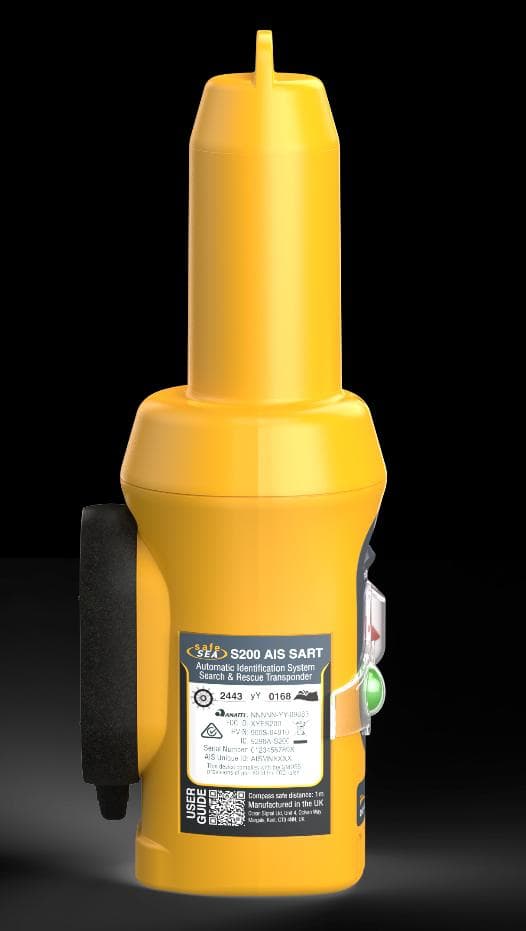
XYES200
Aug 20, 2026Search and Rescue Transmitter incorporating 162MHz AIS Man Overboard positioning capability
Equipment Class
AIS - Automatic Identification Systems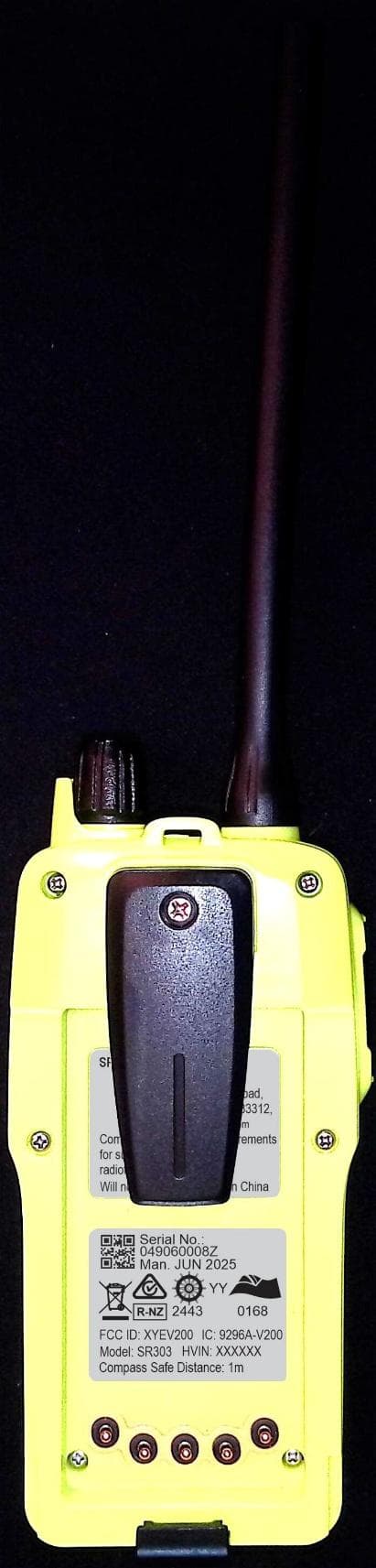
XYEV200
Feb 04, 2026GMDSS SURVIVAL CRAFT VHF RADIOTELEPHONE
Equipment Class
GHH - Part 80 VHF Hand Held Transmitter (GMDSS)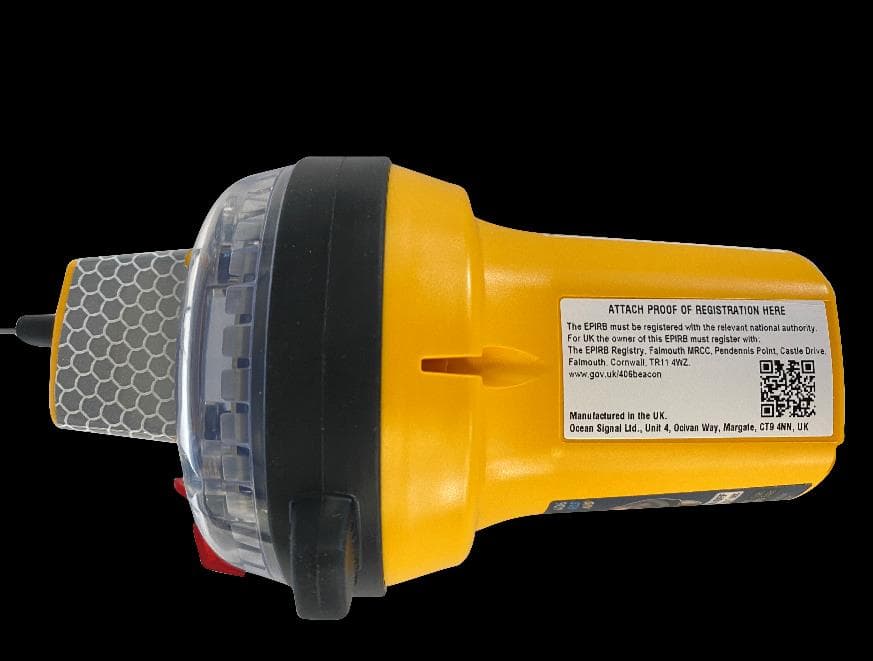
XYEEPIRB2
Jun 29, 2023406 MHz EPIRB with 121.5 MHz homing
Equipment Class
GEP - 406 MHz EPIRB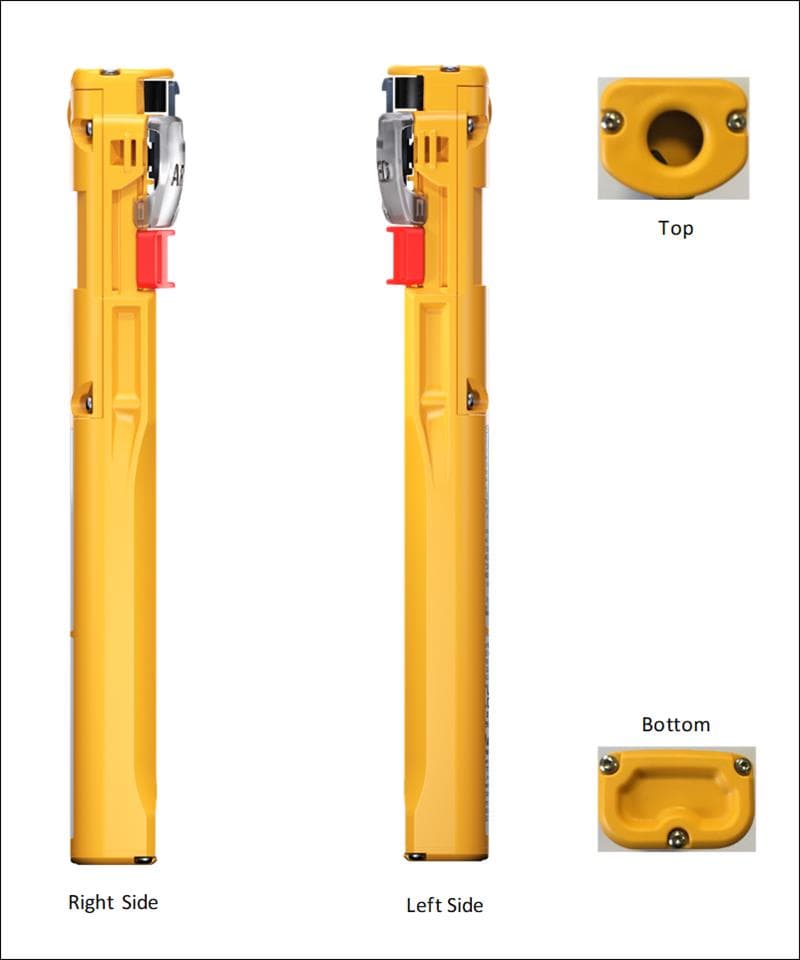
XYEPLB3
Jan 31, 2023PLB with AIS transceiver
Equipment Class
AIS - Automatic Identification Systems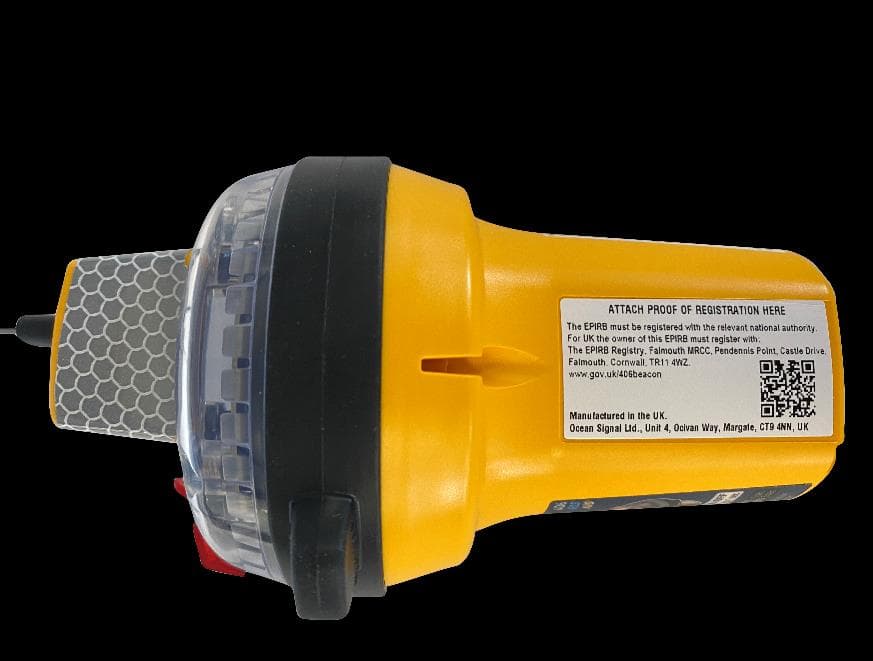
XYEEPIRB3
Jan 25, 2023Marine AIS Transceiver with EPIRB
Equipment Class
GEP - 406 MHz EPIRB