XYES200Search and Rescue Transmitter incorporating 162MHz AIS Man Overboard positioning capability
Ocean Signal Ltd.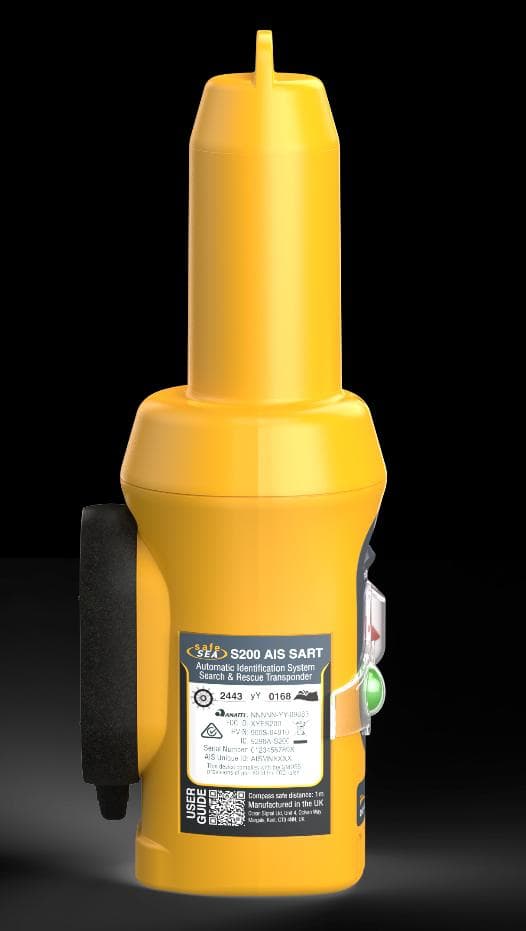
Click to zoom
Application Details
- Equipment Class
- AIS - Automatic Identification Systems
- Date of Grant
- Aug 20, 2026
- Application Purpose
- Original Equipment
- Equipment Note
- Search and Rescue Transmitter incorporating 162MHz AIS Man Overboard positioning capability
- Frequency Range
- 161.97500000 - 162.02500000
- Company
- Ocean Signal Ltd.
- Country
- United Kingdom
Documents & Files
Document Text
Text extracted from the exhibit documents filed with the FCC. Open a document above to read the original.
Users Manual
13. WARRANTY The limited warranties in the global limited warranty are exclusive and in lieu of all other warranties express or implied or statutory, including any liability arising under any war-ranty of merchantability or fitness for a particular purpose, statutory or otherwise. This warranty gives the owner specific legal rights, which may vary from jurisdiction to jurisdiction. In no event shall ACR Electronics, Inc., or its affiliates be liable for any incidental, special, indirect or consequential damages, whether resulting from the use, misuse, inability to use, improper reliance on, or from any defects in the product. Some jurisdictions do not allow the exclusion on incidental or consequential damages, so the above limitation may not apply to you. The Global Limited Warranty does not affect a customer’s rights against a retailer arising from a sales/ purchase contract. Product repaired or replaced under warranty will be warranted only for the remaining balance of the applicable original warranty period. Subject to the terms, conditions, limitations and exclusions in the Global Limited Warranty, all ACR Electronics, Inc., Products are warranted to be free from defects in material or workmanship for a period of two (2) years from the date the Product was purchased by the Original Customer (the “Standard Limited Warranty Period”). During this period and for the Original Customer only, ACR Electronics, Inc., will, at its sole discretion, repair or re-place any components that fail in normal use, which, in the absence of any applicable law to the contrary, shall be the customer’s sole and exclusive remedy for any breach of warranty. If the Standard Limited Warranty applies to you, ACR Electronics, Inc. will not charge you for parts or labour for warranty repairs or replacements. However, the cost of transporting your warranted product to ACR Electronics, Inc. for repair or replacement is your responsibility and is not covered by ACR Electronics, Inc. 1. ABOUT YOUR AIS SART The AIS system operates on the VHF radio band. Transceivers are fitted to all commercial ships and an ever-growing number of recreational vessels globally. Shortly after activation an AIS Location device will activate a SART target and message on plotters in all AIS equipped vessels within the VHF range, alerting them that emergency assistance is required. Often it is a vessel in the close vicinity of an incident that is able to react and effect a rescue quicker than the emergency services. Emergency service craft are fitted with AIS receivers allowing them to pinpoint emergencies in the water more precisely than any other system. The method in which an AIS message is displayed will depend on the reception equipment being used. AIS enabled plotters will display a ship or SART target with the Pathfinder AIS SART’s preprogrammed AIS unique ID, that identifies it as an AIS SART device. 2. BOX CONTENTS 14x Screws (for bracket) 2Pathfinder AIS SART 3Quick Start Guide 4Hex Key (for battery) 5SART Battery 6Mounting Bracket 3. BATTERY INSTALLATION The battery module is retained by a single hex head screw using the 3mm hex key provided. Insert the battery module into the bottom of the Pathfinder AIS SART, ensuring that the rubber seal is correctly in position. Tighten the screw until the battery is fully home within the SART body, torque not exceeding 0.5Nm. IN CASE OF EMERGENCY Use only in situations of grave an imminent danger 4. ACTIVATION 4.1 Optical indications on activation LEDCOLORWHENGNSS (1x) single flash GreenOn activation (1x) single flash GreenEvery 5 seconds whilst active (3x) single flash GreenOnceFix acquired (8x) double flash RedAt AIS transmissionNo GNSS fix (8x) double flash GreenAt AIS transmissionWith GNSS fix Ensure the Pathfinder AIS SART is always fitted with an unused battery that is within the marked expiry date. Check the battery information by using NFC and the ACR app (see section 10). A SART is not intended as a primary distress alerting device. At least one of the following should also be carried on-board your vessel to alert the authorities to your situation: an EPIRB; a DSC radio; an Inmarsat satellite terminal. 912S-05342 Issue 01.00 ...............................................................................................25/09/2025 AIS Search and Rescue Transponder (with NFC) GET THE MOBILE APP TO SEE YOUR SART’S TEST INFORMATION AndroidiOS NFC Communication Enabled https://www.acrartex.com/ products/pathfinder-ais/ DOWNLOAD THE FULL USER GUIDE ACR Electronics, Inc. 5757 Ravenswood Road, Fort Lauderdale, Florida 33312 - U.S.A. [email protected] www.acrartex.com 1 2 36 5 4 Press release latch and remove from bracket. Hold green switch left and push red switch down Break off the front cover Release green switch to lock in Activation mode Use the lanyard to attach the Pathfinder AIS SART to the roof of the liferaft. NOTE: Thread the lanyard through the lanyard attachment point before tying to the liferaft canopy in order to maintain an upright position. >1m The SART should be mounted at least 1m (3.3ft) above sea level for maximum effectiveness during activation. The SART should be tethered to the life raft using the lanyard to avoid losing overboard. Interface diagram showing typical usage 5. DEPLOYMENT 5.1 Standard Deployment The lanyard should be unwound and tied securely to the life raft to ensure the Pathfinder AIS SART is not lost overboard. Once the Pathfinder AIS SART is activated it will help guide the Search and Rescue authorities to your position. For the best performance, it is important that the Pathfinder AIS SART is mounted as high as possible in the life raft. Remove the rubber lanyard cover from the back of the Pathfinder AIS SART to reveal the lanyard stowed underneath. Use this lanyard to attach the Pathfinder AIS SART directly to the liferaft canopy or around the inflatable tube supporting the canopy. 5.2 Deployment using optional pole The Pathfinder AIS SART can als…
Text truncated - open the document above for the full version.
Users Manual
AIS Search and Rescue Transmitter (with NFC) S200 AIS SART 912S-05223 Issue 01.00 25/09/202 1. ABOUT YOUR AIS SART The AIS system operates on the VHF radio band. Transceivers are fitted to all commercial ships and an ever-growing number of recreational vessels globally. Shortly after activation an AIS location device will activate a SART target and message on plotters in all AIS equipped vessels within the VHF range, alerting them that emergency assistance is required. Often it is a vessel in the close vicinity of an incident that is able to react and effect a rescue quicker than the emergency services. Emergency service craft are fitted with AIS receivers allowing them to pinpoint emergencies in the water more precisely than any other system. The method in which an AIS message is displayed will depend on the reception equipment being used. AIS enabled plotters will display a ship or SART target with the S200 AIS SART preprogrammed AIS unique ID, that identifies it as an AIS SART device. 2. S200 AIS SART CONTENTS 14x Screws (for bracket) 2S200 AIS SART 3Quick Start Guide 4Hex Key (for battery) 5LB3S SART Battery 6Mounting Bracket 3. BATTERY INSTALLATION The battery module is retained by a single hex head screw using the 3mm hex key provided. Insert the battery module into the bottom of the S200 AIS SART, ensuring that the rubber seal is correctly in position. Tighten the screw until the battery is fully home within the SART body, torque not exceeding 0.5Nm. IN CASE OF EMERGENCY Use only in situations of grave an imminent danger 4. ACTIVATION 4.1 Optical indications on activation LEDCOLOURWHENGNSS (1x) single flash GreenOn activation (1x) single flash GreenEvery 5 seconds whilst active (3x) single flash GreenOnceFix acquired (8x) double flash RedAt AIS transmissionNo GNSS fix (8x) double flash GreenAt AIS transmissionWith GNSS fix Ensure the S200 AIS SART is always fitted with an unused battery that is within the marked expiry date. Check the battery information by using NFC and the Ocean Signal app (See section 10). A SART is not intended as a primary distress alerting device. At least one of the following should also be carried on-board your vessel to alert the authorities to your situation: an EPIRB; a DSC radio; an Inmarsat satellite terminal. Press release latch and remove from bracket. Hold green switch left and push red switch down. Break off the front cover Release green switch to lock in Activation mode GET THE MOBILE APP TO SEE YOUR SART’S TEST INFORMATION AndroidiOS Communication Enabled https://oceansignal.com/ manuals DOWNLOAD THE FULL USER GUIDE Ocean Signal Ltd. Ocivan Way, Margate, Kent, CT9 4NN United Kingdom [email protected] www.oceansignal.com Use the lanyard to attach the S200 AIS SART to the roof of the liferaft. NOTE: Thread the lanyard through the lanyard attachment point before tying to the liferaft canopy in order to maintain an upright position. >1m The SART should be mounted at least 1m (3.3ft) above sea level for maximum effectiveness during activation. The SART should be tethered to the life raft using the lanyard to avoid being lost overboard. 1 4 6 5 3 2 13. WARRANTY The limited warranties in the global limited warranty are exclusive and in lieu of all other warranties express or implied or statutory, including any liability arising under any war-ranty of merchantability or fitness for a particular purpose, statutory or otherwise. This warranty gives the owner specific legal rights, which may vary from jurisdiction to juris-diction. In no event shall Ocean Signal Ltd. or its affiliates be liable for any incidental, special, indirect or consequential damages, whether resulting from the use, misuse, inability to use, improper reliance on, or from any defects in the product. Some jurisdictions do not allow the exclusion on incidental or consequential damages, so the above limitation may not apply to you. The Global Limited Warranty does not affect a customer’s rights against a retailer arising from a sales/ purchase contract. Product repaired or replaced under warranty will be warranted only for the remaining balance of the applicable original warranty period. Subject to the terms, conditions, limitations and exclusions in the Global Limited Warranty, all Ocean Signal Products are warranted to be free from defects in material or workmanship for a period of two (2) years from the date the Product was purchased by the Original Customer (the “Standard Limited Warranty Period”). During this period and for the Original Customer only, Ocean Signal will, at its sole discretion, repair or re-place any components that fail in normal use, which, in the absence of any applicable law to the contrary, shall be the customer’s sole and exclusive remedy for any breach of warranty. If the Standard Limited Warranty applies to you, Ocean Signal will not charge you for parts or labour for warranty repairs or replacements. However, the cost of transporting your warranted product to Ocean Signal for repair or replacement is your responsibility and is not covered by Ocean Signal. Interface diagram showing typical usage 5. DEPLOYMENT 5.1 Standard Deployment The lanyard should be unwound and tied securely to the life raft to ensure the S200 AIS SART is not lost overboard. Once the S200 AIS SART is activated it will help guide the Search and Rescue authorities to your position. For the best performance, it is important that the S200 AIS SART is mounted as high as possible in the life raft. Remove the rubber lanyard cover from the back of the S200 AIS SART to reveal the lanyard stowed underneath. Use this lanyard to attach the S200 AIS SART directly to the liferaft canopy or around the inflatable tube supporting the canopy. 5.2 Deployment using optional pole The S200 AIS SART can also be fitted with an optional telescopic pole which will keep the unit at a height of 1 meter (3.3ft) above sea level. Remove the cap from the top of the pole and then pull out the sections until fully ext…
Text truncated - open the document above for the full version.
Users Manual
USER MANUAL AIS SEARCH AND RESCUE TRANSMITTER Copyright © 2026 ACR Electronics, Inc. All contents of this manual are the intellectual property of ACR Electronics, Inc. This includes but is not limited to text, diagrams, illustrations and any other materials contained herein. No part of this manual may be altered and further produced in any form, electronic or mechanical, without the prior written permission of ACR Electronics, Inc. For permission requests or inquiries, please contact [email protected] ACR Electronics, Inc. reserves the right to change or update the contents of this manual without prior notice. While every effort has been made to ensure the accuracy of the information provided, ACR Electronics, Inc. assumes no responsibility for errors or omissions. Pathfinder TM is a registered trademark of ACR Electronics, Inc. PATHFINDER AIS USER MANUAL 10/06/2026 912S-04652 Issue 01.02 3 IN CASE OF EMERGENCY Use only in situations of grave and imminent danger The Pathfinder AIS SART should be mounted at least 3.3ft (1m) above sea level for maximum effectiveness during activation. The Pathfinder AIS SART should be tethered to the life raft using the lanyard to avoid being lost overboard. NOTE: Refer to section 5.2 and 5.3 for full deployment instructions. NOTE: Refer to section 5.6 for deactivation instructions. >3.3ft (>1m) >3.3ft (>1m) Press release latch and remove from bracket. Break off clear protective cover over the green and red switches. Holding the green switch to the left, push the red switch down and hold. Whilst holding the red switch down, release the green switch to lock in active position. 1 23 4 NOTE: this will activate SART 5 Attach the SART to the roof of the life raft, or mount on the optional telescopic pole, if fitted, and attach to the side of the life raft. OR PATHFINDER AIS USER MANUAL 4 912S-04652 Issue 01.02 10/06/2026 CONTENTS 1. GENERAL 5 1.1 Exposure to RF Electromagnetic Energy 5 1.2 Warnings 5 1.3 Pathfinder AIS Contents 5 2. INTRODUCTION 6 2.1 AIS System 6 2.2 Near Field Communication (NFC) 6 3. PATHFINDER AIS SART OVERVIEW 7 3.1 Antenna Information 7 4. INSTALLATION 8 4.1 Bracket Installation 8 4.2 Battery Installation 9 5. Operation 9 5.1 Activation 9 5.2 Standard Deployment 10 5.3 Deployment using optional pole 10 5.4 Optical indications on activation 11 5.5 End of Life 11 5.6 Deactivation 12 6. TESTING 12 6.1 Function Test 12 6.2 Functional Test LED Indicator 13 7. BATTERIES 13 7.1 Battery Replacement 14 8. APPENDIX 15 8.1 Maintenance and Troubleshooting 15 8.2 Battery Safety Information 15 8.3 Handling and Storage 15 8.4 Transportation 16 8.5 Accessories 16 8.6 Specifications 17 8.7 Limited Warranty 18 8.8 Approvals 19 PATHFINDER AIS USER MANUAL 10/06/2026 912S-04652 Issue 01.02 5 1. GENERAL 1.1 Exposure to RF Electromagnetic Energy This product has been evaluated for compliance with the FCC RF exposure limits given in CFR 47 part 2.1093: Portable Devices. This equipment complies with the RF exposure limits established by ISED for an uncontrolled environment. The device has been evaluated at 0 mm separation distance and found to meet the Specific Absorption Rate (SAR) requirements of RSS-102. No minimum separation distance is required during use. 1.2 Warnings The Pathfinder AIS SART is designed for use in emergency only. Only operate it in situations of grave and imminent danger. The Pathfinder AIS SART incorporates a protective tab over the operating controls to avoid accidental activation and indicate that the unit has been used. After any period of operation, the battery should be replaced and the unit returned to your local service dealer for replacement of the protective tab. Always replace the battery before the expiry date is exceeded to ensure full operating capacity in case of emergency. Please ensure you follow local regulations before disposing of this item. Ensure the battery is removed from the unit before disposal. Changes or modifications not expressly approved by the manufacturer may void the user’s authority to operate this equipment. 1.3 Pathfinder AIS Contents 14x Screws (for bracket) 2Pathfinder AIS SART 3Quick Start Guide 4Hex Key (for battery) 5 2920 Battery Module 6Mounting Bracket 1 4 6 25 3 PATHFINDER AIS USER MANUAL 6 912S-04652 Issue 01.02 10/06/2026 2. INTRODUCTION 2.1 AIS System The AIS system operates on the VHF radio band. Transceivers are fitted to all commercial ships and an ever-growing number of recreational vessels globally. Shortly after activation an AIS location device will activate a SART target and SART ACTIVE message on plotters on all AIS equipped vessels within the VHF range, alerting them that emergency assistance is required. Often it is a vessel in the close vicinity of an incident that is able to react and effect a rescue quicker than the emergency services. Emergency service craft are fitted with AIS receivers allowing them to pinpoint emergencies in the water more precisely than any other system. The method in which an AIS message is displayed will depend on the reception equipment being used. AIS enabled plotters will display a ship or SART target with the SART preprogrammed AIS unique ID, that identifies it as an AIS SART device. 2.2 Near Field Communication (NFC) The Pathfinder AIS AIS SART is capable of connection to devices using Near Field Communication (NFC). NFC technology allows communication between two electronic devices over a distance of a few centimetres. The benefit of using NFC in the Pathfinder AIS SART is that the power used for communication comes from the mobile device and not the SART. The ACR Electronics, Inc. mobile app allows a user to access the Pathfinder AIS SART for viewing the latest test results and battery health. Download the app here: Android iOS To use the app simply align your mobile device NFC antenna to the front of the Pathfinder AIS SART where you see “NFC”. Once connected, details about your Pathfinder AIS SART will be displayed on your mobile device, inclu…
Text truncated - open the document above for the full version.
Users Manual
User Manual www.oceansignal.com English AIS Search and Rescue Transmitter S200 AIS SART Copyright© 2026 by Ocean Signal Ltd. All contents of this manual are the intellectual property of Ocean Signal Ltd. This includes but is not limited to text, diagrams, illustrations and any other materials contained herein. No part of this manual may be altered and further produced in any form, electronic or mechanical, without the prior written permission of Ocean Signal Ltd. For permission requests or inquiries, please contact [email protected] Ocean Signal Ltd. reserves the right to change or update the contents of this manual without prior notice. While every effort has been made to ensure the accuracy of the information provided, Ocean Signal Ltd. assumes no responsibility for errors or omissions. Ocean Signal® and safeSEA® are registered trademarks of Ocean Signal Ltd. S200 AIS SART USER MANUAL 01/06/2026 912S-04650 Issue 01.02 3 IN CASE OF EMERGENCY Use only in situations of grave and imminent danger The S200 AIS SART should be mounted at least 1m (3.3ft) above sea level for maximum effectiveness during activation. The S200 AIS SART should be tethered to the life raft using the lanyard to avoid being lost overboard. NOTE: Refer to section 5.2 and 5.3 for full deployment instruction NOTE: Refer to section 5.6 for deactivation instructions >1m (>3.3ft) >1m (>3.3ft) Press release latch and remove from bracket. Break off clear protective cover over the green and red switches. Holding the green switch to the left, push the red switch down and hold. Whilst holding the red switch down, release the green switch to lock in active position. 1 23 4 NOTE: this will activate SART 5 Attach the SART to the roof of the life raft, or mount on the optional telescopic pole, if fitted, and attach to the side of the life raft. OR S200 AIS SART USER MANUAL 4 912S-04650 Issue 01.02 10/06/2026 CONTENTS 1. GENERAL 5 1.1 Exposure to RF Electromagnetic Energy 5 1.2 Warnings 5 1.3 S200 AIS SART Contents 5 2. INTRODUCTION 6 2.1 AIS System 6 2.2 Near Field Communication (NFC) 6 3. S200 AIS SART OVERVIEW 7 3.1 Antenna Information 7 4. INSTALLATION 8 4.1 Bracket Installation 8 4.2 Battery Installation 9 5. OPERATION 9 5.1 Activation 9 5.2 Standard Deployment 10 5.3 Deployment using optional pole 10 5.4 Optical indications on activation 11 5.5 End of Life 11 5.6 Deactivation 12 6. TESTING 12 6.1 Function Test 12 6.2 Functional Test LED Indicator 13 7. BATTERIES 13 7.1 Battery Replacement 14 8. APPENDIX 15 8.1 Maintenance and Troubleshooting 15 8.2 Battery Safety Information 15 8.3 Handling and Storage 15 8.4 Transportation 16 8.5 Accessories 16 8.6 Specifications 17 8.7 Limited Warranty 18 8.8 Approvals 19 S200 AIS SART USER MANUAL 01/06/2026 912S-04650 Issue 01.02 5 1. GENERAL 1.1 Exposure to RF Electromagnetic Energy This product has been evaluated for compliance with the FCC RF exposure limits given in CFR 47 part 2.1093: Portable Devices. This equipment complies with the RF exposure limits established by ISED for an uncontrolled environment. The device has been evaluated at 0 mm separation distance and found to meet the Specific Absorption Rate (SAR) requirements of RSS-102. No minimum separation distance is required during use. 1.2 Warnings The S200 AIS SART is designed for use in emergency only. Only operate it in situations of grave and imminent danger. The S200 AIS SART incorporates a protective tab over the operating controls to avoid accidental activation and indicate that the unit has been used. After any period of operation, the battery should be replaced and the unit returned to your local service dealer for replacement of the protective tab. Always replace the battery before the expiry date is exceeded to ensure full operating capacity in case of emergency. Please ensure you follow local regulations before disposing of this item. Ensure the battery is removed from the unit before disposal. Changes or modifications not expressly approved by the manufacturer may void the user’s authority to operate this equipment. 1.3 S200 AIS SART Contents 14x Screws (for bracket) 2S200 AIS SART 3Quick Start Guide 4Hex Key (for battery) 5LB3S Battery Module 6Mounting Bracket 2 3 4 5 6 1 S200 AIS SART USER MANUAL 6 912S-04650 Issue 01.02 10/06/2026 2. INTRODUCTION 2.1 AIS System The AIS system operates on the VHF radio band. Transceivers are fitted to all commercial ships and an ever-growing number of recreational vessels globally. Shortly after activation an AIS location device will activate a SART target and SART ACTIVE message on plotters on all AIS equipped vessels within the VHF range, alerting them that emergency assistance is required. Often it is a vessel in the close vicinity of an incident that is able to react and effect a rescue quicker than the emergency services. Emergency service craft are fitted with AIS receivers allowing them to pinpoint emergencies in the water more precisely than any other system. The method in which an AIS message is displayed will depend on the reception equipment being used. AIS enabled plotters will display a ship or SART target with the S200 AIS SART preprogrammed AIS unique ID, that identifies it as an AIS SART device. 2.2 Near Field Communication (NFC) The S200 AIS SART is capable of connection to devices using Near Field Communication (NFC). NFC technology allows communication between two electronic devices over a distance of a few centimetres. The benefit of using NFC in the S200 AIS SART is that the power used for communication comes from the mobile device and not the SART. The Ocean Signal mobile app allows a user to access the S200 AIS SART for viewing the latest test results and battery health. Download the app here: Android iOS To use the app simply align your mobile device NFC antenna to the front of the S200 AIS SART where you see “NFC”. Once connected, details about your S200 AIS SART will be displayed on your mobile device, including the product name and serial number, the u…
Text truncated - open the document above for the full version.
RF Exposure Info
TÜV SÜD is a trading name of TUV SUD Ltd Registered in Scotland at East Kilbride, Glasgow G75 0QF, United Kingdom Registered number: SC215164 TUV SUD Ltd is a TÜV SÜD Group Company Phone: +44 (0) 1489 558100 Fax: +44 (0) 1489 558101 www.tuvsud.com/en TÜV SÜD Octagon House Concorde Way Fareham Hampshire PO15 5RL United Kingdom TÜV SÜD SIGNATURE NAME JOB TITLE RESPONSIBLE FOR ISSUE DATE Matthew Russell Chief Engineer, RF Authorised Signatory 15 September 2025 Signatures in this approval box have checked this document in line with the requirements of TÜV SÜD document control rules. EXECUTIVE SUMMARY The calculation of exposure for this product was found to be compliant at a minimum distance of 47cm with EN 60945 assuming continuous exposure of 6 minutes or more. If alternative antennas are used with greater gains, the distance must be recalculated. DISCLAIMER AND COPYRIGHT This non-binding report has been prepared by TÜV SÜD with all reasonable skill and care. The document is confidential to the potential Client and TÜV SÜD. No part of this document may be reproduced without the prior written approval of TÜV SÜD. © 2025 TÜV SÜD. This report relates only to the actual item/items tested. ACCREDITATION Our UKAS Accreditation does not cover opinions and interpretations and any expressed are outside the scope of our UKAS Accreditation. Results of tests not covered by our UKAS Accreditation Schedule are marked NUA (Not UKAS Accredited). Exposure Calculation Report Ocean Signal Ltd. AIS SART Model: S200 Brand Variant: ACR Electronics Inc. AIS SART, Model: Pathfinder AIS In accordance with EN 60945 Prepared for: Ocean Signal Ltd. Ocivan Way Margate CT9 4NN United Kingdom COMMERCIAL-IN-CONFIDENCE Document 75959389-06 Issue: 01 Document 75959389-06 Issue: 01 COMMERCIAL-IN-CONFIDENCE COMMERCIAL-IN-CONFIDENCE Page 1 of 7 Contents 1 Report Summary .........................................................................................................................2 1.1 Report Modification Record ...........................................................................................................2 1.2 Introduction ....................................................................................................................................2 1.3 Brief Summary of Results .............................................................................................................3 1.4 Product Information .......................................................................................................................4 2 Assessment Details ....................................................................................................................5 2.1 Assessment Method ......................................................................................................................5 2.2 Individual Antenna Port Exposure Results ....................................................................................6 2.3 Far Field Region Boundary Results ..............................................................................................7 2.4 Uncertainty ....................................................................................................................................7 Annex A Regional Requirements ............................................................................................................. A.1 Document 75959389-06 Issue: 01 COMMERCIAL-IN-CONFIDENCE COMMERCIAL-IN-CONFIDENCE Page 2 of 7 1 Report Summary 1.1 Report Modification Record Alterations and additions to this report will be issued to the holders of each copy in the form of a complete document. Issue Description of Change Date of Issue 1 First Issue 15-Sept-2025 Table 1 1.2 Introduction Applicant Ocean Signal Ltd. Manufacturer Ocean Signal Ltd. / ACR Electronics Inc Model Number(s) S200 / Pathfinder AIS * Hardware Version(s) 01.00 / 01.00 Software Version(s) 01.00 / 01.00 Specification/Issue/Date EN 60945:2002 Maritime navigation and radiocommunication equipment and systems – General requirements – Methods of testing and required test results Order Number Date P8980 - QAF 14-September-2023 Related Document(s) EN 62311: 2008 Assessment of electronic and electrical equipment related to human exposure restrictions for electromagnetic fields (0 Hz to 300 GHz) *Manufacturer declared variants: Refer to documents “Variant Relation Declaration - AIS SART Model Variants 300625.pdf” and “921S-06454 Issue 01.00 AIS SART Variant Comparison.pdf”. Document 75959389-06 Issue: 01 COMMERCIAL-IN-CONFIDENCE COMMERCIAL-IN-CONFIDENCE Page 3 of 7 1.3 Brief Summary of Results The wireless device described within this report was compliant with the restrictions related to human exposure to electromagnetic fields for both general public and worker/occupational exposures at the minimum compliance distances calculated. The calculations shown in this report were made in accordance with the procedures specified in the applied test specification(s). 1.3.1 Compliance Boundary EN 60945 Requirement Configuration Calculated minimum compliance boundary (m) (rounded up to nearest 0.01 m) Note 1 Worker/Occupational General Public EN 60945 162 MHz transmitter operating 0.47 m 0.47 m Table 2 – Compliance Boundary Calculation Results Note 1: The calculated minimum compliance boundary was less than the values stated, however the minimum valid distance that can be calculated by the method described in Section 2.1 is beyond the reactive near field boundary of 0.4630 m stated in Section 2.33, therefore a minimum compliance boundary of 0.4630 m is required. A description of antenna field regions is given in EN 62311:2008. Compliance boundaries in the region between 0.2 m and the reactive near field boundary, i.e. 0.2 m to 0.4630 m in this case, can be established by test of the electric and magnetic field strength. Compliance boundaries in the region up to 0.2 m can be established by SAR (specific absorption rate) test. Document 7…
Text truncated - open the document above for the full version.
Contact Information
Applicant
Stefan Kennedy(Director of R&D)
[email protected]Fax: +441843293659
Technical Contact
ACR Electronics, Inc.Dan Stankovic
5757 Ravenswood Rd · Fort Lauderdale, Florida, 33312 · United States
Test Firm
TUV SUD LimitedSandra Kitson-Wilms
[email protected]Fax: 44 1489 558101
Technical Specifications
| # | Rule Parts | Frequency Range | Power Output | Emission | Tolerance |
|---|---|---|---|---|---|
| 1 | 80 | 161.975 MHz - 162.025 MHz | 1 W | 16K0GXW | 500.0000000000Hz |
Other Applications from Ocean Signal Ltd.
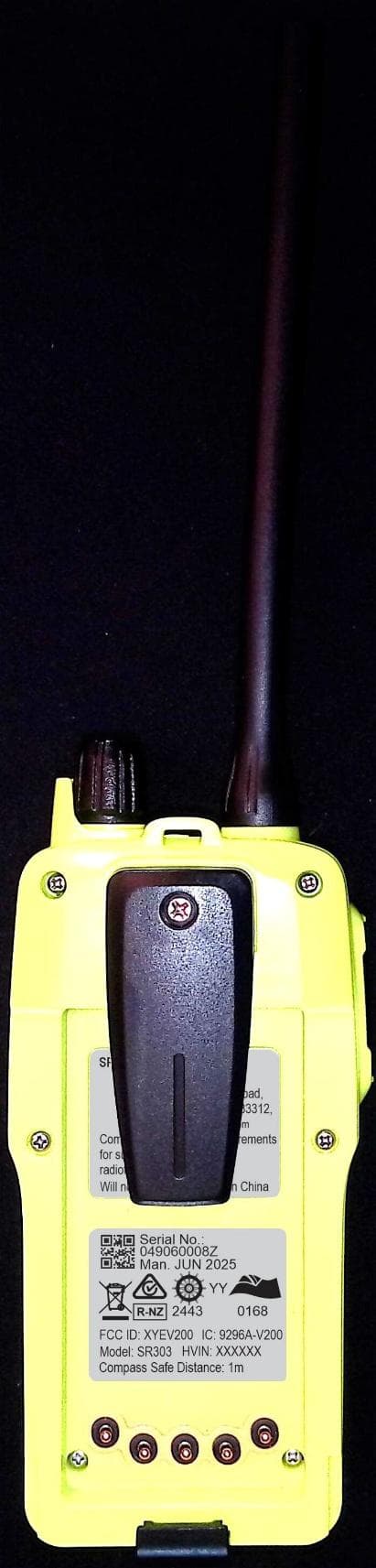
XYEV200
Feb 04, 2026GMDSS SURVIVAL CRAFT VHF RADIOTELEPHONE
Equipment Class
GHH - Part 80 VHF Hand Held Transmitter (GMDSS)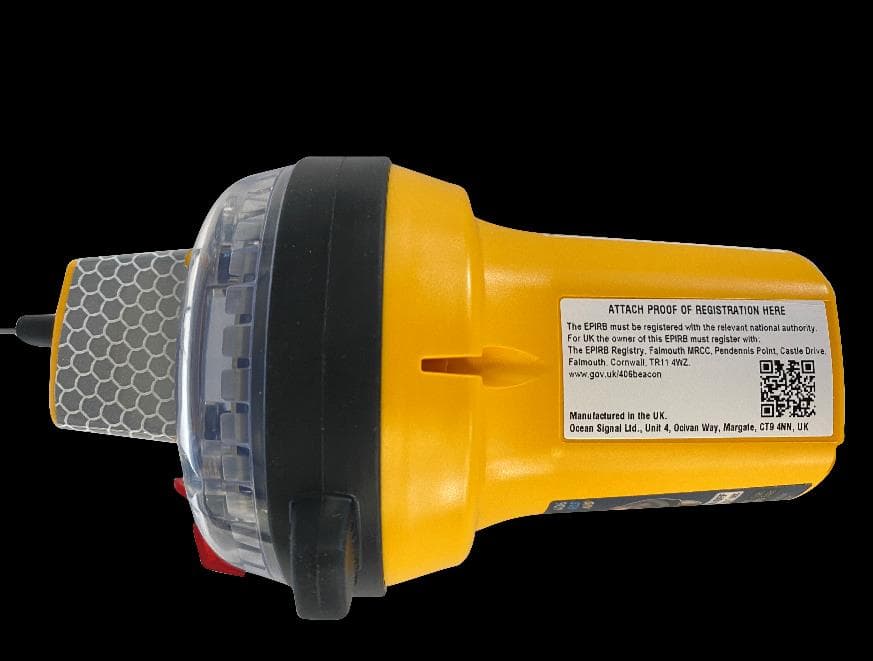
XYEEPIRB2
Jun 29, 2023406 MHz EPIRB with 121.5 MHz homing
Equipment Class
GEP - 406 MHz EPIRB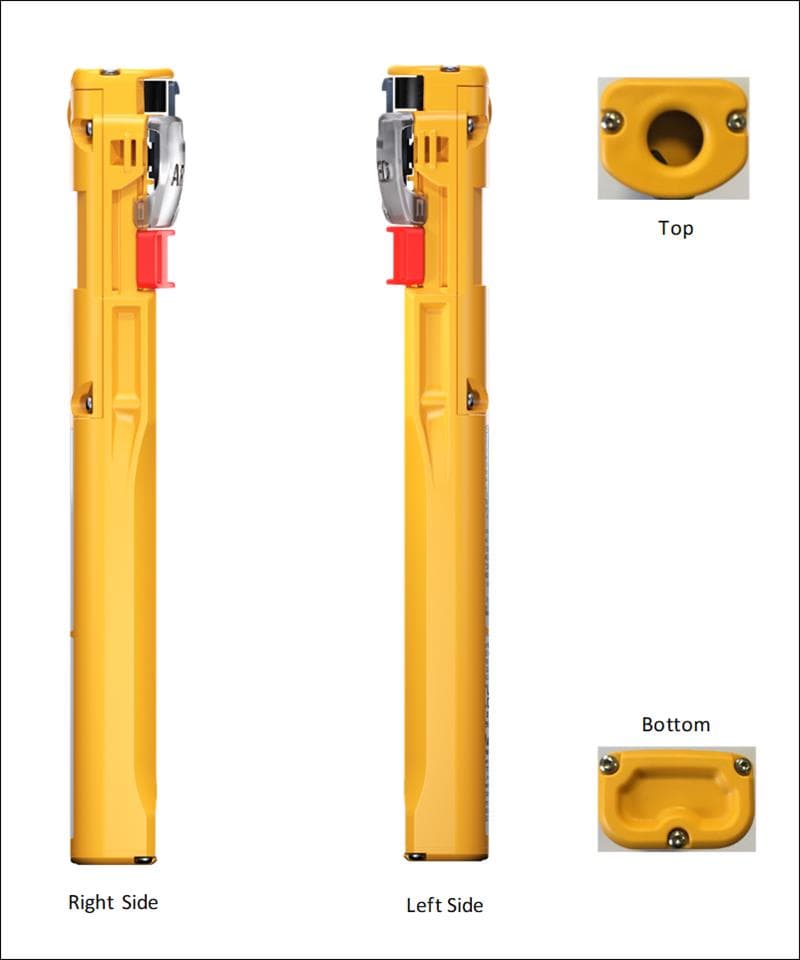
XYEPLB3
Jan 31, 2023PLB with AIS transceiver
Equipment Class
AIS - Automatic Identification Systems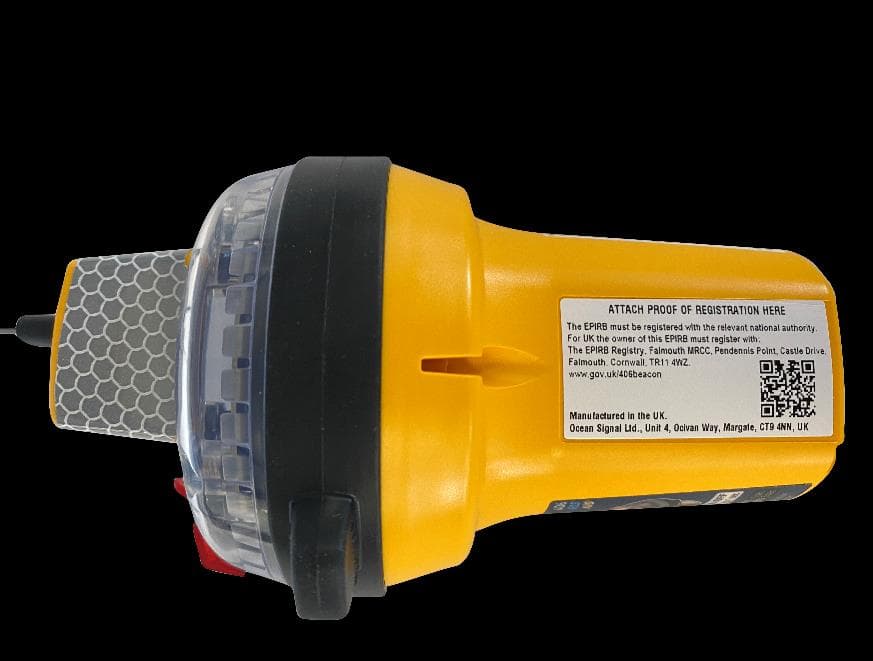
XYEEPIRB3
Jan 25, 2023Marine AIS Transceiver with EPIRB
Equipment Class
GEP - 406 MHz EPIRBXYEMOB1
Mar 02, 2015Maritime Survivor Locator Device
Equipment Class
PLB - Personal Locator Beacons