XYEPLB3PLB with AIS transceiver
Ocean Signal Ltd.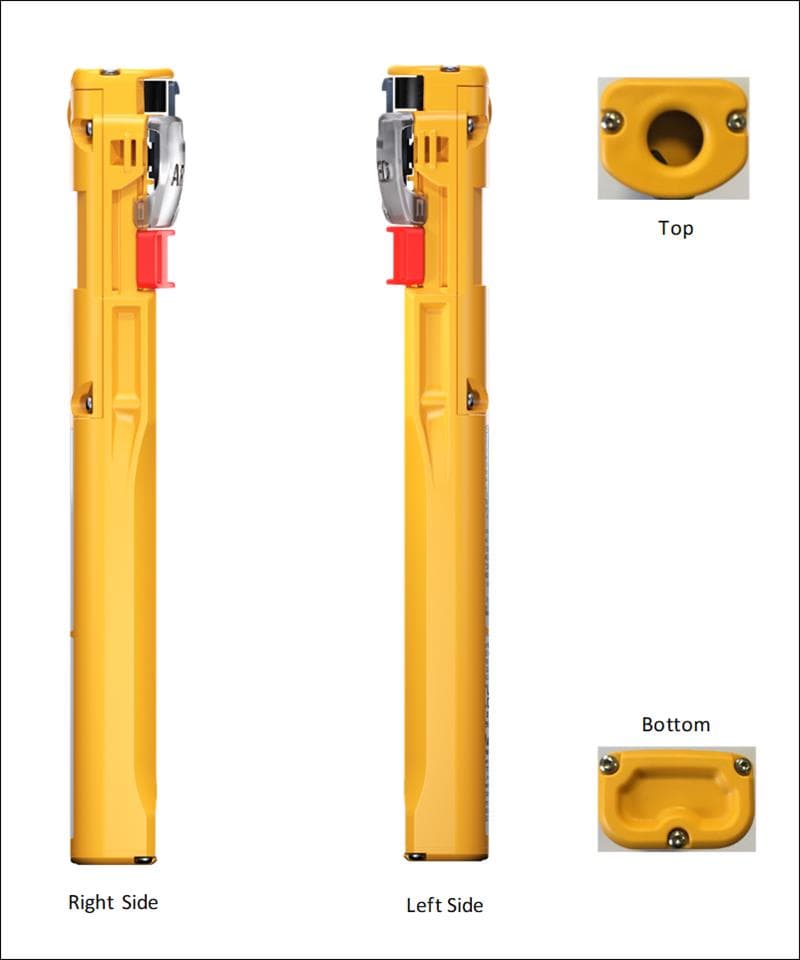
Click to zoom
Application Details
- Equipment Class
- AIS - Automatic Identification Systems
- Date of Grant
- Jan 31, 2023
- Application Purpose
- Original Equipment
- Date of Application
- Jan 30, 2023
- Equipment Note
- PLB with AIS transceiver
- Frequency Range
- 161.97500000 - 162.02500000
- Company
- Ocean Signal Ltd.
- Country
- United Kingdom
Documents & Files
Document Text
Text extracted from the exhibit documents filed with the FCC. Open a document above to read the original.
Users Manual
User Manual www.oceansignal.com English Personal Locator Beacon (with AIS and RLS) PLB3 OWNER DETAILS Name Organisation CONTACT Tel. Email PLB3 USER MANUAL 2 912S-03718 v01.00 12/10/2022 © 2022 Ocean Signal Ltd The technical data, information and illustrations contained in this manual were believed to be correct at the time of print. Ocean Signal Ltd. reserve the right to change specifications and other information contained in this manual as part of our continual improvement process. No part of this manual may be reproduced, stored in a retrieval system or transmitted in any form, electronic or otherwise, without the prior permission of Ocean Signal Ltd. No liability can be accepted for any inaccuracies or omissions in this manual. Ocean Signal® and rescueME® are registered trademarks of Ocean Signal Ltd. 12/10/2022 912S-03718 v01.00 3 PLB3 USER MANUAL IN CASE OF EMERGENCY Use only in situations of grave and imminent danger MANUAL ACTIVATION ! Take great care to keep well clear of eyes and face as the antenna will be released very quickly. Keep at least 30cm (12”) clear to avoid possible injury. • Following activation ensure the antenna is fully released and the unit has the best possible view of the sky for optimal performance. • If the strobe light does not start flashing, manually switch the PLB3 on by pressing the ON Key • Always turn off the PLB3 immediately after you have been rescued to avoid interference with other users. • To turn off the beacon press and hold the TEST/OFF button until the red LED flashes twice. PLB3 USER MANUAL 4 912S-03718 v01.00 12/10/2022 1. ABOUT YOUR PLB3 5 1.1 Cospas-Sarsat System 5 1.2 Return Link Service 5 1.3 AIS System 5 1.4 Introduction 6 1.5 Exposure to RF Energy 6 1.6 Warnings 6 1.7 What’s in the box 7 1.8 Spares and Accessories 8 1.9 NFC and Mobile App. 8 1.10 PLB3 Overview 9 2. OPERATION 10 2.1 Activation when installed in a life jacket 10 2.2 Manual activation 10 2.3 Optical indications on activation 11 2.4 Deactivation 11 2.5 AIS message reception 12 2.6 Rewinding the antenna 12 2.7 False Alerts 12 3. TESTING 12 3.1 Functional test 13 3.2 GNSS Test 14 4. BEACON REGISTRATION 15 4.1 Advice to owners of Personal Locator Beacons (PLBs). 15 4.2 Country Specific Registration information 15 5. LIFE JACKET INSTALLATION 16 5.1 Remove the Activation Slider 17 5.2 Securing the Activation System 17 5.3 Attach the tape to the Activation Slider 18 5.4 Insert the Activation Slider 19 5.5 Attach the Oral Tube bracket to the Oral Tube 20 6. BEACON CONFIGURATION 22 6.1 Pre-configured Beacons 22 7. APPENDIX 22 7.1 Maintenance and Troubleshooting 22 7.2 Batteries 22 7.3 Decommissioning and Disposal 23 7.4 Transport 23 7.5 Specifications 24 7.6 Approvals 25 7.7 Warranty Information 26 8. YOUR BEACON DETAILS 27 12/10/2022 912S-03718 v01.00 5 PLB3 USER MANUAL 1. ABOUT YOUR PLB3 1.1 Cospas-Sarsat System The basic Cospas-Sarsat concept is illustrated in the adjacent figure. The System is composed of: • distress radio beacons (ELTs for aviation use, EPIRBs for maritime use, and PLBs for personal use) which transmit signals during distress situations • instruments on board satellites in geostationary and low-altitude Earth orbits which detect the signals transmitted by distress radio beacons • ground receiving stations, referred to as Local User Terminals (LUTs), which receive and process the satellite downlink signal to generate distress alerts • Mission Control Centers (MCCs) which receive alerts produced by LUTs and forward them to Rescue Coordination Centers (RCCs), Search and Rescue Points Of Contacts (SPOCs) or other MCCs The Cospas-Sarsat System includes two types of satellites: • satellites in low-altitude Earth orbit (LEO) which form the LEOSAR System • satellites in geostationary Earth orbit (GEO) which form the GEOSAR System The new MEOSAR system, which is not yet fully operational (2022), already brings significant advan- tages to many users in terms of better satellite coverage, faster alerts and improved detectability and is also the basis for the Return Link Service (RLS) on Galileo satellites. 1.2 Return Link Service The Galileo Return Link Service (RLS) is a free-of-charge global service available to Cospas-Sarsat RLS compatible beacons. The RLS feature is an indication on the PLB3 that confirms to the User that the distress signal from the PLB3 has been localised by the Cospas-Sarsat system and is being sent to the SAR authorities. It does NOT mean that a search and rescue mission has been launched, but only confirms that the distress alert has been received by the Cospas-Sarsat system and is being routed to the appropriate SAR agencies. The RLS aims to send an acknowledgment to the beacon within 30 minutes following activation (the response may not be received by the beacon for signif- icantly longer). RLS is an optional function and may not be permitted in all countries. The full RLS specification can be found here: https://gsc-europa.eu/sites/default/files/sites/all/files/Galileo-SAR-SDD.pdf 1.3 AIS System AIS systems operate on VHF radio bands and transceivers are fitted to all commercial shipping and an ever growing number of recreational vessels globally. Shortly after activation an AIS Location device will activate an alarm on all AIS equipped vessels within the VHF range alerting them to the fact that a person is in the water needing assistance. Often it is a vessel in the close vicinity of an incident that is able to react and effect a rescue quicker than the emergency services. Emergency service craft are fitted with AIS receivers allowing them to pinpoint a casualty in the water more precisely than any other system. PLB3 USER MANUAL 6 912S-03718 v01.00 12/10/2022 1.4 Introduction The rescueME range of products provides the user with the latest technology specifically designed for compact size and ease of operation. Primarily designed for use when permanently attached to a Personal Floatation Device, in the event that you fall overboard, the …
Text truncated - open the document above for the full version.
Users Manual
User Manual USER MANUAL PERSONAL LOCATOR BEACON WITH AIS TECHNOLOGY ENGLISH USER MANUAL 2 912S-03765-01.00 12/10/2022 © 2022 ACR Electronics The technical data, information and illustrations contained in this manual were believed to be correct at the time of print. ACR Electronics reserve the right to change specifications and other information contained in this manual as part of our continual improvement process. No part of this manual may be reproduced, stored in a retrieval system or transmitted in any form, electronic or otherwise, without the prior permission of ACR Electronics. No liability can be accepted for any inaccuracies or omissions in this manual. 12/10/2021 912S-03765-01.00 3 USER MANUAL IN CASE OF EMERGENCY Use only in situations of grave and imminent danger MANUAL ACTIVATION ! Take great care to keep well clear of eyes and face as the antenna will be released very quickly. Keep at least 30cm (12”) clear to avoid possible injury. • Following activation ensure the antenna is fully released and the unit has the best possible view of the sky for optimal performance. • If the strobe light does not start flashing, manually switch the ResQLink AIS on by pressing the ON Key • Always turn off the ResQLink AIS immediately after you have been rescued to avoid interference with other users. • To turn off the beacon press and hold the TEST/OFF button until the red LED flashes twice. USER MANUAL 4 912S-03765-01.00 12/10/2022 1. ABOUT YOUR RESQLINK AIS 5 1.1 Cospas-Sarsat System 5 1.2 Return Link Service 5 1.3 AIS System 5 1.4 Introduction 6 1.5 Exposure to RF Energy 6 1.6 Warnings 6 1.7 What’s in the box 7 1.8 Spares and Accessories 8 1.9 NFC and Mobile App. 8 1.10 ResQLink AIS Overview 9 2. OPERATION 10 2.1 Activation when installed in a life jacket 10 2.2 Manual activation 10 2.3 Optical indications on activation 11 2.4 Deactivation 11 2.5 AIS message reception 12 2.6 Rewinding the antenna 12 2.7 False Alerts 12 3. TESTING 12 3.1 Functional test 13 3.2 GNSS Test 14 4. BEACON REGISTRATION 15 4.1 Advice to owners of Personal Locator Beacons (PLBs). 15 4.2 Country Specific Registration information 15 5. LIFE JACKET INSTALLATION 16 5.1 Remove the Activation Slider 17 5.2 Securing the Activation System 17 5.3 Attach the tape to the Activation Slider 18 5.4 Insert the Activation Slider 19 5.5 Attach the Oral Tube bracket to the Oral Tube 20 6. BEACON CONFIGURATION 22 6.1 Pre-configured Beacons 22 7. APPENDIX 22 7.1 Maintenance and Troubleshooting 22 7.2 Batteries 22 7.3 Decommissioning and Disposal 23 7.4 Transport 23 7.5 Specifications 24 7.6 Approvals 25 7.7 Warranty Information 26 8. YOUR BEACON DETAILS 27 12/10/2021 912S-03765-01.00 5 USER MANUAL 1. ABOUT YOUR RESQLINK AIS 1.1 Cospas-Sarsat System The basic Cospas-Sarsat concept is illustrated in the adjacent figure. The System is composed of: • distress radio beacons (ELTs for aviation use, EPIRBs for maritime use, and PLBs for personal use) which transmit signals during distress situations • instruments on board satellites in geostationary and low-altitude Earth orbits which detect the signals transmitted by distress radio beacons • ground receiving stations, referred to as Local Users Terminals (LUTs), which receive and process the satellite downlink signal to generate distress alerts • Mission Control Centers (MCCs) which receive alerts produced by LUTs and forward them to Rescue Coordination Centers (RCCs), Search and Rescue Points Of Contacts (SPOCs) or other MCCs The Cospas-Sarsat System includes two types of satellites: • satellites in low-altitude Earth orbit (LEO) which form the LEOSAR System • satellites in geostationary Earth orbit (GEO) which form the GEOSAR System The future Cospas-Sarsat System will include a new type of satellite in the medium-altitude Earth orbit (MEO) which will form the MEOSAR System. The ResqLink AIS is fully compatible with the new MEOSAR satellites. 1.2 Return Link Service The Galileo Return Link Service (RLS) is a free-of-charge global service available to Cospas-Sarsat RLS compatible beacons. The RLS feature is an indication on the PLB3 that confirms to the User that the distress signal from the PLB3 has been localised by the Cospas-Sarsat system and is being sent to the SAR authorities. It does NOT mean that a search and rescue mission has been launched, but only confirms that the distress alert has been received by the Cospas-Sarsat system and is being routed to the appropriate SAR agencies. The RLS aims to send an acknowledgment to the beacon within 30 minutes following activation (the response may not be received by the beacon for signifi- cantly longer). RLS is an optional function and may not be permitted in all countries. The full RLS specification can be found here: https://gsc-europa.eu/sites/default/files/sites/all/files/Galileo-SAR-SDD.pdf 1.3 AIS System AIS systems operate on VHF radio bands and transceivers are fitted to all commercial shipping and an ever growing number of recreational vessels globally. Shortly after activation an AIS Man Over Board device will activate an alarm on all AIS equipped vessels within VHF range alerting them to the fact that a person is in the water needing assistance. Often it is a vessel in the close vicinity of an incident that is able to react and effect a rescue quicker than the emergency services. Emergency service craft are fitted with AIS receivers allowing them to pinpoint a casualty in the water more precisely than any other system. USER MANUAL 6 912S-03765-01.00 12/10/2022 1.4 Introduction The ResQLink range of products provides the user with the latest technology specifically designed for compact size and ease of operation. In the event that you fall overboard, the ResQLink AIS is intended to alert your vessel and plot your location on a suitable AIS equipped chart plotter on other vessels within VHF radio range. At the same time the ResQLink AIS will alert the 406MHz Cospas-Sarsat satellite global emergency system. Equipped with the latest…
Text truncated - open the document above for the full version.
Users Manual
Personal Locator Beacon (Incorporating AIS) PLB3 OWNER DETAILS Name Organisation CONTACT Tel. Email Warranty Information Limited Warranty Your Ocean Signal product is warranted against manufacturing defects in materials and workmanship for a period of 2 years from the date of purchase and in accordance with the following conditions. Ocean Signal will at its discretion, repair or replace faulty product free of charge excluding the cost of shipping. Proof of purchase shall be required in order for a warranty claim to be valid from the original purchaser. All claims shall be made in writing to Ocean Signal or an approved service dealer or distributor. Ocean Signal shall not be liable to the buyer under the above warranty: • for any repairs or modifications carried out on the product using parts that are not supplied or approved by the manufacturer Ocean Signal including batteries and for work carried out other than by Ocean Signal or approved service dealers, • for any part, material or accessory that is not manufactured by Ocean Signal the consumer will be covered by the guarantee / warranty offered to Ocean Signal by the manufacturer or supplier of such a component, • for product which has not been fully paid for, • for any product supplied by Ocean Signal to a customer under an alternative warranty or commercial agreement, • for the cost of shipping product from the customer to Ocean Signal. The Battery is only warranted until the date of expiry and provided the unit is tested in accordance with the information in the user manual as noted by the electronic witness stored within the product. The following specific item is excluded from this warranty: • Damage to the antenna This warranty does not affect your statutory rights. Extended Warranty ! ENTER YOUR PRODUCT DETAILS TO GAIN THE EXTENDED WARRANTY PERIOD Apply for free at www.oceansignal.com/warranty By entering your product details you can add 3 years to the warranty period. For full details on extended warranty on this product see www.oceansignal.com/warranty. For further assistance please contact our Technical Service Department. Email: [email protected] BEACON REGISTRATION ! It is the owner’s responsibility to register this beacon with the appropriate National authority before operation. Documentation is provided within the packaging with information regarding registration with the relevant body to comply with the configuration requirements of the beacon. ATTACH YOUR BEACON DETAILS HERE DOWNLOAD THE FULL USER MANUAL oceansignal.com/products/plb3 1. ABOUT YOUR PLB3 1.1 COSPAS/SARSAT System The basic Cospas-Sarsat concept is illustrated in the adjacent figure. The System is composed of: • distress radio beacons (ELTs for aviation use, EPIRBs for maritime use, and PLBs for personal use) which transmit signals during distress situations • instruments on board satellites in geosta- tionary and low-altitude Earth orbits which detect the signals transmitted by distress radio beacons • ground receiving stations, referred to as Local Users Terminals (LUTs), which receive and process the satellite downlink signal to generate distress alerts • Mission Control Centers (MCCs) which receive alerts produced by LUTs and forward them to Rescue Coordination Centers (RCCs), Search and Rescue Points Of Contacts (SPOCs) or other MCCs The Cospas-Sarsat System includes two types of satellites: • satellites in low-altitude Earth orbit (LEO) which form the LEOSAR System • satellites in geostationary Earth orbit (GEO) which form the GEOSAR System The new MEOSAR system, which is not yet fully operational, already brings significant advantages to many users in terms of better satellite coverage, faster alerts and improved detectability and is also the basis for the Return Link Service (RLS) on Galileo satellites. 1.2 Return Link Service The Galileo Return Link Service (RLS) is a free-of-charge global service available to Cospas-Sarsat RLS compatible beacons. The RLS feature is an indication on the PLB3 that confirms to the User that the distress signal from the PLB3 has been localised by the Cospas-Sarsat system and is being sent to the SAR authorities. It does NOT mean that a search and rescue mission has been launched, but only confirms that the distress alert has been received by the Cospas-Sarsat system and is being routed to the appropriate SAR agencies. The RLS aims to send an acknowledgment to the beacon within 30 minutes following activation (the response may not be received by the beacon for signif- icantly longer). RLS is an optional function and may not be permitted in all countries. The full RLS specification can be found here: https://gsc-europa.eu/sites/default/files/sites/all/files/Galileo-SAR-SDD.pdf 1.3 AIS System AIS systems operate on VHF radio bands and transceivers are fitted to all commercial shipping and an ever growing number of recreational vessels globally. Shortly after activation an AIS Man Over Board device will activate an alarm on all AIS equipped vessels within VHF range alerting them to the fact that a person is in the water needing assistance. Often it is a vessel in the close vicinity of an incident that is able to react and effect a rescue quicker than the emergency services. Emergency service craft are fitted with AIS receivers allowing them to pinpoint a casualty in the water more precisely than any other system. IN CASE OF EMERGENCY Use only in situations of grave and imminent danger MANUAL ACTIVATION ! Following activation ensure the antenna is fully released and the unit has the best possible view of the sky for optimal performance. • If the strobe light does not start flashing, manually switch the PLB3 on by pressing the ON Key • Always turn off the PLB3 immediately after you have been rescued to avoid interference with other users. • To turn off the beacon press and hold the TEST/OFF button until the red LED flashes twice. LED Indications with RLS Enabled LEDWhenTransmitGNSSRLS (x1) Every 5 sSearching (x3) OnceFi…
Text truncated - open the document above for the full version.
Users Manual
912S-03812 v01.00 12/10/2022 1. ABOUT YOUR RESQLINK AIS 1.1 COSPAS/SARSAT System The basic Cospas-Sarsat System is composed of: • distress radio beacons (ELTs for aviation use, EPIRBs for maritime use, and PLBs for personal use) which transmit signals during distress situations • instruments on board satellites in geosta- tionary and low-altitude Earth orbits which detect the signals transmitted by distress radio beacons • ground receiving stations, referred to as Local User Terminals (LUTs), which receive and process the satellite downlink signal to generate distress alerts • mission Control Centers (MCCs) which receive alerts produced by LUTs and forward them to Rescue Coordination Centers (RCCs), Search and Rescue Points Of Contacts (SPOCs) or other MCCs The Cospas-Sarsat System includes two types of satellites: • Low-altitude Earth orbit (LEO) which form the LEOSAR System • Geostationary Earth orbit (GEO) which form the GEOSAR System The future Cospas-Sarsat System will include a new type of satellite in the medium-altitude Earth orbit (MEO) which will form the MEOSAR System. 1.2 Return Link Service (RLS) The Galileo Return Link Service (RLS) is a free-of-charge global service available to Cospas-Sarsat RLS compatible beacons. The RLS feature is an indication on the PLB3 that confirms to the User that the distress signal from the PLB3 has been localised by the Cospas-Sarsat system and is being sent to the SAR authorities. It does NOT mean that a search and rescue mission has been launched, but only confirms that the distress alert has been received by the Cospas-Sarsat system and is being routed to the appropriate SAR agencies. The RLS aims to send an acknowledgment to the beacon within 30 minutes following activation (the response may not be received by the beacon for signif- icantly longer). RLS is an optional function and may not be permitted in all countries. The full RLS specification can be found here: https://gsc-europa.eu/sites/default/files/sites/all/files/Galileo-SAR-SDD.pdf 1.3 AIS System AIS systems operate on VHF radio bands and transceivers are fitted to all commercial shipping and an ever growing number of recreational vessels globally. Shortly after activation an AIS Man Overboard device will activate an alarm on all AIS equipped vessels within VHF range alerting them to the fact that a person is in the water needing assistance. Often it is a vessel in the close vicinity of an incident that is able to react and effect a rescue quicker than the emergency services. Emergency service craft are fitted with AIS receivers allowing them to pinpoint a casualty in the water more precisely than any other system. IN CASE OF EMERGENCY Use only in situations of grave and imminent danger MANUAL ACTIVATION ! Following activation ensure the antenna is fully released and the unit has the best possible view of the sky for optimal performance. • If the strobe light does not start flashing, manually switch the ResQLink AIS on by pressing the ON Key • Always turn off the ResQLink AIS immediately after you have been rescued to avoid interference with other users. • To turn off the beacon press and hold the TEST/OFF button until the red LED flashes twice. LED Indications with RLS Enabled LEDWhenTransmitGNSSRLS (x1) Every 5 sSearching (x3) OnceFix acquired (x5) At transmit406MHzNo FixRequest sent (x5) At transmit406MHzFix acquiredRequest sent (x8) At transmit*AISNo Fix (x8) At transmit*AISFix acquired (x1) Every 2.5 s**121MHzReply not received (x1) Every 2.5 s**121MHzReply received (x1) Every 2.5 s LED Indications for units configured with non-RLS Protocol LEDWhenTransmitGNSS (x1) Every 5 sSearching (x3) OnceFix acquired (x5) At transmit406MHzNo Fix (x5) At transmit406MHzFix acquired (x8) At transmit*AISNo Fix (x8) At transmit*AISFix acquired (x1) Every 2.5 s**121MHz (x1) Every 2.5 s DOWNLOAD THE FULL USER MANUAL www.acrartex.com/products/resqlink-ais NOTE: Non-RLS Protocol is usually country specific and is not a user changeable function. * The AIS transmissions will show as 8 flashes (1 every 2 seconds) as a sequence repeated once every minute. ** The 121MHz Homer will not transmit until after the first 406MHz transmission. Warranty Information Limited Warranty Your ACR Electronics product is warranted against manufacturing defects in materials and workman- ship for a period of 2 years from the date of purchase and in accordance with the following conditions. ACR Electronics will at its discretion, repair or replace faulty product free of charge excluding the cost of shipping. Proof of purchase shall be required in order for a warranty claim to be valid from the original purchaser. All claims shall be made in writing to ACR Electronics or an approved service dealer or distributor. ACR Electronics shall not be liable to the buyer under the above warranty: • for any repairs or modifications carried out on the product using parts that are not supplied or approved by the manufacturer ACR Electronics including batteries and for work carried out other than by ACR Electronics or approved service dealers, • for any part, material or accessory that is not manufactured by ACR Electronics the consumer will be covered by the guarantee / warranty offered to ACR Electronics by the manufacturer or supplier of such a component, • for product which has not been fully paid for, • for any product supplied by ACR Electronics to a customer under an alternative warranty or commercial agreement, • for the cost of shipping product from the customer to ACR Electronics. The Battery is only warranted until the date of expiry and provided the unit is tested in accordance with the information in the user manual as noted by the electronic witness stored within the product. The following specific item is excluded from this warranty: • Damage to the antenna This warranty does not affect your statutory rights. Extended Warranty By entering your product details you can add 3 years to the warranty period. For full details o…
Text truncated - open the document above for the full version.
Users Manual
À n’utiliser que dans les situations critiques et de danger imminent. Une amende peut être infligée pour mauvaise utilisation délibérée. Activation Manuelle • Pour activer manuellement votre PLB3 en cas de détresse : Faites glisser le coulisseau d’armement rouge vers le bas. Faites glisser le coulisseau d’activation gris vers la droite ou la gauche. ! Agissez avec précaution car l’antenne se déploiera très vite sur une longueur de 30 cm. ! En cas d’échec de l’activation de la balise lorsque le coulisseau est déplacé, appuyez sur le bouton ON jusqu’à ce que le voyant lumineux LED vert (bleu en présence de la fonction RLS) s’allume pendant 1 seconde puis clignote. Relâchez le bouton. Activation sur un gilet de sauvetage Lorsqu’elle est installée sur un gilet de sauvetage, la PLB3 s’active au gonflage du gilet. En cas de gonflage défaillant du gilet, il peut être nécessaire d’aider l’activation de la balise en tirant sur la sangle pour éjecter entièrement le coulisseau. ! Vous trouverez tous les détails d’installation dans le manuel utilisateur. ! Pour éviter les activations accidentelles lorsque la balise est installée sur un gilet, as- surez-vous que le capot translucide est bien posé sur le coulisseau gris tel que décrit dans le manuel et ce avec suffisamment de longueur libre sur la sangle d’activation, de façon à ce qu’elle ne tire pas sur le coulisseau en cours d’activité ordinaire avec le gilet. ! Utilisez la lanière fournie pour sécuriser la balise PLB3 sur vous ou votre gilet et ainsi éviter sa perte. ! Tenez la balise PLB3 avec l’antenne pointée vers le haut. Gardez dégagée vers le ciel la zone marquée “DO NOT OBSTRUCT” et située sous le coulisseau d’armement. Si cette zone n’est pas dégagée, la réception GNSS est perturbée, ce qui peut réduire la précision. Indication visuelle • L’indicateur LED vert (bleu si la fonction RLS est activée) s’allume pendant 1 seconde. • Le feux stroboscopique commence à clignoter • Dans les 30s de l’activation, le témoin LED clignote, indiquant l’émission de signaux AIS. • Dans les 50s* de l’activation, le témoin LED émet une séquence rapide de 5 éclats, indi- quant une émission sur 406 MHz. Désactivation Pour désactiver la PLB3 après son utilisation, ou après un déclenchement accidentel, appuyez sur le bouton TEST/OFF jusqu’à ce que le témoin LED clignote deux fois en rouge, puis relâchez le bouton. Personal Locator Beacon PLB3 Limited Warranty Ce produit est garanti contre les défauts de matériau et de main-d’œuvre pour une période de 2 ans à compter de la date d’achat. SAISISSEZ LES RÉFÉRENCES DE VOTRE PRODUIT POUR BÉNÉFICIER D’UNE EXTENSION DE 3 ANS DE LA PÉRIODE DE GARANTIE Este producto tiene garantía contra defectos de fabricación en materiales y mano de obra por un período de 2 años a partir de la fecha de compra. INTRODUZCA LOS DATOS DE SU PRODUCTO PARA OBTENER UN PERIODO DE GARANTÍA AMPLIADO A 3 AÑOS Für dieses Produkt gilt ab dem Kaufdatum eine Garantie von 2 Jahren auf Material- und Verarbeitungsfehler. GEBEN SIE IHRE PRODUKTDATEN EIN, UM DIE GARANTIEZEIT UM 3 JAHRE ZU VERLÄNGERN Dit product valt onder garantie tegen fabricagefouten in materialen en vakmanschap voor een periode van 2 jaar vanaf de aankoopdatum. VOER UW PRODUCTGEGEVENS IN OM 3 JAAR VERLENGDE GARANTIEPERIODE TE KRIJGEN Questo prodotto è coperto da garanzia contro i difetti di materiale e di manodopera per un periodo di due anni dalla data d’acquisto. INSERIRE I DATI DEL PRODOTTO PER USUFRUIRE DI UN’ESTENSONE DELLA GARANZIA DI TRE ANNI Tällä tuotteella on ostopäivämäärästä lähtien kahden vuoden takuu, joka kattaa materiaali- ja valmistusvirheet. SYÖTÄ TUOTETIETOSI SAADAKSESI 3 VUODEN PIDENNETYN TAKUUAJAN Το παρόν προϊόν διαθέτει εγγύηση 2 ετών από την ημερομηνία αγοράς, για κατασκευαστικά ελαττώματα στα υλικά και τη συναρμολόγηση. ΕΙΣΑΓΑΓΕΤΕ ΤΑ ΛΕΠΤΟΜΕΡΗ ΣΤΟΙΧΕΙΑ ΤΟΥ ΠΡΟΪΟΝΤΟΣ ΣΑΣ ΚΑΙ ΚΕΡΔΙΣΤΕ 3 ΕΤΗ ΕΚΤΕΤΑΜΕΝΗΣ ΕΓΓΥΗΣΗΣ Este produto está coberto por garantia contra defeitos de material e de mão de obra por um período de dois anos a partir da data da compra. INSERIR OS DADOS DO PRODUTO PARA DESFRUTAR DE UMA EXTENSÃO DA GARANTIA A TRÊS ANOS Šim produktam ir materiālu un cilvēkdarba izraisītu ražošanas defektu garantija 2 gadus no iegādes datuma. IEVADIET DETALIZĒTU INFORMĀCIJU PAR PRODUKTU, LAI SAŅEMTU PAGARINĀTU 3 GADU GARANTIJAS PERIODU Ten produkt jest objęty gwarancją w zakresie wad produkcyjnych, materiałowych i wykonania przez okres 2 lat od daty zakupu. WPROWADŹ DANE DOTYCZĄCE SWOICH PRODUKTÓW, ABY UZYSKAĆ GWARANCJĘ WYDŁUŻONĄ DO 3 LAT Na tento produkt se vztahuje záruka na výrobní vady materiálu a zpracování po dobu 2 let od data nákupu. ZADEJTE PODROBNOSTI O SVÉM PRODUKTU A ZÍSKEJTE PRODLOUŽENOU ZÁRUČNÍ DOBU 3 ROKY www.oceansignal.com/warranty 912S-04087 v01.00 01/09/2022 ! Il est de la responsabilité du propriétaire d’enregistrer sa balise auprès de l’autorité compétente avant de pouvoir la mettre en service. ! Es responsabilidad del propietario registrar esta radiobaliza ante la autoridad nacional correspondiente antes de su puesta en servicio. ! Es liegt in der Verantwortung des Besitzers, diese Notfunkbake vor dem Betrieb bei der zuständigen nationalen Behörde zu registrieren. ! Het is de verantwoordelijkheid van de eigenaar om dit baken vóór gebruik te registreren bij de bevoegde nationale autoriteit. ! È responsabilità del proprietario registrare questo localizzatore presso le autorità competenti prima di attivarlo. ! Omistajan vastuulla on rekisteröidä tämä majakkavalo asianmukaiselle kansalliselle viranomaiselle ennen käyttöä. ! Είναι ευθύνη του ιδιοκτήτη να καταχωρήσει αυτόν τον φακό στην αρμόδια εθνική αρχή πριν τη λειτουργία. ! O proprietário tem a responsabilidade de registar este localizador junto das autoridades competentes antes de o ativar. ! ILietotāja pienākums ir pirms darbības uzsākšanas reģistrēt šo bāk- signālu atbilstošajā valsts iestādē. ! Właściciel jest odpowiedzialny za zarejestrowanie tego światła os- trzegawczego w odpowiednim urzędzie kra…
Text truncated - open the document above for the full version.
Contact Information
Applicant
Mark Newton(Approvals Manager)
Test Firm
TUV SUD LimitedNathan Emery
Technical Specifications
| # | Rule Parts | Frequency Range | Power Output | Emission | Tolerance |
|---|---|---|---|---|---|
| 1 | 80 | 161.975 MHz - 162.025 MHz | 1 W | 16K0GXW | 500.0000000000 Hz |
Other Applications from Ocean Signal Ltd.
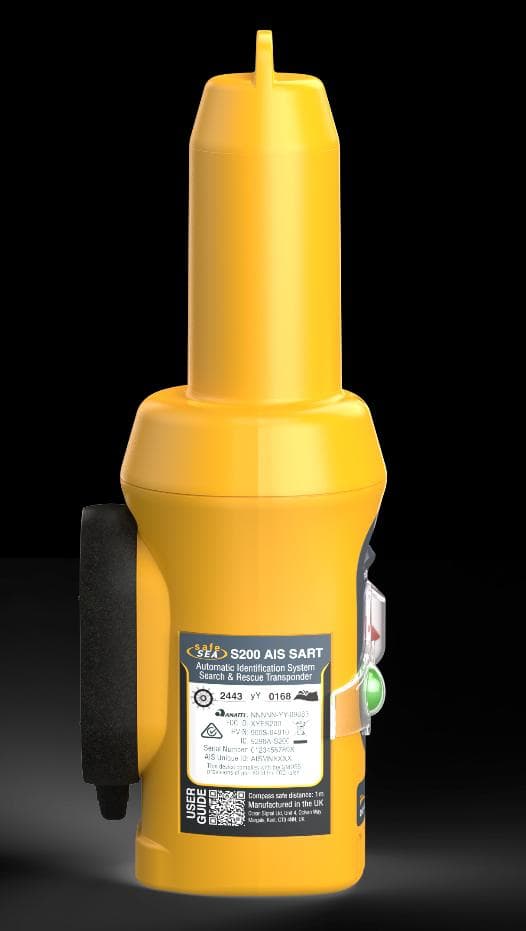
XYES200
Aug 20, 2026Search and Rescue Transmitter incorporating 162MHz AIS Man Overboard positioning capability
Equipment Class
AIS - Automatic Identification Systems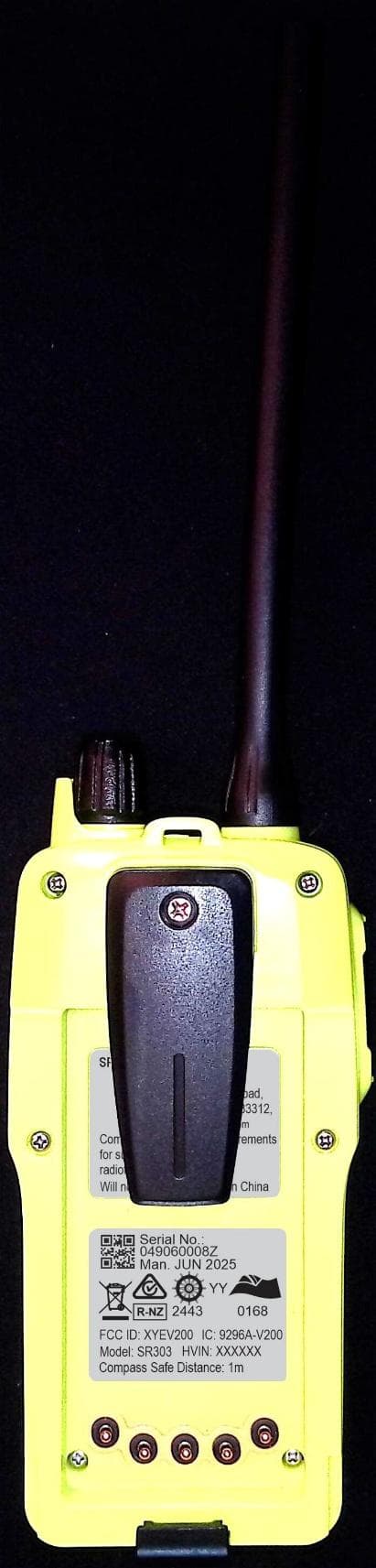
XYEV200
Feb 04, 2026GMDSS SURVIVAL CRAFT VHF RADIOTELEPHONE
Equipment Class
GHH - Part 80 VHF Hand Held Transmitter (GMDSS)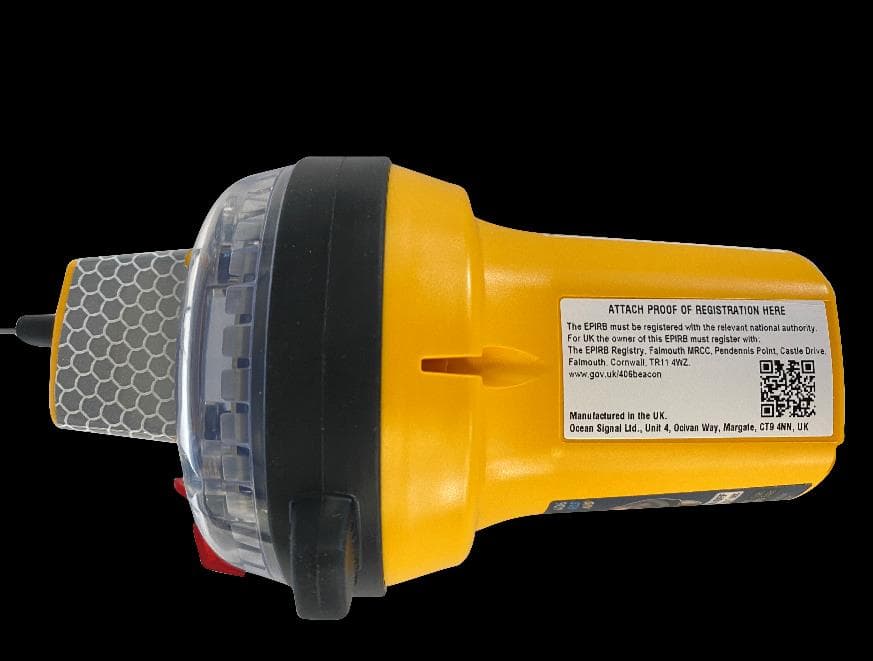
XYEEPIRB2
Jun 29, 2023406 MHz EPIRB with 121.5 MHz homing
Equipment Class
GEP - 406 MHz EPIRB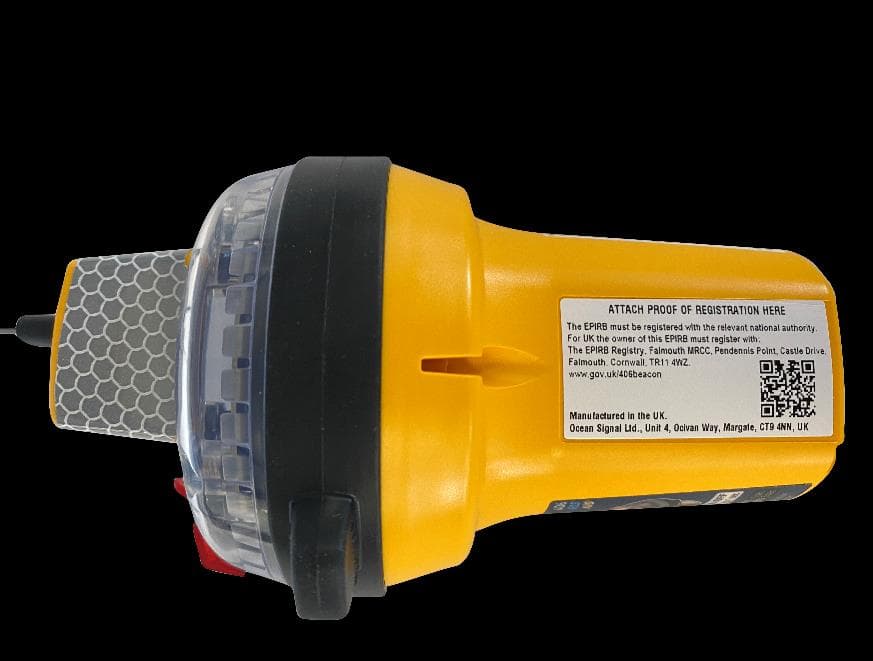
XYEEPIRB3
Jan 25, 2023Marine AIS Transceiver with EPIRB
Equipment Class
GEP - 406 MHz EPIRBXYEMOB1
Mar 02, 2015Maritime Survivor Locator Device
Equipment Class
PLB - Personal Locator Beacons