XYEEPIRB2406 MHz EPIRB with 121.5 MHz homing
Ocean Signal Ltd.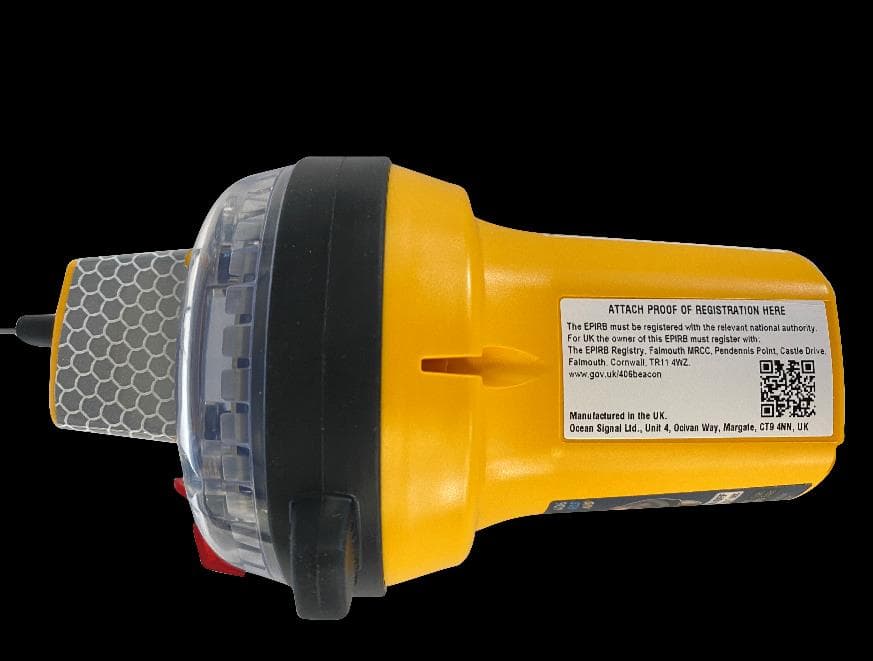
Click to zoom
Application Details
- Equipment Class
- GEP - 406 MHz EPIRB
- Date of Grant
- Jun 29, 2023
- Application Purpose
- Original Equipment
- Date of Application
- Jun 28, 2023
- Equipment Note
- 406 MHz EPIRB with 121.5 MHz homing
- Frequency Range
- 406.03100000 - 406.03100000
- Company
- Ocean Signal Ltd.
- Country
- United Kingdom
Documents & Files
Document Text
Text extracted from the exhibit documents filed with the FCC. Open a document above to read the original.
Users Manual
User Manual English Class 2, Category 2 Emergency Position Indicating Radio Beacon with RLS www.oceansignal.com EPIRB2 EPIRB2 USER MANUAL 2 912S-04391 - 01.02 22/05/2023 © 2023 Ocean Signal Ltd The technical data, information and illustrations contained in this manual were believed to be correct at the time of print. Ocean Signal Ltd reserve the right to change specifica- tions and other information contained in this manual as part of our continual improvement process. No part of this manual may be reproduced, stored in a retrieval system or transmitted in any form, electronic or otherwise, without the prior permission of Ocean Signal Ltd. No liability can be accepted for any inaccuracies or omissions in this manual. Ocean Signal® and rescueME® are registered trademarks of Ocean Signal Ltd. For ease of access please record details of your EPIRB2 here: Owners Name: ....................................................... Vessel Name: ....................................................... Beacon HEX ID (UIN): ....................................................... 22/05/2023 912S-04391 - 01.02 3 EPIRB2 USER MANUAL IN CASE OF EMERGENCY USE ONLY IN SITUATIONS OF GRAVE AND IMMINENT DANGER MANUAL ACTIVATION 12 3 4 5 EPIRB2 USER MANUAL 4 912S-04391 - 01.02 22/05/2023 1. ABOUT YOUR EPIRB 1.1 COSPAS/SARSAT System The basic Cospas-Sarsat concept is illustrated in the figure below. The System is composed of: • distress radio beacons (ELTs for aviation use, EPIRBs for maritime use, and PLBs for personal use) which transmit signals during distress situations • instruments on board satellites in geostationary and low-altitude Earth orbits which detect the signals transmitted by distress radio beacons • ground receiving stations, referred to as Local User Terminals (LUTs), which receive and process the satellite downlink signal to generate distress alerts • Mission Control Centers (MCCs) which receive alerts produced by LUTs and forward them to Rescue Coordination Centers (RCCs), Search and Rescue Points Of Contacts (SPOCs) or other MCCs The Cospas-Sarsat System includes two types of satellites: • satellites in low-altitude Earth orbit (LEO) which form the LEOSAR System • satellites in geostationary Earth orbit (GEO) which form the GEOSAR System The future Cospas-Sarsat System will include a new type of satellite in the medium-al- titude Earth orbit (MEO) which will form the MEOSAR System. The EPIRB2 is fully compatible with the new MEOSAR satellites. 22/05/2023 912S-04391 - 01.02 5 EPIRB2 USER MANUAL 1.2 Return Link Service The Galileo Return Link Service (RLS) is a free-of-charge global service available to Cospas-Sarsat RLS compatible beacons. The new functionality, currently offered uniquely by Galileo, enables a communication link that relays a Return Link Message (RLM) back to the originating beacon through the Galileo Navigation Signal in Space. The RLS feature is an indication on the EPIRB2 that confirms to the User that the distress signal from the EPIRB2 has been localised by the Cospas-Sarsat system and is being sent to the SAR authorities. It does NOT mean that a search and rescue mission has been launched, but only confirms that the distress alert has been received by the Cospas-Sarsat system and is being routed to the appropriate SAR agencies. The RLS aims to send an acknowledgment to the beacon within 30 minutes following activation (the response may not be received by the beacon for significantly longer). RLS is an optional function and may not be permitted in all countries. The full RLS specification can be found here: https://gsc-europa.eu/sites/default/files/sites/all/files/Galileo-SAR-SDD.pdf EPIRB2 USER MANUAL 6 912S-04391 - 01.02 22/05/2023 1. ABOUT YOUR EPIRB 4 1.1 COSPAS/SARSAT System 4 1.2 Return Link Service 5 2. GENERAL 7 2.1 Introduction 7 2.2 Exposure to RF Electromagnetic Energy 7 2.3 Warnings 7 2.4 What’s in the Box 8 2.5 Operating Modes 8 3. EPIRB2 OVERVIEW 9 4. INSTALLATION 10 4.1 Location 10 4.2 Mounting Dimensions 10 4.3 Remove the EPIRB2 from the Mounting Bracket 11 4.4 Fit the Manual Mounting Bracket 11 4.5 Fit the EPIRB2 into the Mounting Bracket 11 5. OPERATION 12 5.1 Manual Release 12 5.2 Optical indications on activation 15 5.3 Deactivation 16 6. FALSE ALERTS 16 7. TESTING 17 7.1 NFC and Mobile App. 17 7.2 Beacon Test 18 7.3 GNSS Test 20 8. BEACON REGISTRATION 21 8.1 Advice to owners of EPIRBs 21 8.2 Country Specific Registration Information 21 8.3 UNREGISTERED BEACON 22 9. APPENDIX 22 9.1 Maintenance 22 9.2 Batteries 23 9.3 Decommissioning and Disposal 23 9.4 Transport 24 9.5 Specifications 25 9.6 Approvals 26 9.7 Spares 26 10. WARRANTY INFORMATION 27 10.1 Limited Warranty 27 10.2 Extended Warranty 27 22/05/2023 912S-04391 - 01.02 7 EPIRB2 USER MANUAL 2. GENERAL 2.1 Introduction This manual provides valuable information for the installation, operation and routine maintenance of the EPIRB2. Please read this manual completely before using your EPIRB2. 2.2 Exposure to RF Electromagnetic Energy This product complies with EN62479 (EU) at a separation distance of 25 mm and with RSS-102 (Canada). 2.3 Warnings ! It is a legal requirement to register your EPIRB2 with your National Authority. ! Only use your EPIRB2 in a situation of grave and imminent danger. ! Deliberately misusing your EPIRB2 or setting it off accidentally may result in prosecution and a fine. ! Contains Lithium batteries: - store between -30°C (-22ºF) to+70°C (+158ºF) If the EPIRB2 is stored at higher temperatures the battery life may be degraded and should be replaced earlier than the date stated. Failure to do this may result in the EPIRB2 not fulfilling the stated 48hr operating life. The effect is more pronounced as the temperature increases. - DO NOT ATTEMPT TO REPLACE THE BATTERIES YOURSELF unauthorised opening and battery replacement may put your life at risk. - do not short circuit, incinerate or recharge. ! Please see section 9.4 for information on safe transportation. ! The battery in your E…
Text truncated - open the document above for the full version.
Users Manual
User Manual English Class 2, Category 1 Emergency Position Indicating Radio Beacon with RLS www.oceansignal.com EPIRB2 Pro EPIRB2 Pro USER MANUAL 2 912S-04393 - 01.02 22/05/2023 © 2023 Ocean Signal Ltd The technical data, information and illustrations contained in this manual were believed to be correct at the time of print. Ocean Signal Ltd reserve the right to change specifica- tions and other information contained in this manual as part of our continual improvement process. No part of this manual may be reproduced, stored in a retrieval system or transmitted in any form, electronic or otherwise, without the prior permission of Ocean Signal Ltd. No liability can be accepted for any inaccuracies or omissions in this manual. Ocean Signal® and rescueME® are registered trademarks of Ocean Signal Ltd. For ease of access please record details of your EPIRB2 Pro here: Owners Name: ....................................................... Vessel Name: ....................................................... Beacon HEX ID (UIN): ....................................................... 22/05/2023 912S-04393 - 01.02 3 EPIRB2 Pro USER MANUAL IN CASE OF EMERGENCY USE ONLY IN SITUATIONS OF GRAVE AND IMMINENT DANGER MANUAL ACTIVATION 12 3 4 5 6 7 8 EPIRB2 Pro USER MANUAL 4 912S-04393 - 01.02 22/05/2023 1. ABOUT YOUR EPIRB 1.1 COSPAS/SARSAT System The basic Cospas-Sarsat concept is illustrated in the figure below. The System is composed of: • distress radio beacons (ELTs for aviation use, EPIRBs for maritime use, and PLBs for personal use) which transmit signals during distress situations • instruments on board satellites in geostationary and low-altitude Earth orbits which detect the signals transmitted by distress radio beacons • ground receiving stations, referred to as Local User Terminals (LUTs), which receive and process the satellite downlink signal to generate distress alerts • Mission Control Centers (MCCs) which receive alerts produced by LUTs and forward them to Rescue Coordination Centers (RCCs), Search and Rescue Points Of Contacts (SPOCs) or other MCCs The Cospas-Sarsat System includes two types of satellites: • satellites in low-altitude Earth orbit (LEO) which form the LEOSAR System • satellites in geostationary Earth orbit (GEO) which form the GEOSAR System The future Cospas-Sarsat System will include a new type of satellite in the medium-al- titude Earth orbit (MEO) which will form the MEOSAR System. The EPIRB2 Pro is fully compatible with the new MEOSAR satellites. 22/05/2023 912S-04393 - 01.02 5 EPIRB2 Pro USER MANUAL 1.2 Return Link Service The Galileo Return Link Service (RLS) is a free-of-charge global service available to Cospas-Sarsat RLS compatible beacons. The new functionality, currently offered uniquely by Galileo, enables a communication link that relays a Return Link Message (RLM) back to the originating beacon through the Galileo Navigation Signal in Space. The RLS feature is an indication on the EPIRB2 Pro that confirms to the User that the distress signal from the EPIRB2 Pro has been localised by the Cospas-Sarsat system and is being sent to the SAR authorities. It does NOT mean that a search and rescue mission has been launched, but only confirms that the distress alert has been received by the Cospas- Sarsat system and is being routed to the appropriate SAR agencies. The RLS aims to send an acknowledgment to the beacon within 30 minutes following activation (the response may not be received by the beacon for significantly longer). RLS is an optional function and may not be permitted in all countries. The full RLS specification can be found here: https://gsc-europa.eu/sites/default/files/sites/all/files/Galileo-SAR-SDD.pdf EPIRB2 Pro USER MANUAL 6 912S-04393 - 01.02 22/05/2023 1. ABOUT YOUR EPIRB 4 1.1 COSPAS/SARSAT System 4 1.2 Return Link Service 5 2. GENERAL 7 2.1 Introduction 7 2.2 Exposure to RF Electromagnetic Energy 7 2.3 Warnings 7 2.4 What’s in the Box 8 2.5 Operating Modes 8 3. EPIRB2 PRO OVERVIEW 9 4. INSTALLATION 10 4.1 Location 10 4.2 Remove the EPIRB2 Pro from the Auto Release Housing 11 4.3 Mounting Dimensions 12 4.4 Fit the Auto Release Housing 12 4.5 Load the EPIRB2 Pro into the Auto Release Housing 14 5. OPERATION 16 5.1 Manual Activation 17 5.2 Optical Indications on activation 19 5.3 Deactivation 20 6. FALSE ALERTS 20 7. TESTING 21 7.1 NFC and Mobile App. 21 7.2 Beacon Test 22 7.3 GNSS Test 24 8. BEACON REGISTRATION 25 8.1 Advice to owners of EPIRBs 25 8.2 Country Specific Registration Information 25 8.3 UNREGISTERED BEACON 26 9. APPENDIX 27 9.1 Maintenance 27 9.2 Batteries 29 9.3 Decommissioning and Disposal 29 9.4 Transport 30 9.5 HRU Replacement 31 9.6 Specifications 32 9.7 Approvals 33 9.8 Spares 33 10. WARRANTY INFORMATION 35 10.1 Limited Warranty 35 10.2 Extended Warranty 35 22/05/2023 912S-04393 - 01.02 7 EPIRB2 Pro USER MANUAL 2. GENERAL 2.1 Introduction This manual provides valuable information for the installation, operation and routine maintenance of the EPIRB2 Pro complete with the included Auto Release Housing. Please read this manual completely before using your EPIRB2 Pro. 2.2 Exposure to RF Electromagnetic Energy This product complies with EN62479 (EU) at a separation distance of 25 mm and with RSS-102 (Canada). 2.3 Warnings ! It is a legal requirement to register your EPIRB2 Pro with your National Authority. ! Only use your EPIRB2 Pro in a situation of grave and imminent danger. ! Deliberately misusing your EPIRB2 Pro or setting it off accidentally may result in prosecution and a fine. ! Contains Lithium batteries: - store between -30°C (-22ºF) to+70°C (+158ºF) If the EPIRB2 Pro is stored at higher temperatures the battery life may be degraded and should be replaced earlier than the date stated. Failure to do this may result in the EPIRB2 not fulfilling the stated 48hr operating life. The effect is more pronounced as the temperature increases. - DO NOT ATTEMPT TO REPLACE THE BATTERIES YOURSELF unauthorised opening and battery replacem…
Text truncated - open the document above for the full version.
Attestation Statements
Date: 06-05-2023 To: Federal Communications Commission Authorization and Evaluation Division 7435 Oakland Mills Road Columbia, MD 21046 USA Ref: Attestation Statements Part 2.911(d)(5)(i) and Part 2.911(d)(5)(ii) Filing Re. KDB 986446 D01 FCC ID: XYE EPIRB2 Dear Sir or Madam, The ACR Group (“the applicant”) certifies that the equipment for which authorization is sought is not “covered” equipment prohibited from receiving an equipment authorization pursuant to section 2.903 of the FCC rules. We also certify that, as of the date of the filing of the application, the applicant is not identified on the Covered List as an entity producing “covered” equipment. If you have any questions, please contact us. Sincerely, Contact name: Mark Newton (Approvals Manager) Company name: Ocean Signal Ltd. (Part of the ACR Group). Address: Unit 4, Ocivan Way, Margate, Kent, CT9 4NN, UK E-mail: [email protected] Tel: +44 1843 808028
Attestation Statements
Rev 1/26/2023 To: Federal Communications Commission Authorization and Evaluation Division 7435 Oakland Mills Road Columbia, MD 21046 USA Date: 06-05-2023 Ref: Attestation Statements Part 2.911(d)(7) Filing FCC ID: XYE EPIRB2 The ACR Group (“the applicant”) certifies that, as of the date of the filing of the application, ACR Electronics Inc. is our designated U.S. agent for service of process for the above referenced FCC ID. The ACR Group accepts to maintain an agent for no less than one year after the grantee has terminated all marketing and importation or the conclusion of any Commission-related proceeding involving the equipment. ACR Electronics Inc. accepts, as of the date of the filing of the application, the obligation of the designated U.S. agent for service of process for the above referenced FCC ID. Designated U.S. Agent Information: Name: ACR Electronics Inc. Address: 5757 Ravenswood Road, Fort Lauderdale, FL 33312, USA Contact Person: Dan Stankovic, Director of Certification and Test Tel.: (954) 981-3333 x2175 Email: [email protected] Sincerely, [Insert U.S. agent company name] ACR Electronics Inc. (U.S. agent company name printed name) Dan Stankovic (U.S. agent company name signature) [Insert applicant name] Ocean Signal Ltd. (Part of the ACR Group) (Applicant printed name) Mark Newton (Applicant signature)
Cover Letter(s)
16714/161.011/ACR 16714/161.011/OCEAN SIGNAL CORR: 2023-0120 June 2, 2023 Mr. Simon Nolan Ocean Signal Ltd. Ocivan Way, Unit 4 Margate, Kent CT9 4NN United Kingdom Subj: OCEAN SIGNAL SAFESEA EPIRB3 PRO & EPIRB2 PRO, RESCUEME EPIRB3 & EPIRB2, ACR GLOBALFIX V5 & GLOBALFIX V6 We have reviewed the information submitted in your email dated March 8, 2023 and subsequent correspondence, requesting Coast Guard acceptance of the following emergency position indicating radiobeacons (EPIRBs) with a 121.5 MHz homing signal, a Return Link Service (RLS), and the Automatic Identification System (AIS) and non-AIS variants, in accordance with 46 CFR 161.011 and per the Radio Technical Commission for Maritime Services (RTCM) standard 11000.5 for EPIRBs: • Ocean Signal SafeSea EPIRB3 Pro (Class 2, Category 1) • Ocean Signal SafeSea EPIRB2 Pro (Class 2, Category 1), Non-AIS • Ocean Signal RescueME EPIRB3 (Class 2, Category 2) • Ocean Signal RescueME EPIRB2 (Class 2, Category 2), Non-AIS • ACR Electronics GlobalFix V5 (Class 2, Categories 1 and 2) • ACR Electronics GlobalFix V6 (Class 2, Categories 1 and 2), Non-AIS In compliance with Federal Communications Commission (FCC) requirements, and the FCC waivers granted in via email from Mr. Thomas Derenge, Deputy Chief Mobility Division, WTB, FCC email dated March 8, 2022, for use of RTCM standard 11000.5 for EPIRBs, our review verifies performance as a radiobeacon for marine use per 46 CFR 161.011. USCG approval certificates are not issued for marine radiobeacons as final approval rests with the FCC. The information provided, including the TUV SUD test reports listed below, indicate compliance with the relevant requirements of RTCM Standard 11000.5 and 47 CFR 80.1061(c)(2). Therefore, we conclude that the subject EPIRBs are acceptable for marine use. Commandant United States Coast Guard U.S. Coast Guard (CG-ENG-4) US Coast Guard Stop 7509 2703 Martin Luther King Jr. AVE SE Washington, DC 20593-7509 Phone: (202) 372-1396 E-mail: [email protected] www.dco.uscg.mil/CG-ENG-4 16714/161.011/ACR 16714/161.011/OCEAN SIGNAL CORR: 2023-0120 June 2, 2023 Subj: OCEAN SIGNAL SAFESEA EPIRB3 PRO & EPIRB2 PRO, RESCUEME EPIRB3 & EPIRB2, ACR GLOBALFIX V5 & GLOBALFIX V6 2 Ocean Signal Limited • EPIRB3 Pro and EPIRB3 – Document 7592867-01, Issue 5, 02 August 2022 • EPIRB3/2 Pro and EPIRB3/2 – Document 7592867-07, Issue 1, 20 October 2022 • EPIRB2 Pro and EPIRB2 – Document 75952867-02, Issue 2, 16 February 2023 ACR Electronics Inc. • RLB-44 – Document 75953445-01, Issue 5, 02 August 2022 • RLB-44/RLB-43 (GlobalFix V5/V6) – Document 75953445-06, Issue 1, 20 October 2022 • GlobalFix V6 – Document 75953445-02 Issue 2, 16 February 2023 This letter was delivered to [email protected]. No hard copies will be provided. You are welcome to print as many copies as you wish. If you have any follow-up questions, please contact Chris Reimer at [email protected]. Please reference ID#: 2023-0120 in any correspondence related to this project. Sincerely, B. A. BALDWIN Chief, Lifesaving and Fire Safety Division U.S. Coast Guard By direction Copy: FCC Federal Communications Commission – Office of Engineering and Technology (OET)
Cover Letter(s)
Dear Sir/Madam, Pursuant to Sections 0.457(d)(1)(ii) and 0.459 of the Commission’s Rules, the ACR Group hereby requests permanent confidential treatment of information accompanying this application as outlined below: Block diagrams, Schematic Diagrams, Operational description, Bill of Materials and Parts List. The ACR Group also hereby requests short-term confidential treatment of information accompanying this application as outlined below for a period of 180 days: Internal Photographs, External Photographs, User Manuals, Test Set-up Photographs. The above materials contain trade secrets and proprietary information not customarily released to the public. The public disclosure of these matters might be harmful to the Applicant and provide unjustified benefits to its competitors. The Applicant understands that pursuant to Rule 0.457(d)(1)(ii), disclosure of this Application and all accompanying materials will not be made before the date of the Grant for this Application. Yours Faithfully Signed on behalf of the ACR Group Mark Newton Approvals Manager Ocean Signal Ltd. Telephone: +44 1843 808028 Email: [email protected] 13 th June 2023 TUV SUD BABT TCB Octagon House, Segensworth Road, Fareham, Hampshire, PO15 5RL Confidentiality Request ISED FCC IDs: XYEEPIRB2 B66ACRRLB-43
External Photos
Ocean Signal rescueME EPIRB2 – External Photographs External photographs of the rescueME EPIRB2 are shown below in Figures 1 to 6. Figure 1: rescueME EPIRB2 – Front View Figure 2: rescueME EPIRB2 – Right Hand Side View Approval information will be printed on this label Figure 3: rescueME EPIRB2 - Left Hand Side View Figure 4: rescueME EPIRB2 – Rear View The FCC Identifier will be printed on this label Figure 5: rescueME EPIRB2 - Top View Figure 6: rescueME EPIRB2 – Base View
External Photos
Ocean Signal rescueME EPIRB2 PRO – External Photographs External photographs of the rescueME EPIRB2 PRO are shown below in Figures 1 to 6. Figure 1: rescueME EPIRB2 PRO – Front View (Including Fixed Antenna in Deployed Configuration) Antenna Not Shown for Clarity Figure 2: rescueME EPIRB2 PRO – Right Hand Side View (Antenna Not Shown for Clarity) Figure 3: rescueME EPIRB2 PRO - Left Hand Side View (Antenna Not Shown for Clarity) Approval information will be printed on this label Figure 4: rescueME EPIRB2 PRO – Rear View (Antenna Not Shown for Clarity) Figure 5: rescueME EPIRB2 PRO - Top View (Including Fixed Antenna in Stowed Configuration) The FCC Identifier will be printed on this label Figure 6: rescueME EPIRB2 PRO – Base View
ID Label/Location Info
Ocean Signal rescueME EPIRB2 – FCC ID Labelling and Location Note: Labels shown on product photos for location indication only rescueME EPIRB2 - Left Hand Side Label (NOAA / U.S. Coast Guard) rescueME EPIRB2 – Rear Label (FCC ID) rescueME EPIRB2 – Right Hand Side Label (Approvals) rescueME EPIRB2 – Front Label
ID Label/Location Info
Ocean Signal SafeSea EPIRB2 PRO – FCC ID Labelling and Location Note: Labels shown on product photos for location indication only rescueME EPIRB2 PRO - Left Hand Side Label (NOAA / U.S. Coast Guard) (Antenna Not Shown for Clarity) rescueME EPIRB2 PRO – Rear Label (FCC ID) (Antenna Not Shown for Clarity) rescueME EPIRB2 PRO - Right Hand Side Label (Approvals) (Antenna Not Shown for Clarity) rescueME EPIRB2 PRO – Front Label (Antenna Not Shown for Clarity)
Internal Photos
Ocean Signal rescueME EPIRB2 and rescueME EPIRB2 Pro - Internal Photographs Photographs showing the internal construction, battery pack and PCB assembly of the Ocean Signal EPIRB2 and EPIRB2 Pro are shown in Figures 1 to 6 below. Note that the internal construction, battery pack and PCB of both EPIRB variants is identical. Figure 1: EPIRB2/EPIRB2 Pro – Top view showing PCB in-situ. Figure 2: EPIRB2/EPIRB2 Pro – Top view, PCB removed showing battery carrier in-situ. Figure 3: EPIRB2/EPIRB2 Pro – Top view, case only. Figure 4: EPIRB2/EPIRB2 Pro PCB – Rear side. Figure 5: EPIRB2/EPIRB2 Pro PCB – Rear side with screening cans removed. Figure 6: EPIRB2/EPIRB2 Pro – Battery pack in carrier.
RF Exposure Info
1 (33) Copyright © Verkotan Document ID:FCC SAR report_EPIRBV3_ID5732_22092022 SAR Compliance Test Report Date of Report 22/09/2022 Client’s Contact person: Number of pages: 33 Mark Newton Responsible Test engineer: Kalle Orava Testing laboratory: Verkotan Oy Elektroniikkatie 17 90590 Oulu Finland Client: Ocean Signal Ltd. Unit 4, Ocivan Way CT9 4NN Margate United Kingdom Tested device EPIRB3 Pro Related r eports: - Testing has been carried out in accordance with: 47CFR §2.1093 Radiofrequency Radiation Exposure Evaluation: Portable Devices FCC KDB Publications 447498 D04 Interim General RF Exposure Guidance v01. Documentation: The test report must always be reproduced in full; reproduction of an excerpt only is subject to written approval of the testing laboratory Test Results: The EUT complies with the requirements in respect of all parameters subject to the test. The test results relate only to devices specified in this document Date and signatures: 22.09.2022 For the contents: 2 (33) Copyright © Verkotan Document ID:FCC SAR report_EPIRBV3_ID5732_22092022 TABLE OF CONTENTS 1. SUMMARY OF SAR TEST REPORT ......................................................................................................................................................... 3 1.1 TEST DETAILS .................................................................................................................................................................................................... 3 1.2 MAXIMUM RESULTS ...................................................................................................................................................................................... 4 1.2.1 Maximum Drift ........................................................................................................................................................................................... 4 1.2.2 Measurement Uncertainty ..................................................................................................................................................................... 4 2. DESCRIPTION OF THE DEVICE UNDER TEST (DUT) ............................................................................................................................. 5 2.1 SUPPORTED FREQUENCY BANDS AND OPERATIONAL MODES ................................................................................................. 5 3. OUTPUT POWER ........................................................................................................................................................................... 6 3.1 MAXIMUM OUTPUT POWER ...................................................................................................................................................................... 6 3.2 TESTED CONDUCTED POWER .................................................................................................................................................................... 6 4. TEST EQUIPMENT .................................................................................................................................................................................... 7 4.1 TEST EQUIPMENT LIST .................................................................................................................................................................................. 7 4.1.1 Isotropic E-field Probe Type EX3DV4 ................................................................................................................................................ 8 4.2 PHANTOMS ....................................................................................................................................................................................................... 8 4.3 TISSUE SIMULANTS ........................................................................................................................................................................................ 8 4.4 SYSTEM VALIDATION STATUS ................................................................................................................................................................... 9 4.5 SYSTEM CHECK ................................................................................................................................................................................................ 9 4.5.1 Tissue Simulant Verification ................................................................................................................................................................... 9 5. TEST PROCEDURE .................................................................................................................................................................................. 10 5.1 TEST POSITIONS ............................................................................................................................................................................................. 10 5.1.1 Body-worn Configuration, 0mm separation distance ........................................................................................................... 10 5.2 SCAN PROCEDURES ..................................................................................................................................................................................... 10 5.3 SAR AVERAGING METHODS ..................................................................................................................................................................... 10 6. MEASUREMENT UNCERTAINTY ................................................................................................................................................ 11 7. TEST RESULTS ........................................................................................................................................................................................ 12 7.1.1 …
Text truncated - open the document above for the full version.
Test Report
Document 75953445 Report 01 Issue 5 August 2022 Report On Emergency Beacons Testing of the ACR Electronics Inc RLB-44 In accordance with Cospas-Sarsat T.007 TÜV SÜD, Octagon House, Concorde Way, Segensworth North, Fareham, Hampshire, United Kingdom, PO15 5RL Tel: +44 (0) 1489 558100. Website: www.tuv-sud.co.uk Document 75953445 Report 01 Issue 5Page 1 of 161 REPORT ON Emergency Beacons Testing of the ACR Electronics Inc RLB-44 Document 75953445 Report 01 Issue 5 August 2022 APPLICANT/ MANUFACTURER Ocean Signal Limited Unit 4 Ocivan Way Margate CT9 4NN MANUFACTURER ACR Electronics Inc 5757 Ravenswood Drive Fort Lauderdale FL 33312 USA PREPARED BY Matt Sellers Apprentice (RF) APPROVED BY Martin Hardy Authorised Signatory DATED 02 August 2022 Document 75953445 Report 01 Issue 5 Page 2 of 161 CONTENTS Section Page No 1REPORT SUMMARY .................................................................................................................. 3 1.1Introduction .................................................................................................................................. 4 1.2Application Form .......................................................................................................................... 5 1.3Product Information ................................................................................................................... 15 1.4Test Locations ........................................................................................................................... 20 1.5Modifications .............................................................................................................................. 21 1.6Report Modification Record ....................................................................................................... 23 2TEST DETAILS ......................................................................................................................... 24 2.1Power Output ............................................................................................................................. 41 2.2Digital Message ......................................................................................................................... 43 2.3Modulation ................................................................................................................................. 48 2.4406 MHz Transmitted Frequency .............................................................................................. 52 2.5Spurious Emissio…
Text truncated - open the document above for the full version.
Contact Information
Applicant
Mark Newton(Approvals Manager)
Test Firm
TUV SUD LimitedNathan Emery
Technical Specifications
| # | Rule Parts | Frequency Range | Power Output | Emission | Tolerance |
|---|---|---|---|---|---|
| 2 | 80.1101(c)(5) | 406.031 MHz - 406.031 MHz | 5 W | 16K0G1D | 0.0005 % |
Other Applications from Ocean Signal Ltd.
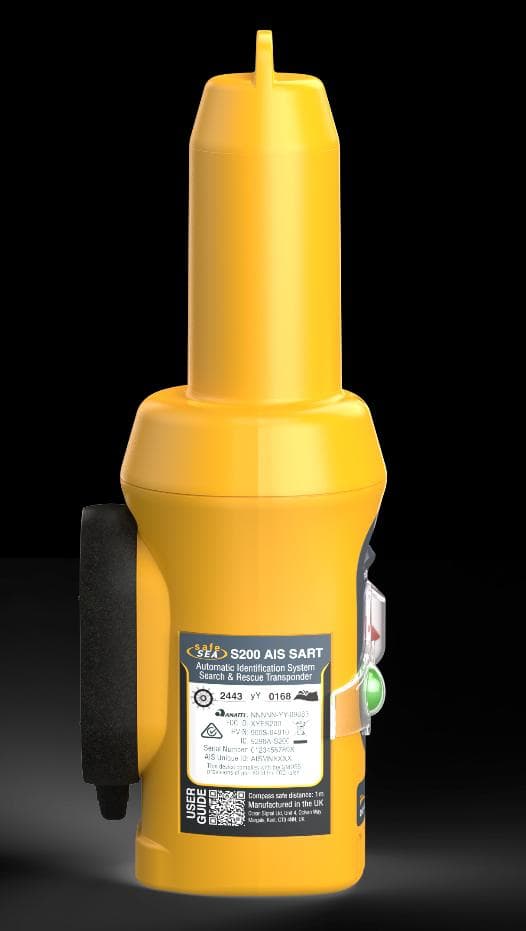
XYES200
Aug 20, 2026Search and Rescue Transmitter incorporating 162MHz AIS Man Overboard positioning capability
Equipment Class
AIS - Automatic Identification Systems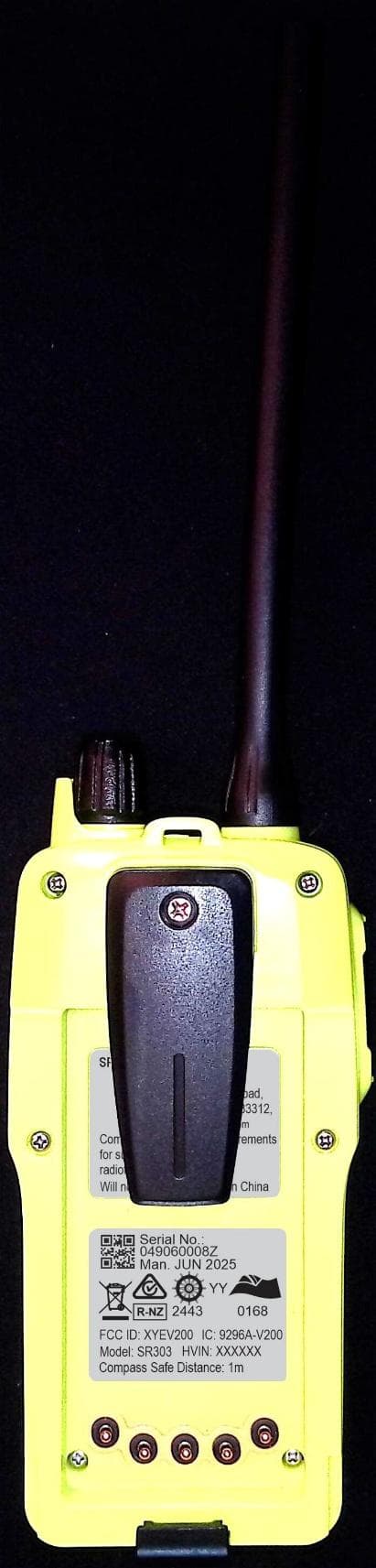
XYEV200
Feb 04, 2026GMDSS SURVIVAL CRAFT VHF RADIOTELEPHONE
Equipment Class
GHH - Part 80 VHF Hand Held Transmitter (GMDSS)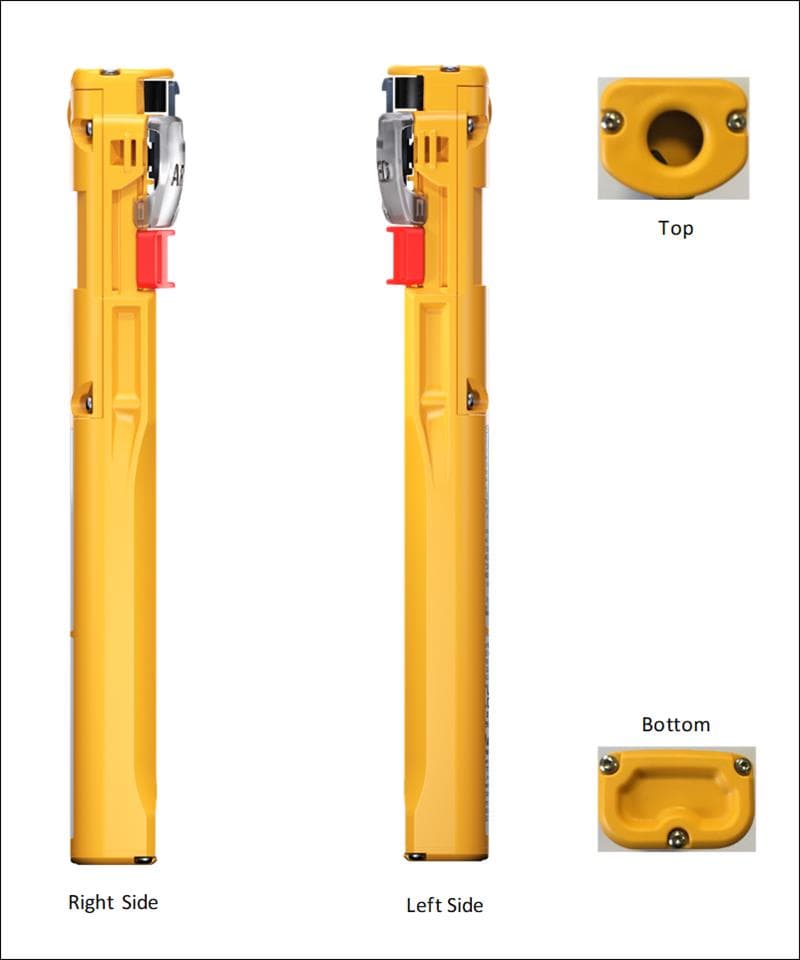
XYEPLB3
Jan 31, 2023PLB with AIS transceiver
Equipment Class
AIS - Automatic Identification Systems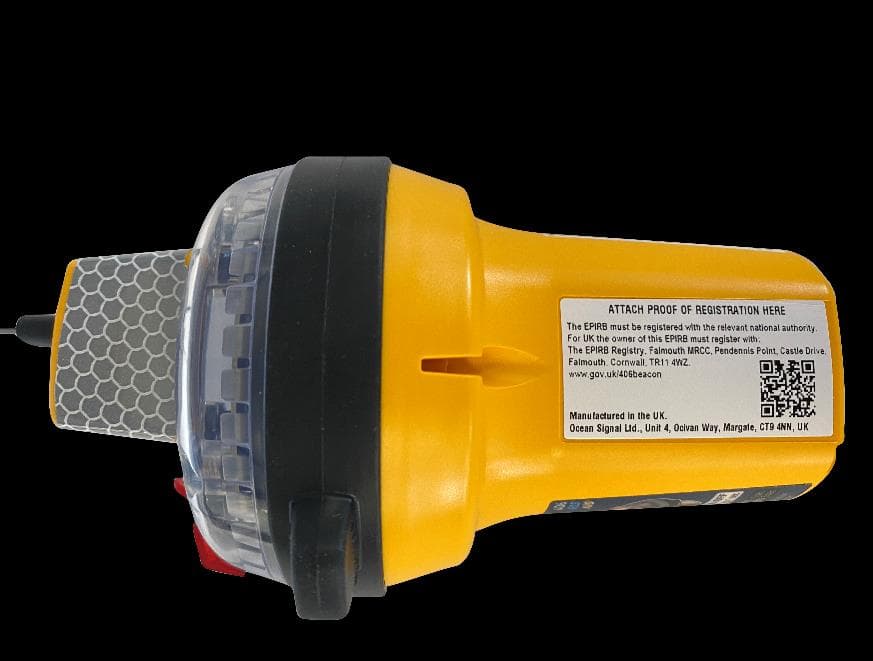
XYEEPIRB3
Jan 25, 2023Marine AIS Transceiver with EPIRB
Equipment Class
GEP - 406 MHz EPIRBXYEMOB1
Mar 02, 2015Maritime Survivor Locator Device
Equipment Class
PLB - Personal Locator Beacons