XYEEPIRB3Marine AIS Transceiver with EPIRB
Ocean Signal Ltd.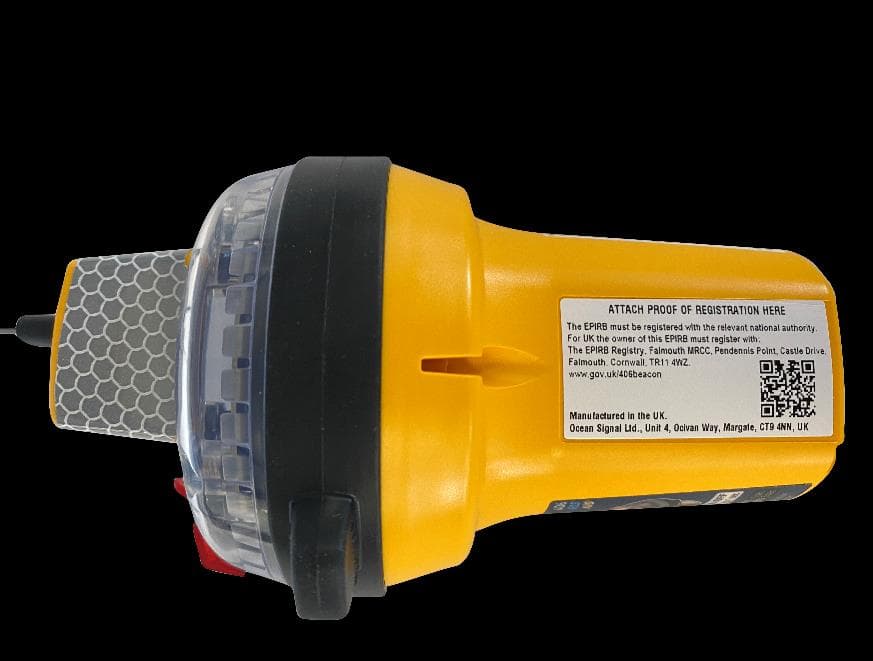
Click to zoom
Application Details
- Equipment Class
- GEP - 406 MHz EPIRB
- Date of Grant
- Jan 25, 2023
- Application Purpose
- Original Equipment
- Date of Application
- Jan 22, 2023
- Equipment Note
- Marine AIS Transceiver with EPIRB
- Frequency Range
- 406.03100000 - 406.03100000
- Company
- Ocean Signal Ltd.
- Country
- United Kingdom
Documents & Files
Document Text
Text extracted from the exhibit documents filed with the FCC. Open a document above to read the original.
Users Manual
User Manual English Class 2, Category 2 Emergency Position Indicating Radio Beacon with AIS and RLS www.oceansignal.com EPIRB3 EPIRB3 USER MANUAL 2 912S-03967 - 01.01 14/11/2022 © 2022 Ocean Signal Ltd The technical data, information and illustrations contained in this manual were believed to be correct at the time of print. Ocean Signal Ltd reserve the right to change specifica- tions and other information contained in this manual as part of our continual improvement process. No part of this manual may be reproduced, stored in a retrieval system or transmitted in any form, electronic or otherwise, without the prior permission of Ocean Signal Ltd. No liability can be accepted for any inaccuracies or omissions in this manual. Ocean Signal® and rescueME® are registered trademarks of Ocean Signal Ltd. For ease of access please record details of your EPIRB3 here: Owners Name: ....................................................... Vessel Name: ....................................................... Beacon HEX ID (UIN): ....................................................... 14/11/2022 912S-03967 - 01.01 3 EPIRB3 USER MANUAL IN CASE OF EMERGENCY USE ONLY IN SITUATIONS OF GRAVE AND IMMINENT DANGER MANUAL ACTIVATION 12 3 4 5 EPIRB3 USER MANUAL 4 912S-03967 - 01.01 14/11/2022 1. ABOUT YOUR EPIRB 1.1 COSPAS/SARSAT System The basic Cospas-Sarsat concept is illustrated in the figure below. The System is composed of: • distress radio beacons (ELTs for aviation use, EPIRBs for maritime use, and PLBs for personal use) which transmit signals during distress situations • instruments on board satellites in geostationary and low-altitude Earth orbits which detect the signals transmitted by distress radio beacons • ground receiving stations, referred to as Local User Terminals (LUTs), which receive and process the satellite downlink signal to generate distress alerts • Mission Control Centers (MCCs) which receive alerts produced by LUTs and forward them to Rescue Coordination Centers (RCCs), Search and Rescue Points Of Contacts (SPOCs) or other MCCs The Cospas-Sarsat System includes two types of satellites: • satellites in low-altitude Earth orbit (LEO) which form the LEOSAR System • satellites in geostationary Earth orbit (GEO) which form the GEOSAR System The future Cospas-Sarsat System will include a new type of satellite in the medium-al- titude Earth orbit (MEO) which will form the MEOSAR System. The EPIRB3 is fully compatible with the new MEOSAR satellites. 14/11/2022 912S-03967 - 01.01 5 EPIRB3 USER MANUAL 1.2 Return Link Service The Galileo Return Link Service (RLS) is a free-of-charge global service available to Cospas-Sarsat RLS compatible beacons. The new functionality, currently offered uniquely by Galileo, enables a communication link that relays a Return Link Message (RLM) back to the originating beacon through the Galileo Navigation Signal in Space. The RLS feature is an indication on the EPIRB3 that confirms to the User that the distress signal from the EPIRB3 has been localised by the Cospas-Sarsat system and is being sent to the SAR authorities. It does NOT mean that a search and rescue mission has been launched, but only confirms that the distress alert has been received by the Cospas-Sarsat system and is being routed to the appropriate SAR agencies. The RLS aims to send an acknowledgment to the beacon within 30 minutes following activation (the response may not be received by the beacon for significantly longer). RLS is an optional function and may not be permitted in all countries. The full RLS specification can be found here: https://gsc-europa.eu/sites/default/files/sites/all/files/Galileo-SAR-SDD.pdf 1.3 AIS System AIS systems operate on VHF radio bands and transceivers are fitted to all commercial shipping and an ever growing number of recreational vessels globally. Shortly after activation, an AIS EPIRB device will activate an alarm on all AIS equipped vessels within VHF range alerting them to the fact that a person is in the water needing assistance. Often it is a vessel in the close vicinity of an incident that is able to react and effect a rescue quicker than the emergency services. Emergency service craft are fitted with AIS receivers allowing them to pinpoint a casualty in the water more precisely than any other system. EPIRB3 USER MANUAL 6 912S-03967 - 01.01 14/11/2022 1. ABOUT YOUR EPIRB 4 1.1 COSPAS/SARSAT System 4 1.2 Return Link Service 5 1.3 AIS System 5 2. GENERAL 7 2.1 Introduction 7 2.2 Exposure to RF Electromagnetic Energy 7 2.3 Warnings 7 2.4 What’s in the Box 8 2.5 Operating Modes 8 3. EPIRB3 OVERVIEW 9 4. INSTALLATION 10 4.1 Location 10 4.2 Mounting Dimensions 10 4.3 Remove the EPIRB3 from the Mounting Bracket 10 4.4 Fit the Manual Mounting Bracket 11 4.5 Fitting the EPIRB3 into the Mounting Bracket 11 5. OPERATION 12 5.1 Manual Release 12 5.2 Optical Indications on activation 15 5.3 Deactivation 16 6. FALSE ALERTS 16 7. TESTING 17 7.1 NFC and Mobile App. 17 7.2 Beacon Test 18 7.3 GNSS Test 20 8. BEACON REGISTRATION 21 8.1 Advice to owners of EPIRBs 21 8.2 Country Specific Registration Information 21 8.3 UNREGISTERED BEACON 22 9. APPENDIX 22 9.1 Maintenance 22 9.2 Batteries 23 9.3 Decommissioning and Disposal 23 9.4 Transport 24 9.5 Specifications 25 9.6 Approvals 26 9.7 Spares 26 10. WARRANTY INFORMATION 27 10.1 Limited Warranty 27 10.2 Extended Warranty 27 14/11/2022 912S-03967 - 01.01 7 EPIRB3 USER MANUAL 2. GENERAL 2.1 Introduction This manual provides valuable information for the installation, operation and routine maintenance of the EPIRB3. Please read this manual completely before using your EPIRB3. 2.2 Exposure to RF Electromagnetic Energy This product complies with EN62479 (EU) and RSS-102 (Canada). 2.3 Warnings ! It is a legal requirement to register your EPIRB3 with your National Authority. ! Only use your EPIRB3 in a situation of grave and imminent danger. ! Deliberately misusing your EPIRB3 or setting it off accidentally may result in prosecution and…
Text truncated - open the document above for the full version.
Users Manual
User Manual English Category 1 Emergency Position Indicating Radio Beacon with AIS and RLS www.oceansignal.com EPIRB3 Pro EPIRB3 Pro USER MANUAL 2 912S-03968 - 01.03 15/11/2022 © 2022 Ocean Signal Ltd The technical data, information and illustrations contained in this manual were believed to be correct at the time of print. Ocean Signal Ltd reserve the right to change specifica- tions and other information contained in this manual as part of our continual improvement process. No part of this manual may be reproduced, stored in a retrieval system or transmitted in any form, electronic or otherwise, without the prior permission of Ocean Signal Ltd. No liability can be accepted for any inaccuracies or omissions in this manual. Ocean Signal® and SafeSea® are registered trademarks of Ocean Signal Ltd. For ease of access please record details of your EPIRB3 Pro here: Owners Name: ....................................................... Vessel Name: ....................................................... Beacon HEX ID (UIN): ....................................................... 15/11/2022 912S-03968 - 01.03 3 EPIRB3 Pro USER MANUAL IN CASE OF EMERGENCY USE ONLY IN SITUATIONS OF GRAVE AND IMMINENT DANGER MANUAL ACTIVATION 12 3 4 5 6 7 8 EPIRB3 Pro USER MANUAL 4 912S-03968 - 01.03 15/11/2022 1. ABOUT YOUR EPIRB 1.1 COSPAS/SARSAT System The basic Cospas-Sarsat concept is illustrated in the figure below. The System is composed of: • distress radio beacons (ELTs for aviation use, EPIRBs for maritime use, and PLBs for personal use) which transmit signals during distress situations • instruments on board satellites in geostationary and low-altitude Earth orbits which detect the signals transmitted by distress radio beacons • ground receiving stations, referred to as Local User Terminals (LUTs), which receive and process the satellite downlink signal to generate distress alerts • Mission Control Centers (MCCs) which receive alerts produced by LUTs and forward them to Rescue Coordination Centers (RCCs), Search and Rescue Points Of Contacts (SPOCs) or other MCCs The Cospas-Sarsat System includes two types of satellites: • satellites in low-altitude Earth orbit (LEO) which form the LEOSAR System • satellites in geostationary Earth orbit (GEO) which form the GEOSAR System The future Cospas-Sarsat System will include a new type of satellite in the medium-al- titude Earth orbit (MEO) which will form the MEOSAR System. The EPIRB3 Pro is fully compatible with the new MEOSAR satellites. 15/11/2022 912S-03968 - 01.03 5 EPIRB3 Pro USER MANUAL 1.2 Return Link Service The Galileo Return Link Service (RLS) is a free-of-charge global service available to Cospas-Sarsat RLS compatible beacons. The new functionality, currently offered uniquely by Galileo, enables a communication link that relays a Return Link Message (RLM) back to the originating beacon through the Galileo Navigation Signal in Space. The RLS feature is an indication on the EPIRB3 Pro that confirms to the User that the distress signal from the EPIRB3 Pro has been localised by the Cospas-Sarsat system and is being sent to the SAR authorities. It does NOT mean that a search and rescue mission has been launched, but only confirms that the distress alert has been received by the Cospas- Sarsat system and is being routed to the appropriate SAR agencies. The RLS will send an acknowledgment to the beacon less than 30 minutes following activation (usually much quicker). RLS is an optional function and may not be permitted in all countries. The full RLS specification can be found here: https://gsc-europa.eu/sites/default/files/sites/all/files/Galileo-SAR-SDD.pdf 1.3 AIS System AIS systems operate on VHF radio bands and transceivers are fitted to all commercial shipping and an ever growing number of recreational vessels globally. Shortly after activation, an AIS EPIRB device will activate an alarm on all AIS equipped vessels within VHF range alerting them to the fact that a person is in the water needing assistance. Often it is a vessel in the close vicinity of an incident that is able to react and effect a rescue quicker than the emergency services. Emergency service craft are fitted with AIS receivers allowing them to pinpoint a casualty in the water more precisely than any other system. EPIRB3 Pro USER MANUAL 6 912S-03968 - 01.03 15/11/2022 1. ABOUT YOUR EPIRB 4 1.1 COSPAS/SARSAT System 4 1.2 Return Link Service 5 1.3 AIS System 5 2. GENERAL 7 2.1 Introduction 7 2.2 Exposure to RF Electromagnetic Energy 7 2.3 Warnings 7 2.4 What’s in the Box 8 2.5 Operating Modes 8 3. EPIRB3 PRO OVERVIEW 9 4. INSTALLATION 10 4.1 Location 10 4.2 Removing the EPIRB from the Auto Release Housing 11 4.3 Mounting Dimensions 12 4.4 Fitting the Auto Release Housing 12 4.5 Loading the EPIRB3 Pro into the housing 14 5. OPERATION 16 5.1 Manual Activation 17 5.2 Optical Indications on activation 19 5.3 Deactivation 20 6. FALSE ALERTS 20 7. TESTING 21 7.1 NFC and Mobile App. 21 7.2 Beacon Test 22 7.3 GNSS Test 24 8. BEACON REGISTRATION 25 8.1 Advice to owners of EPIRBs 25 8.2 Country Specific Registration Information 25 8.3 UNREGISTERED BEACON 26 9. APPENDIX 27 9.1 Maintenance 27 9.2 Batteries 29 9.3 Decommissioning and Disposal 29 9.4 Transport 30 9.5 HRU Replacement 31 9.6 Specifications 32 9.7 Approvals 33 9.8 Spares 33 10. WARRANTY INFORMATION 35 10.1 Limited Warranty 35 10.2 Extended Warranty 35 15/11/2022 912S-03968 - 01.03 7 EPIRB3 Pro USER MANUAL 2. GENERAL 2.1 Introduction This manual provides valuable information for the installation, operation and routine maintenance of the EPIRB3 Pro complete with the included Auto Release Housing. Please read this manual completely before using your EPIRB3 Pro. 2.2 Exposure to RF Electromagnetic Energy This product complies with EN62479 (EU) and RSS-102 (Canada). 2.3 Warnings ! It is a legal requirement to register your EPIRB3 Pro with your National Authority. ! Only use your EPIRB3 Pro in a situation of grave and imminent danger. ! Deliberat…
Text truncated - open the document above for the full version.
Users Manual
OWNER DETAILS Name Vessel CONTACT Tel. Email BEACON REGISTRATION ! It is the owner’s responsibility to register this beacon with the appropriate National Authority before operation. Documentation is provided within the packaging with information regarding registration with the relevant body to comply with the required configuration of the beacon. ATTACH YOUR BEACON DETAILS HERE Category 2 406MHz EPIRB (With AIS and RLS) 6. Specifications 406MHz Transmitter Transmit Power (EIRP) 12W Frequency 406.031 MHz ±1KHz Modulation Phase ±1.1 Radians (16K0G1D) Encoding Biphase L Rate 400 bps AIS Transmitter Transmit Power (EIRP) 1Watt±3dB Frequency 161.975/162.025MHz ±500Hz Baud rate 9600baud Synchronisation UTC Messages Message 1 (Position), Message 14 (Status) Repetition interval 8 messages/minute Message 14 sent twice every 4 minutes 121.5MHz Transmitter Transmit Power (PERP) 50mW±3dB Frequency 121.5 MHz Modulation Duty Cycle >35% Modulation Factor 0.85 to1.00 Frequency Stability ±50ppm Duty Cycle >98% Strobe and Night Vision Lights Light Type High Intensity LED & Infrared (IR) Light Colour White and IR Average Intensity Visible >1 candela Average Intensity Night Vision Light 15mW/sr Flash Rate 24 per minute (nom.) Battery Type Lithium Iron Disulphide (LiFeS2) Operating Time >48Hours @ -20°C Battery Replacement Period 10 years GNSS Receiver Satellite Channels 72 acquisition Sensitivity -167dBm Cold Start / Re-acquisition -148dBm / -160dBm GNSS Antenna Microstrip Patch General Dimensions of EPIRB (Inc. antenna) 410mm x 90mm x 101mm (16.1 x 3.5 x 3.9 in.) Weight (EPIRB Only) 422grams (0.92lbs) IEC60945 Category Portable Operating Temperature Class 2 -20C to +55C Storage Temperature Class 2 -30C to +70C Waterproof (EPIRB) 10m depth for 1 hour Expected Life (EPIRB and Bracket) In excess of 10 years EPIRB3 DOWNLOAD THE FULL USER MANUAL oceansignal.com/products/epirb3 912S-03969 v01.01 14/11/2022 GET THE MOBILE APP. TO SEE YOUR BEACON’S TEST INFORMATION Android iOS 1. ABOUT YOUR AIS EPIRB 1.1 COSPAS/SARSAT System The basic Cospas-Sarsat concept is illustrated in the adjacent figure. The System is composed of: • distress radio beacons (ELTs for aviation use, EPIRBs for maritime use, and PLBs for personal use) which transmit signals during distress situations • instruments on board satellites in geosta- tionary and low-altitude Earth orbits which detect the signals transmitted by distress radio beacons • ground receiving stations, referred to as Local Users Terminals (LUTs), which receive and process the satellite downlink signal to generate distress alerts • Mission Control Centers (MCCs) which receive alerts produced by LUTs and forward them to Rescue Coordination Centers (RCCs), Search and Rescue Points Of Contacts (SPOCs) or other MCCs The Cospas-Sarsat System includes two types of satellites: • satellites in low-altitude Earth orbit (LEO) which form the LEOSAR System • satellites in geostationary Earth orbit (GEO) which form the GEOSAR System The future Cospas-Sarsat System will include a new type of satellite in the medium-altitude Earth orbit (MEO) which will form the MEOSAR System. 1.2 Return Link Service The Galileo Return Link Service (RLS) is a free-of-charge global service available to Cospas-Sarsat RLS compatible beacons. The new functionality, currently offered uniquely by Galileo, enables a communication link that relays Return Link Messages (RLM) back to the originating beacon through the Galileo Navigation Signal in Space. The RLS feature is an indication on the EPIRB3 that confirms to the User that the distress signal from the EPIRB3 has been localised by the Cospas-Sarsat system and is being sent to the SAR authorities. It does NOT mean that a search and rescue mission has been launched, but only confirms that the distress alert has been received by the Cospas-Sarsat system and is being routed to the appropriate SAR agencies. The RLS aims to send an acknowledgment to the beacon within 30 minutes following activation (the response may not be received by the beacon for significantly longer). RLS is an optional function and may not be permitted in all countries. The full RLS specification can be found here: https://gsc-europa.eu/sites/default/files/sites/all/files/Galileo-SAR-SDD.pdf 1.3 AIS System AIS systems operate on VHF radio bands and transceivers are fitted to all commercial shipping and an ever growing number of recreational vessels globally. On activation an AIS EPIRB device will activate an alarm on all AIS equipped vessels within VHF range alerting them to the fact that a person is in the water needing assistance. Often it is a vessel in the close vicinity of an incident that is able to react and effect a rescue quicker than the emergency services. Emergency service craft are fitted with AIS receivers allowing them to pinpoint a casualty in the water more precisely than any other system. Emergency service craft are fitted with AIS receivers allowing them to pinpoint a casualty in the water more precisely than any other system. IN CASE OF EMERGENCY USE ONLY IN SITUATIONS OF GRAVE AND IMMINENT DANGER MANUAL ACTIVATION NOTE: Remove the rubber lanyard cover and tie the lanyard to the life raft or your person to prevent loss. DO NOT tie to a vessel in that is in danger of sinking. NOTE: Once removed from the bracket the EPIRB3 will automatically activate when placed in the water. To deactivate remove from the water. 2 3 4 Fully extend the antenna Break off the tab Press the button 1 Remove from the bracket 3 Lift the flap Lanyard Cover 4.4 GNSS Test ! This test should only be performed where the EPIRB3 has a clear and unobstructed view of the sky. This is required to allow the GNSS receiver to acquire a signal from sufficient satellites to allow it to determine a position. Ensure the area marked “GNSS Antenna” is not obstructed. It is recommended that a GNSS test is carried out at least once every six months to ensure correct operation of the EPIRB3. Press and hold the TEST key for …
Text truncated - open the document above for the full version.
Users Manual
OWNER DETAILS Name Vessel CONTACT Tel. Email BEACON REGISTRATION ! It is the owner’s responsibility to register this beacon with the appropriate National Authority before operation. Documentation is provided within the packaging with information regarding registration with the relevant body to comply with the required configuration of the beacon. ATTACH YOUR BEACON DETAILS HERE Category 1 406MHz EPIRB (With AIS and RLS) 7. Specifications 406MHz Transmitter Transmit Power (EIRP) 12W Frequency 406.031 MHz ±1KHz Modulation Phase ±1.1 Radians (16K0G1D) Encoding Biphase L Rate 400 bps AIS Transmitter Transmit Power (EIRP) 1Watt±3dB Frequency 161.975/162.025MHz ±500Hz Baud rate 9600baud Synchronisation UTC Messages Message 1 (Position), Message 14 (Status) Repetition interval 8 messages/minute Message 14 sent twice every 4 minutes 121.5MHz Transmitter Transmit Power (PERP) 50mW±3dB Frequency 121.5 MHz Modulation Duty Cycle >35% Modulation Factor 0.85 to1.00 Frequency Stability ±50ppm Duty Cycle >98% Strobe and Night Vision Lights Light Type High Intensity LED & Infrared (IR) Light Colour White and IR Average Intensity Visible >1 candela Average Intensity Night Vision Light 15mW/sr Flash Rate 24 per minute (nom.) Battery Type Lithium Iron Disulphide (LiFeS2) Operating Time >48Hours @ -20°C Battery Replacement Period 10 years GNSS Receiver Satellite Channels 72 acquisition Sensitivity -167dBm Cold Start / Re-acquisition -148dBm / -160dBm GNSS Antenna Microstrip Patch General Dimensions of EPIRB (Inc. antenna) 410mm x 90mm x 101mm (16.1 x 3.5 x 3.9 in.) Weight (EPIRB Only) 422grams (0.92lbs) Dimensions of Automatic Release Housing 237mm x 191mm x 121mm (9.3” x 7.5” x 4.8”) Weight (Inc. EPIRB) 1,252grams (2.76lbs) IEC60945 Category Portable Operating Temperature Class 2 -20C to +55C Storage Temperature Class 2 -30C to +70C Waterproof (EPIRB) 10m depth for 1 hour Auto Release Depth 4m maximum EPIRB3 Pro DOWNLOAD THE FULL USER MANUAL oceansignal.com/products/epirb3-pro 912S-03970 v01.11 14/11/2022 GET THE MOBILE APP. TO SEE YOUR BEACON’S TEST INFORMATION Android iOS 1. ABOUT YOUR AIS EPIRB 1.1 COSPAS/SARSAT System The basic Cospas-Sarsat concept is illustrated in the adjacent figure. The System is composed of: • distress radio beacons (ELTs for aviation use, EPIRBs for maritime use, and PLBs for personal use) which transmit signals during distress situations • instruments on board satellites in geosta- tionary and low-altitude Earth orbits which detect the signals transmitted by distress radio beacons • ground receiving stations, referred to as Local Users Terminals (LUTs), which receive and process the satellite downlink signal to generate distress alerts • Mission Control Centers (MCCs) which receive alerts produced by LUTs and forward them to Rescue Coordination Centers (RCCs), Search and Rescue Points Of Contacts (SPOCs) or other MCCs The Cospas-Sarsat System includes two types of satellites: • satellites in low-altitude Earth orbit (LEO) which form the LEOSAR System • satellites in geostationary Earth orbit (GEO) which form the GEOSAR System The future Cospas-Sarsat System will include a new type of satellite in the medium-altitude Earth orbit (MEO) which will form the MEOSAR System. 1.2 Return Link Service The Galileo Return Link Service (RLS) is a free-of-charge global service available to Cospas-Sarsat RLS compatible beacons. The new functionality, currently offered uniquely by Galileo, enables a communication link that relays Return Link Messages (RLM) back to the originating beacon through the Galileo Navigation Signal in Space. The RLS feature is an indication on the EPIRB3 Pro that confirms to the User that the distress signal from the EPIRB3 Pro has been localised by the Cospas-Sarsat system and is being sent to the SAR authorities. It does NOT mean that a search and rescue mission has been launched, but only confirms that the distress alert has been received by the Cospas-Sarsat system and is being routed to the appropriate SAR agencies. The RLS aims to send an acknowledgment to the beacon within 30 minutes following activation (the response may not be received by the beacon for significantly longer). RLS is an optional function and may not be permitted in all countries. The full RLS specification can be found here: https://gsc-europa.eu/sites/default/files/sites/all/files/Galileo-SAR-SDD.pdf 1.3 AIS System AIS systems operate on VHF radio bands and transceivers are fitted to all commercial shipping and an ever growing number of recreational vessels globally. Shortly after activation an AIS Man Over Board device will activate an alarm on all AIS equipped vessels within VHF range alerting them to the fact that a person is in the water needing assistance. Often it is a vessel in the close vicinity of an incident that is able to react and effect a rescue quicker than the emergency services. Emergency service craft are fitted with AIS receivers allowing them to pinpoint a casualty in the water more precisely than any other system. IN CASE OF EMERGENCY USE ONLY IN SITUATIONS OF GRAVE AND IMMINENT DANGER MANUAL ACTIVATION 1 2 3 4 5 6 7 8 Pull the pin Release the catch Turn the knob Remove the cover Release the EPIRB Break the tab Lift the flap Press the button NOTE: Remove the rubber lanyard cover and tie the lanyard to the life raft or your person to prevent loss. DO NOT tie to a vessel in that is in danger of sinking. NOTE: Once removed from the bracket the EPIRB3 will automatically activate when placed in the water. To deactivate remove from the water. Lanyard Cover 5.2 GNSS Test ! This test should only be performed where the EPIRB3 Pro3 has a clear and unobstructed view of the sky. This is required to allow the GNSS receiver to acquire a signal from sufficient satellites to allow it to determine a position. Ensure the area marked “GNSS Antenna” is not obstructed. It is recommended that a GNSS test is carried out at least once every six months to ensure correct operation of the EPIRB3 Pro…
Text truncated - open the document above for the full version.
Users Manual
The new Ocean Signal EPIRB3 packs a host of features into a compact modern design which includes AIS technology. AIS provides local rescuers precise and reliable information on the current beacon position, thereby speeding rescue operations. Additionally, Return Link Service (RLS) comforts those who activate the beacon by confirming that their distress message has been received. The inclusion of Near Field Communication (NFC) capability allows use of a smartphone app to monitor the EPIRB’s battery and other functions ensuring it is working properly. With its slim design and advanced features, the EPIRB3 is ideal for a variety of mariners whether they are cruising the med, heading out through the straights for a passage, fishing, working, or sailing offshore. Your worldwide link to emergency services EPIRB with AIS and Return Link Service EPIRB3 [email protected] GMDSS/ SOLAS Approved Compliant with the mandatory International Maritime Organization (IMO) regulation (as of July 2022) and Safety of Life at Sea (SOLAS) regulation. 406 MHz & 121.5 MHz Signals AIS Locating Signal APP Mobile App Connectivity Galileo Return Link Service Capable Activation Manual or Automatic when released into the water Temperature Range Storage: -30°C to +70°C (-22°F to +158°F) Operating: -20°C to +55°C (-4°F to +131°F) Class Class 2 Operation (@ -4°F / -20°C) Waterproof Ye s Buoyant Ye s Battery Non-rechargeable Lithium Batteries Size 16.1” (H) x 3.5” (W) x 3.9” (D) 41.0 cm (H) x 9.0 cm (W) x 10.1 cm (D) Battery Replacement 10 Years Weight 0.93 lbs (422 g) Warranty 5 Years Operational Life >48 hours @ -20ºC (-4ºF) Specification Part Number: 702S-03932 Model Number: EPIRB3 48 Key Features EPIRB3 EPIRB with AIS and Return Link Service www.oceansignal.com For more information: Ocean Signal Ltd. Unit 1, Ocivan Way, Margate, CT9 4NN United Kingdom Tel. +44 (0) 1843 282930, Email. [email protected] AMSA, New Zealand Cospas-Sarsat, FCC, ISED, MED, UK, Approvals (Pending) Waterproof and Rugged 10 Year Battery Life Operation 48 Hours of Strobe Visible and IR Compatible MEOSAR Multi GNSS Signal AIS Locating Compatible Return Link Service Galileo RLS Signal Signal RLS GNSS Signal Signal GNSS AIS MOB Signal Signal AIS MOB 406 MHz Signal Signal RLS Rescue Alert Satellite Satellite d'alerte de sauvetage EPIRB3: How does it work? EPIRB3: Comment ça marche? GNSS Satellite Satellite GNSS Rescue Center Centre de secours Emergency Position Indicating Radio Beacon with AIS Your worldwide link to emergency services Ocean Signal’s new EPIRB3 (Emergency Positioning Radio Beacon) increases reliability and eases rescue operations with new advanced features. This new EPIRB transmits a digital mayday on 406 MHz notifying rescuers globally via satellite and broadcasts Automatic Identification System (AIS) VHF signals locally to help rescuers find the beacon faster. Once activated the EPIRB3 transmits an emergency signal to the global Cospas- Sarsat satellite rescue system, and simultaneously sends out an AIS alert on VHF frequencies which can be seen immediately by any nearby vessel equipped with AIS. Return Link Service (RLS) provides visual confirmation to the user that their distress message has been received. The combination of AIS, a 121.5 MHz homing signal, and visible and infrared strobe lights speed recovery times by allowing rescuers to pinpoint the beacon location, even if it has drifted, regardless of the time of day or night. Near Field Communication (NFC) is a great new feature that allows users to monitor the EPIRB3 using a free mobile smartphone App, ensuring that the battery has sufficient power and the beacon is functioning properly before heading out. EPIRB3 combines innovative new features into a compact, ergonomically designed case that is ideal for all types and sizes of recreational and commercial vessels. Rescue times can improve with Global activation combined with AIS local beacon broadcast. Ground stations connected to the satellite system receive EPIRB identification and position of deployment information so rescue operations can be coordinated and initiated. With advanced AIS technology now incorporated into the EPIRB, directly upon activation the beacon starts transmitting AIS signals so that nearby AIS equipped vessels are instantly notified of the distress situation and are provided the beacon location. AIS equipped vessels within VHF range will see a safety message on their screens that includes the MMSI vessel identification. Local vessels can start rescue and recovery operations immediately, potentially speeding recovery times and saving lives. Since an AIS target is presented on the onboard display of any nearby AIS equipped vessel, they can easily navigate directly to the EPIRB by selecting the AIS target. Even when no local vessels are available, AIS will speed recovery times by allowing maritime SAR operators to pinpoint the EPIRB’s location as they approach. The combination of Global satellite distress calling, precise GPIRB location transmission and local AIS safety messaging will greatly improve recovery time and success. Beacon users can now check their EPIRB by connecting their smartphone to it with NFC (Near Field Communication). This technology connects a smartphone placed adjacent to the EPIRB3 by launching the free Ocean Signal Product App automatically. Full diagnostics are available in the app showing the user the current battery life, number of self-tests completed, number of GNSS tests completed, and how long the EPIRB has been activated. Detailed information including a map view that shows where a GNSS test was performed, the date and time of the test, the time it took the EPIRB to get a fix on the GNSS coordinates, number of satellites used to obtain that fix, and the accuracy of the fix are all conveniently displayed. Ocean Signal’s free Mobile App and NFC functionality provide users all the information they need to confirm their EPIRB is fully functioning and…
Text truncated - open the document above for the full version.
Contact Information
Applicant
Mark Newton(Approvals Manager)
Test Firm
TUV SUD LimitedNathan Emery
Technical Specifications
| # | Rule Parts | Frequency Range | Power Output | Emission | Tolerance |
|---|---|---|---|---|---|
| 2 | 80.1101(c)(5) | 406.031 MHz - 406.031 MHz | 5 W | 16K0G1D | 0.0005 % |
Other Applications from Ocean Signal Ltd.
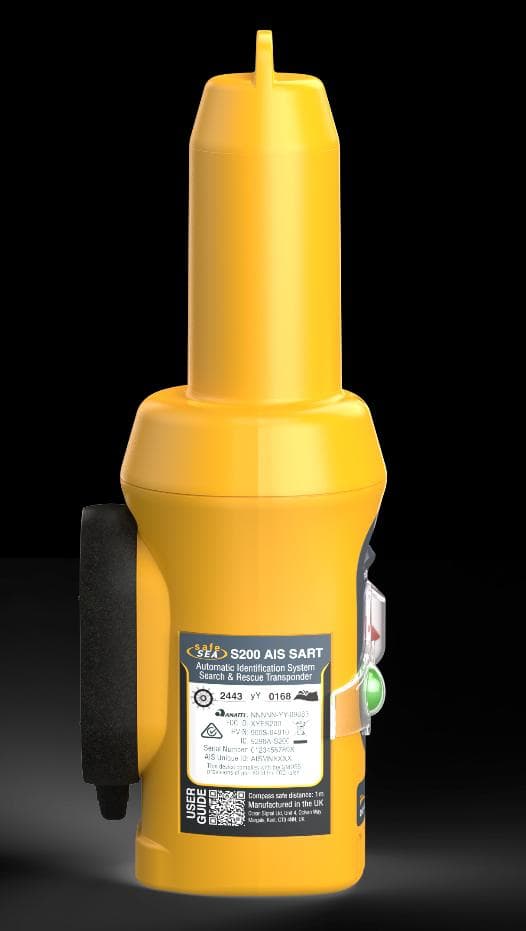
XYES200
Aug 20, 2026Search and Rescue Transmitter incorporating 162MHz AIS Man Overboard positioning capability
Equipment Class
AIS - Automatic Identification Systems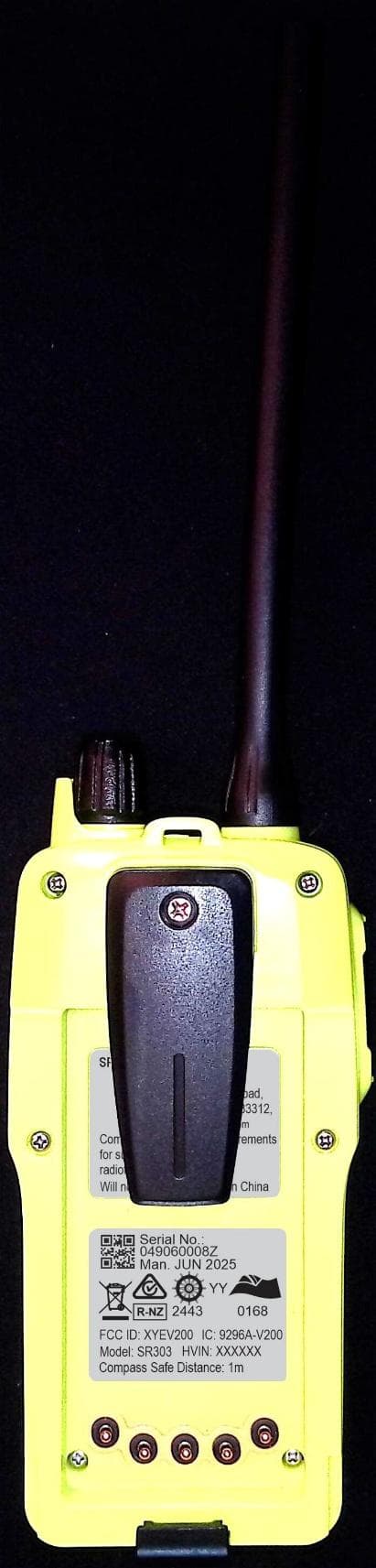
XYEV200
Feb 04, 2026GMDSS SURVIVAL CRAFT VHF RADIOTELEPHONE
Equipment Class
GHH - Part 80 VHF Hand Held Transmitter (GMDSS)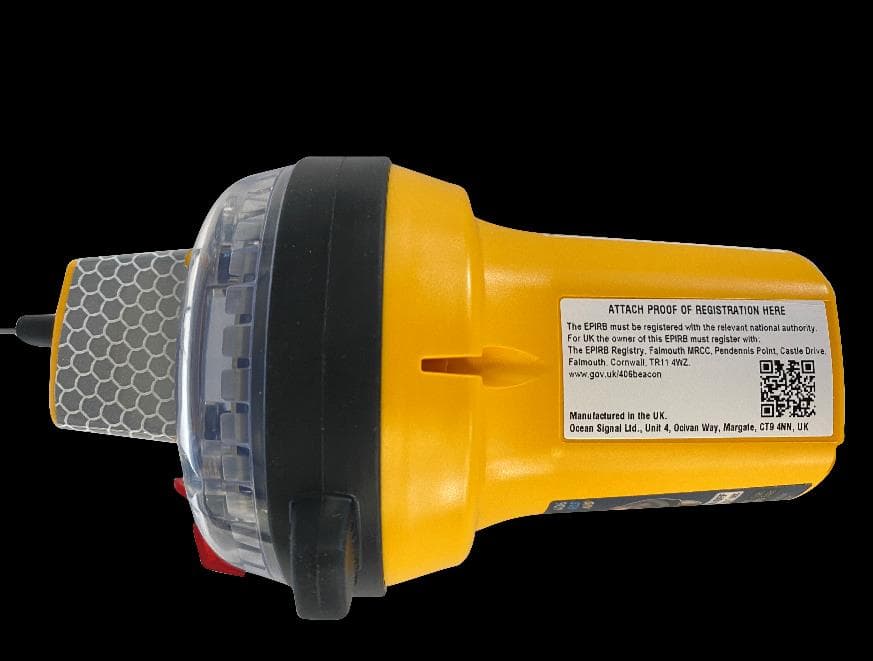
XYEEPIRB2
Jun 29, 2023406 MHz EPIRB with 121.5 MHz homing
Equipment Class
GEP - 406 MHz EPIRB
XYEPLB3
Jan 31, 2023PLB with AIS transceiver
Equipment Class
AIS - Automatic Identification SystemsXYEMOB1
Mar 02, 2015Maritime Survivor Locator Device
Equipment Class
PLB - Personal Locator Beacons