XYES100GMDSS Search and Rescue Transponder
Ocean Signal Ltd.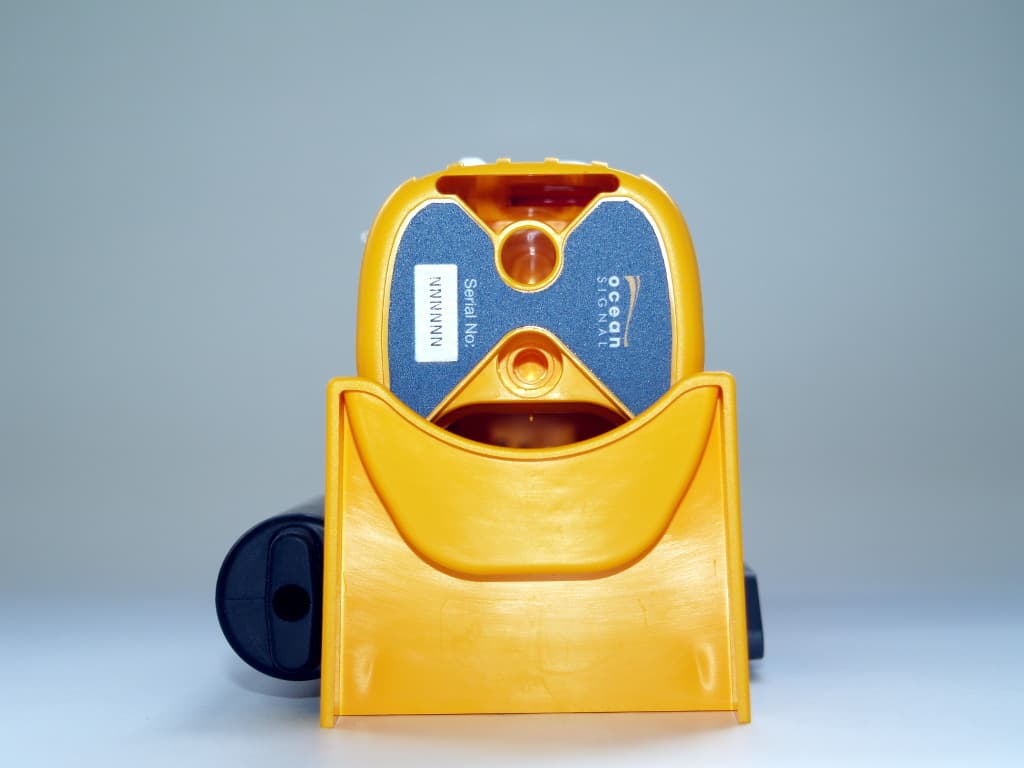
Click to zoom
Application Details
- Equipment Class
- SRT - Radar Transponder
- Date of Grant
- Dec 08, 2010
- Application Purpose
- Original Equipment
- Date of Application
- Oct 04, 2010
- Equipment Note
- GMDSS Search and Rescue Transponder
- Frequency Range
- 9200.00000000 - 9500.00000000
- Company
- Ocean Signal Ltd.
- Country
- United Kingdom
Documents & Files
Document Text
Text extracted from the exhibit documents filed with the FCC. Open a document above to read the original.
Users Manual
©Ocean Signal Ltd. 2010 Ocean Signal User Manual for the SafeSea S100 Search and Rescue Transponder Ocean Signal SafeSea S100 User Manual Part Number Version 0.0a 2 Exposure to RF Electromagnetic Energy This product has been evaluated for compliance with the FCC RF exposure limits given in CFR 47 part 2.1093 at a distance of 2.5cm for “Occupational Use Only” Warnings Do not operate this product without the antenna attached or with a damaged antenna. Always operate the SART with the antenna at least 2.5cm (1inch) away from you. The pulsed nature of a SART transmission will ensure that the duty cycle is below 50%. Approvals The SafeSea S100 SART complies with the requirements of Annex A.1/4.18 of European Directive 98/85/EC as amended by 2009/26/EC, for use onboard ships registered in the European Union. The SafeSea S100 SART complies with the GMDSS provisions of part 80 of the FCC rules. The S100 is designed for use in emergency only. Only operate it in situations of grave and imminent danger. Minimise the time the unit is on for when testing. The S100 incorporates a protective tab over the operating controls to avoid accidental activation and indicate that the unit has been used. After any period of operation, the battery should be replaced and the unit returned to your local service dealer for replacement of the protective tab. Always replace the battery before the expiry date is exceeded to ensure full operating capacity in case of emergency. Please ensure you follow local regulations before disposing of this item. Ensure the battery is removed from the unit before disposal. Ocean Signal SafeSea S100 User Manual Part Number Version 0.0a 3 In Case of Emergency Remove the S100 SART from its mounting or housing To manually activate the SART Following activation the SART should be tethered to the liferaft using the lanyard and mounted on the attached telescopic pole so that the SART at least 1metre above the water. Alternatively the SART may be attached to the roof or the life raft, using the tie provide by the liferaft manufacturer. 1 2 DEACTIVATION 3 Slide and hold the Green switch to the left, then slide the Red switch back into the up position and release the Green switch. TEST Rotate the Grey Switch clockwise and hold. ACTIVATION 1 - Break the switch cover 2 - Slide and hold the Green switch to the left, then slide the Red switch into the down position and release the Green switch. 3 4 Ocean Signal SafeSea S100 User Manual Part Number Version 0.0a 4 Contents Exposure to RF Electromagnetic Energy...................................................2 Approvals.................................................................................................2 In Case of Emergency ..............................................................................3 Contents...................................................................................................4 Controls and Indicators............................................................................5 Installation ..............................................................................................6 Operation .................................................................................................6 Activation ...............................................................................................7 Deactivation............................................................................................7 Testing...................................................................................................8 Batteries ..................................................................................................9 Battery Replacement................................................................................9 Maintenance and Troubleshooting..........................................................10 Specifications.........................................................................................11 Accessories ............................................................................................12 Ocean Signal SafeSea S100 User Manual Part Number Version 0.0a 5 Controls and Indicators 1. Test switch 2. Operating switch 3. Interlock 4. Tear off tag 5. Indicator LED 6. Battery compartment in base 1 2 3 4 5 6 Ocean Signal SafeSea S100 User Manual Part Number Version 0.0a 6 Installation The S100 is supplied with a quick release mounting bracket. This bracket should be mounted on a suitable wall or bulkhead in a position where it can easily be retrieved in an emergency. Although the S100 is rugged and waterproof, Ocean Signal recommends mounting the SART in a protected position whenever possible. Do not mount the SART closer than 1metre to any steering compass as this may affect the accuracy of the compass. Keep the S100 away from any strong magnetic sources such as loudspeakers, compass compensation magnets, etc. Mark the location of the four screw holes onto the mounting position. Pre-drill the holes if required then screw the mounting bracket to the surface using the four N o 6 x 5/8” screws supplied. The SART simply clips onto the mounting bracket. Operation Ensure the S100 SART is always fitted with an unused battery that is within the marked expiry date. Remember that a SART is not intended as a primary distress alerting device. At least one of the following should also be carried onboard your vessel to alert the authorities to your situation: an EPIRB; a DSC radio; an Inmarsat satellite terminal. Once the SART is activated it will help guide the Search and Rescue authorities to your position. Mounting It is important to mount and operate the SART as high as possible in the liferaft. The SafeSea S100 is provided with a telescopic pole which will keep the SART at a height of 1metre above sea level. Remove the pole from the back of the SART. The lanyard is stowed under the rubber pole retainer. The lanyard should be unwound a this stage and tied firmly to the Liferaft to ensure it is not 25…
Text truncated - open the document above for the full version.
Attestation Statements
Attestation Statement – Ocean Signal SafeSea S100 SART Ocean Signal hereby request that the SafeSea S100 Search and Rescue Transponder (SART) is approved under part 80.1101(c)(6) of the Commissions rules contained in CFR47, for use on SOLAS ships as part of the GMDSS as well as for voluntary fit by other users. The SafeSea S100 SART has been tested in accordance with IEC61097-1 and IEC60945 and is compliant with IMO resolutions A.530(13), A.802(19), A.694(17) and MSC.247(83). The SafeSea S100 conforms to the technical recommendations of ITU-R M.628-4. Signed on behalf of Ocean Signal Ltd David Sheekey Product and Approvals Manager 5 th October 2010 Federal Communications Commission 445 12 th Street, SW Washington DC 20554 United States of America Attn: Reviewing officer
Cover Letter(s)
Request for Confidentiality With reference to the conditions laid out in CFR47 parts 0.457 and 0.459, Ocean Signal Ltd respectfully requests that the following categories of documents submitted with this application remain confidential and are not made available for public inspection. These documents contain commercially sensitive information which is the intellectual property of Ocean Signal Ltd. Operational Description (containing block diagrams and circuit descriptions) Schematics Parts Lists/Tune Up Information I thank you for your cooperation in this matter. Signed on behalf of Ocean Signal Ltd David Sheekey Product and Approvals Manager 22 nd November 2010 Federal Communications Commission 445 12 th Street, SW Washington DC 20554 United States of America Attn: Reviewing officer
External Photos
Ocean Signal SafeSea S100 SART – External Photographs Shown with supplied bulkhead mounting bracket and 1metre pole. Figure 1: S100 SART – Front View Figure 2: S100 SART - Right Hand Side View Figure 3: S100 SART – Rear View Figure 4: S100 SART – Left Hand Side View Approval information, including the FCC Identifier, will be printed here. Figure 5: S100 SART – Base View
ID Label/Location Info
Ocean Signal SafeSea S100 SART – Approval Labelling The following label will show the approval information for the SafeSea S100 SART. As shown, the label currently includes the European Wheelmark and the FCC Identifier. Other nation’s approvals identifiers may appear when granted. Figure 1: S100 SART – Approvals Label Figure 2: S100 SART – Location of Approvals Label
Internal Photos
Ocean Signal SafeSea S100 SART – Internal Photographs Figure 1: S100 SART PCB – Front Side Location of additional switch board (see fig 4) Figure 2: S100 SART PCB – Rear Side Figure 3: S100 SART PCB – Rear Side with screening can removed Figure 4: S100 SART PCB – Switch Board.
RF Exposure Info
Human Exposure to Electromagnetic Fields This document demonstrates that the Ocean Signal SafeSea S100 Search and Rescue Transponder is in compliance with both US and EU requirements for protection of the general public from exposure to electromagnetic fields. In the US regulation 47CFR chapter 1.1310 1 specifies that in the band 1500 – 100,000MHz the exposure limit is 1mW/cm 2 . In the EU, Directive 1999/519/EC 2 Annex III; Table 2 3 gives a limit of 10W/m 2 in the frequency range 2-300GHz. (Note: converting centimetres to metres gives 1mW/cm 2 = 10W/m 2 ) From Test Report no. 10/591 4 the Measured EIRP is stated as 460mW ∴EIRP = 460mW S= 1mW/cm 2 Distance at which the power density meets the 1mW/cm 2 limit is given by r = √(P/(4 x π x S)) r = 6.1cms (= 2.4inches) Therefore the SafeSea S100 meets the requirements for exposure to radiated electromagnetic fields at a worst case distance of 11.5cms from the transmitting antenna in both the USA and Europe. Note: This calculation is based on the continuous saturated peak output power. In practice the SART will only be illuminated for a small percentage of the time, so the safe distance will be significantly reduced. David Sheekey 5 th October 2009 Ocean Signal 1 1.1310 Radiofrequency radiation exposure limits 2 Council Recommendation on the limitation of exposure of the general public to electromagnetic fields(0Hz to 300GHz) 3 Reference levels for electric, magnetic and electromagnetic fields (0Hz to 300GHz,unperturbed rms values) 4 Tested by Public Enterprise Testing Center “Omega”
Test Report
PUBLIC ENTERPRISE TESTING CENTER “OMEGA” Copy No. 1 TEST REPORT NO. 10/591 Search and Rescue Transponder “SafeSea S100” for compliance with IEC61097-1 (Second edition 2007-06) and IEC60945 (Fourth edition 2002-08) Manufacturer “Ocean Signal Ltd.”, Great Britain Sevastopol 2010 September 23, 2010 PE TC “Omega” Test Report No. 10/591 Page 2 of 128 PUBLIC ENTERPRISE TESTING CENTER “OMEGA” COSPAS-SARSAT Secretariat reference No. CS497/F530 21/09/1994 Ministry of Transport Russian Federation Certificate of accreditation of testing laboratory No. АКР.0510-14 РТН valid until 19.05.2015 Federal Agency for Technical Regulation and Metrology Russian Federation Certificate of accreditation of testing laboratory РОСС UA.0001.21МО98 valid until 01.10.2011 Russia Maritime Register of Shipping. Certificate of Recognition testing laboratory No. 07.18114.184 valid until 21.08.2012 National Accreditation Agency of Ukraine. Certificate of accreditation for compliance DSTU ISO/IEC 17025:2006 No. 2H339 valid until 17.05.2011 29 Vakulenchuk Str., Sevastopol, 99053, Ukraine ph. +380 692 24 03 73 fax +380 692 46 96 79 E-mail:[email protected] Basis: Contract No 10-512/20-383 Equipment under test: Search and Rescue Transponder “SafeSea S100” Manufacturer: Ocean Signal Ltd., Great Britain Applicant: Ocean Signal Ltd.”, Great Britain Start Date of Tests: 04.08.10 Date of Completion of Tests: 16.09.10 Test report shall be delivered to: Ocean Signal Ltd. PE TC “Omega” Copy No.1 Copy No.2 Tests results cover just tested samples only. Reproduction or copying of this report or its any part may only be made with the prior written approval of PE TC “Omega”. PE TC “Omega” Test Report No. 10/591 Page 3 of 128 CONTENTS Page No. 1. EQUIPMENT UNDER TEST ............................................................................................................................................... 4 1.1 Equipment Category ............................................................................................................................................................ 4 1.2 Trade Name of the Equipment ............................................................................................................................................. 4 1.3 Model................................................................................................................................................................................... 4 1.4 Serial Number...................................................................................................................................................................... 4 1.5 Function of the Equipment .................................................................................................................................................. 4 1.6 Documentation submitted with the product ......................................................................................................................... 4 1.7 Technical specification ........................................................................................................................................................ 4 2. TEST PURPOSE ................................................................................................................................................................... 5 3. TEST PROGRAMME AND METHODS OF TESTING...................................................................................................... 5 4. TEST CONDITIONS ............................................................................................................................................................ 8 5. TEST SCHEDULE ................................................................................................................................................................ 9 6. TEST RESULTS ................................................................................................................................................................. 11 7. CONCLUSION.................................................................................................................................................................... 14 APPENDIX А Tests Results For Search and Rescue Transponder “SafeSea S100”................................................................. 15 Appendix А1 Check the package contents and compliance of SART with instructions ......................................................... 16 Appendix А2 Check labelling of SART .................................................................................................................................. 23 Appendix А3 Technical characteristics test in standard climatic conditions at nominal voltage of the power supply............ 26 Appendix А4 Check SART operation under low power voltage............................................................................................. 31 Appendix А5 Low temperature cycle ...................................................................................................................................... 34 Appendix А6 Dry heat storage test (at temperature +65 ̊С) ................................................................................................... 38 Appendix А7 Dry heat functional test (at temperature +55 ̊С)............................................................................................... 42 Appendix А8 Damp heat functional test.................................................................................................................................. 45 Appendix А9 Vibration test .................................................................................................................................................... 49 Appendix А10 Check SART floating ...................................................................................................................................... 57 Appendix А11 Drop into water test .........…
Text truncated - open the document above for the full version.
Test Report
PE TC “Omega” Test Report No. 10/591 Page 65 of 128 Appendix А12 Water tightness and thermal shock (Immersion test (100 kPa 5 min) was associated with this test) Standard Standard IEC 61097-1 item 3.2 h), 3.2 g) Model SART SafeSea S100 Serial number No. 003 Sample number of battery pack No. 2 Date of test 10.08.2010 The temperature of the climate chamber +65 °C and minus 10 °C Temperature of water in device for hydrostatic testing 19.2°C и 19.6°C Document by manufacturer Search and Rescue Transponder “SafeSea S100” Serial No 003. Owner’s manual. Test conditions. SART was thermally soaked for period of 3 hours at temperature 65 ±2°C. Then SART was then immersed into device for hydrostatic testing with the water on a depth 0.5 m with temperature 19.7 °C to a pressure of 100 kPa for at 1 hour. After decompressing to normal atmosphere SART was extracted from water, dried and water was removed from crevices. SART was thermally soaked for period of 3 hours at temperature minus 10 ±2°C. Then SART was immersed into device for hydrostatic testing with the water on a depth 0.5 m with temperature 19.6 °C to a pressure of 100 kPa for at 1 hour. After decompressing to normal atmosphere SART was extracted from water, dried and water was removed from crevices. At completion of immersion the SART was tested for leakage and a functional test was carried out. The results of measurements are shown in the table below: Item Parameter Requirements Results 5.1 High frequency (9500+60) MHz 9521,3 MHz 5.1 Low frequency (9200-60) MHz 9170,0 MHz 5.6 RF pulse emission 100 μs 94,0 μs 5.5 Forward sweep time (7,5±1) μs 7,46 μs 5.5 Return sweep time (0,4±0,1) μs 0,324μs 5.4 Response signal 12 12 PE TC “Omega” Test Report No. 10/591 Page 66 of 128 Figure 42– Spectrogram measurement frequency range SART “SafeSea S100” Figure 43 – Forward sweep time. PE TC “Omega” Test Report No. 10/591 Page 67 of 128 Figure 44 – Return sweep time Figure 45 – 12 sweeps of the response signal PE TC “Omega” Test Report No. 10/591 Page 68 of 128 Photo 27 – Device for hydrostatic testing. Photo 28 – The manometer value. . PE TC “Omega” Test Report No. 10/591 Page 69 of 128 Test results: Inspection after test confirmed watertightness SART and absent of leakage into the SART. Functioning SART is equal to the requirements of technical specifications on items 3.2 h), 3.2 g) of the standard IEC 61097-1 , items 8.5, 8.9.2 of the standard IEC 60945. Requirements of the standard IEC 61097-1 items 3.2 h, 3.2 g , the standard IEC 60945 items 8.5, 8.9.2 SART should maintain watertightness when subjected to a thermal shock under specified conditions of immersion. TEST EQUIPMENT USED: 8, 9, 14, 16, 17, 18, 19, 20, 21, 22, 23, 24, 25, 26, 32, 39. CONCLUSION Search and Rescue Transponder “SafeSea S100” conforms to the requirements of the standard IEC 61097-1 items 3.2 h), 3.2 g), standard IEC 60945 items 8.5, 8.9.2 Sample No 1 yes PE TC “Omega” Test Report No. 10/591 Page 70 of 128 Appendix А13 Check of radiated emissions from enclosure port Standard IEC 60945 items 9.3.2, 9.3.3 Model SART SafeSea S100 Serial number No. 003 Sample number of battery pack No. 2 Date of test 11.08.2010 Ambient temperature 30 °C Ambient humidity 54 % Test conditions: Distance from SART to test antenna 3 m. Test results (standby mode): Frequency, MHz radiation limit, dBμV/m, not above correction factor, dB Measurement value, dBμV (QP) Level of radio interferences, dBμV/m Difference between a possible level and level of radio interferences, dBμV/m** 0,15 80 -25,6 19 44,9 35,1 0,3 52 -25,8 12,7 38,4 13,6 1 47,2 -25,7 1,8 27,6 19,6 2 44,6 -25,6 -0,8 25,1 19,5 6 40,3 -25,6 -2,6 23,3 17 10 38,3 -25,7 -1,5 24,3 14 11,28 37,8 -25,7 -3 22,8 15 30 34 -24,8 -2,9 23,8 10,2 45 54 13,07 7,6 20,67 33,33 65 54 10,23 7,4 17,63 36,37 90 54 11,42 7 18,42 35,58 150 54 8,11 6,7 14,81 39,19 180 54 9,77 6,7 16,47 37,53 220 54 11,52 6 17,52 36,48 300 54 13,66 5,8 19,46 34,54 450 54 16,45 6,5 22,95 31,05 600 54 19,47 3,5 22,97 31,03 750 54 20,54 3,7 24,24 29,76 900 54 22,26 3,9 26,16 27,84 1000 54 22,94 4,2 27,14 26,86 1200 54 24,46 4,5 28,96 25,04 1500 54 26,74 4,6 31,34 22,66 PE TC “Omega” Test Report No. 10/591 Page 71 of 128 Frequency, MHz radiation limit, dBμV/m, not above correction factor, dB Measurement value, dBμV (QP) Level of radio interferences, dBμV/m Difference between a possible level and level of radio interferences, dBμV/m** 1750 54 28,1 5,2 33,3 20,7 1900 54 29,36 5,5 34,86 19,14 2000 54 28,78 6,5 35,28 18,72 156 30(PK) 24(QP) 7,77 1,9 (PK) 9,67 20,33 165 30(PK) 24(QP) 8,41 2,7 (PK) 11.11 18,86 In measurements on other frequencies range were not detected interference field strength above the noise level measurement system. Noise level of measurement system during the measurement of field strength interference in the frequency range is: -from 0,15 MHz to 30 MHz inclusive no more then 15,5 dBμV/m; -above 30 MHz to 60 MHz inclusive no more then 13,6 dBμV/m; - above 60 MHz to 120 MHz inclusive no more then 10,7 dBμV/m - above 120 MHz to 300 MHz inclusive no more then 20,0 dBμV/m - above 300 MHz to 600 MHz inclusive no more then 25,6 dBμV/m; - above 600 MHz to 2000 MHz inclusive no more then 32,5 dBμV/m Test results: Check the level of field strength interference SART in the range from 150 kHz to 2000 MHz did not reveal any values above the noise level measurement system. Noise level measurement in the range from 30 MHz to 300 MHz does not exceed 20 dBμV/m, from 600 MHz to 2000 MHz does not exceed 32,5 dBμV/m The requirements of the standard IEC 60945 item 9.3.2 PE TC “Omega” Test Report No. 10/591 Page 72 of 128 All reasonable and practicable steps should be taken to ensure electromagnetic compatibility between the equipment concerned and other radiocommunication and navigational equipment carried on board in compliance with the relevant requirements of chapter IV and chapter V of the 1974 SOLAS convention. TEST EQUIPMENT USED: 10, 12, 40, 42, 43, 44. CONCLUSION Search and Rescue Transpon…
Text truncated - open the document above for the full version.
Contact Information
Applicant
Mark Newton(Approvals Manager)
Technical Contact
Ocean Signal LtdDavid Sheekey
[email protected]+44 1843 282937
Unit 4, Ocivan Way · Margate · United Kingdom
Technical Specifications
| # | Rule Parts | Frequency Range | Power Output | Emission | Tolerance |
|---|---|---|---|---|---|
| 1 | 80.1101(c)(6) | 9.20 GHz - 9.50 GHz | 400.00 mW | 300MX0N | 0.6500000000 % |
Other Applications from Ocean Signal Ltd.
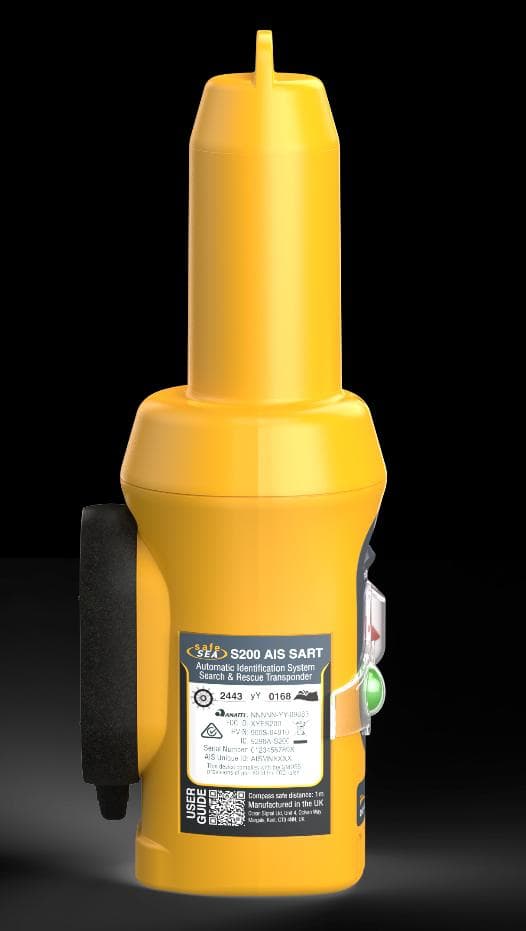
XYES200
Aug 20, 2026Search and Rescue Transmitter incorporating 162MHz AIS Man Overboard positioning capability
Equipment Class
AIS - Automatic Identification Systems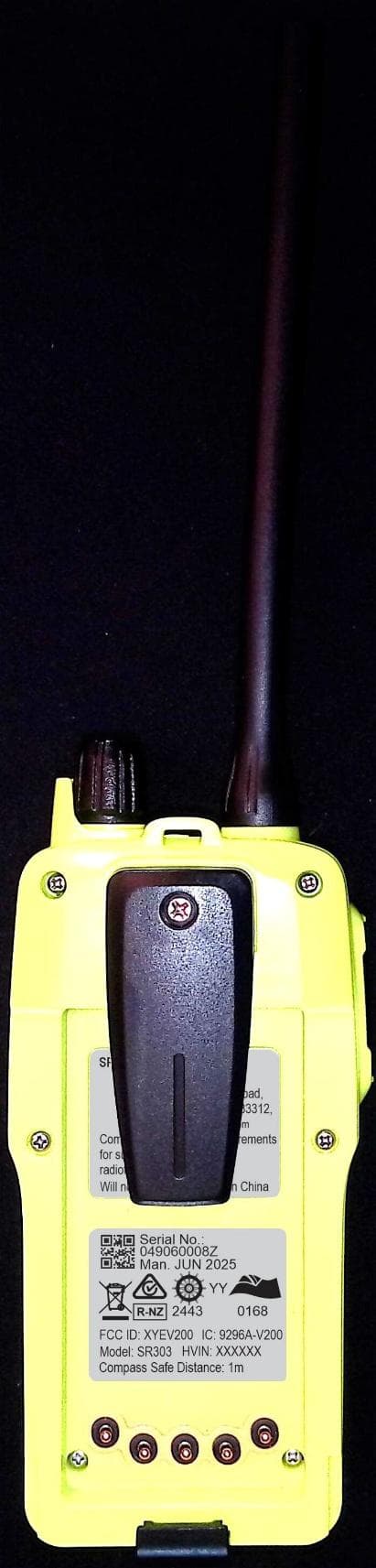
XYEV200
Feb 04, 2026GMDSS SURVIVAL CRAFT VHF RADIOTELEPHONE
Equipment Class
GHH - Part 80 VHF Hand Held Transmitter (GMDSS)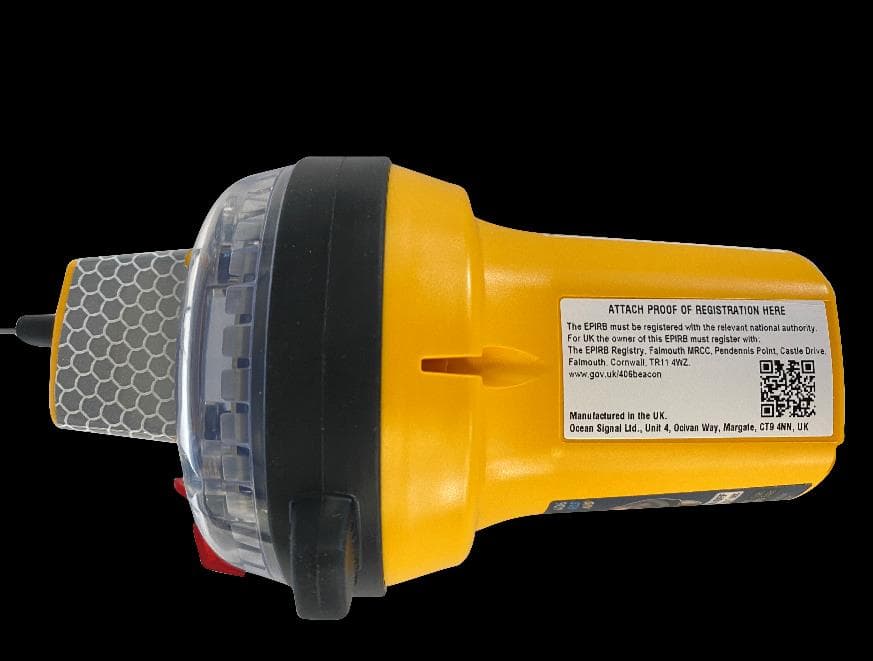
XYEEPIRB2
Jun 29, 2023406 MHz EPIRB with 121.5 MHz homing
Equipment Class
GEP - 406 MHz EPIRB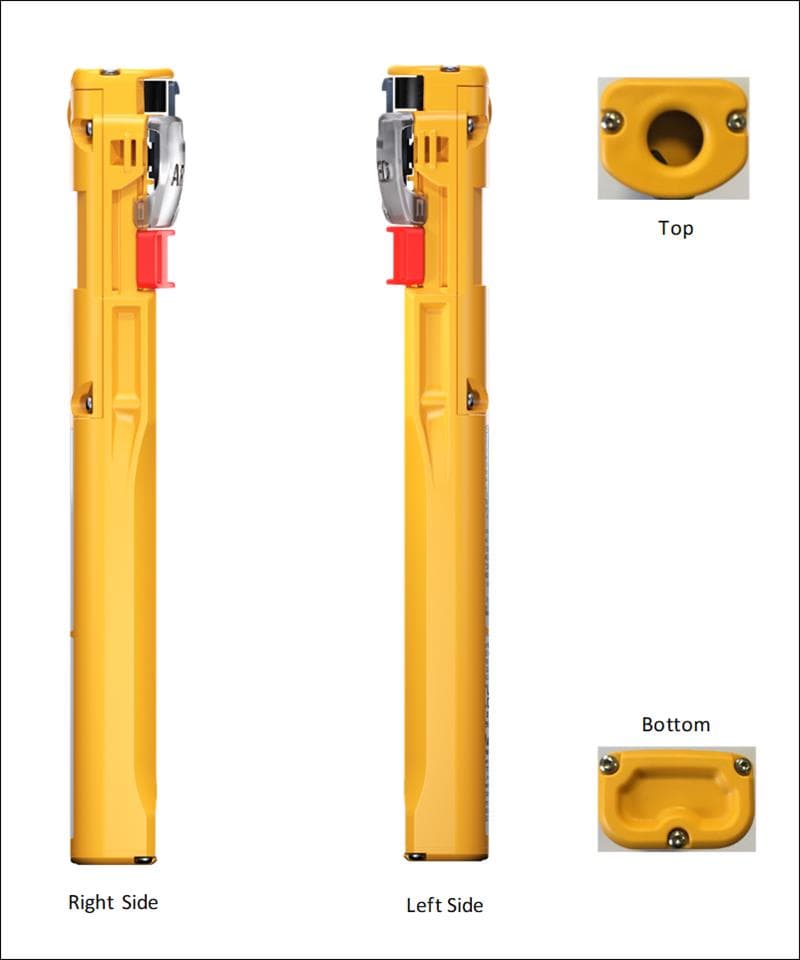
XYEPLB3
Jan 31, 2023PLB with AIS transceiver
Equipment Class
AIS - Automatic Identification Systems
XYEEPIRB3
Jan 25, 2023Marine AIS Transceiver with EPIRB
Equipment Class
GEP - 406 MHz EPIRB